Broadband’s Roadblock

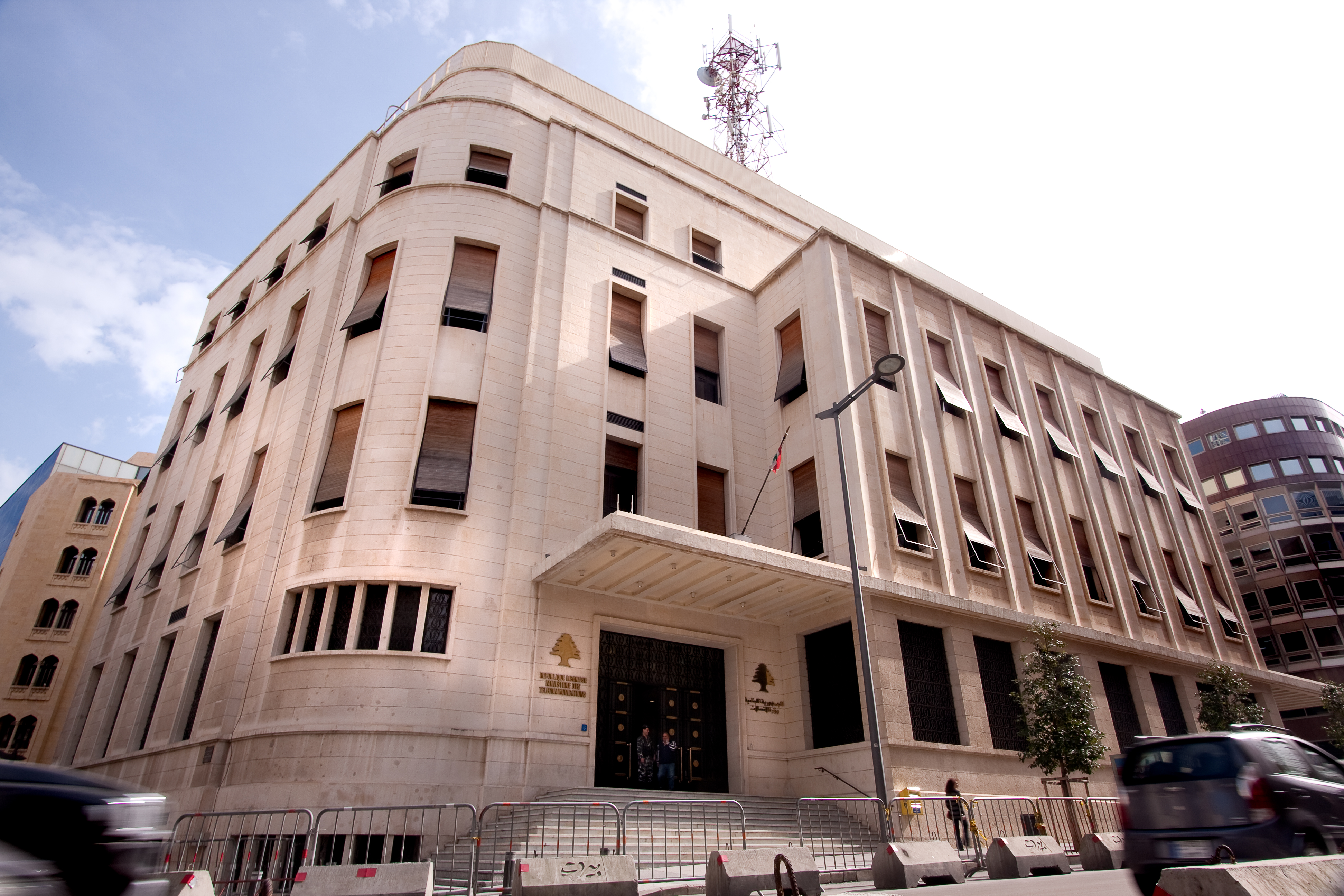
What goes on in the Lebanese Ministry of Telecoms has always been a wonder to those waiting for their files to upload (Photo: Sam Tarling)

Being stopped at an army checkpoint is a regular feature of Lebanese life, largely endured without complaint as a necessary condition for maintaining the country’s semblance of security. These checkpoints are normally benign: more often than not the officer in charge will give the vehicle a cursory glance before waving the driver through to go about his or her business. Lebanese Internet, on the other hand, has been pulled over at the same roadblock for more than a decade, leaving the country and its economic development held up behind, while the vast majority of the rest of the developed and developing world passes by Lebanon in the broadband fast lane. In the past year there have been financial wheels set in motion to move the country past this Internet impasse, but when, or even whether it will be waved through is far from certain.

Political and vested interests have attempted to thwart development at almost every step, and to circumvent the country’s legislative paralysis the “progress” that has been achieved has often been through blatant violations of the same law enacted to liberalize the telecommunication sector. The telecommunications ministry has effectively admitted to having purposely-opaque policies that call into question the integrity of the entire process, while security concerns and espionage charges have piled up like a fast-action thriller. In the following report, Executive lets you in on what’s still blocking the road to broadband.

Stalled in a feedback loop
In January 2010, the Minister of Telecommunications, Charbel Nahas, declared that he would release his policy strategy by November — exactly a year after becoming minister — while his ministry announced that it was beginning the process of upgrading Lebanon’s bandwidth from an estimated two gigabits per second (gbps) to 120 gbps. This included connecting Lebanon to an undersea cable called the India-Middle East-Western Europe 3 (IMEWE3) [see box].
Almost a year later, however, as Executive went to print, neither of these pledges have been fulfilled.
“We tried to assist and be an advisory body to the minister in order to help him to develop and write his policy to submit it to the Council of Ministers,” says Mahassen Ajam, commissioner and member of the board of the Telecommunications Regulatory Authority (TRA), the body theoretically mandated to regulate Lebanon’s telecommunications market. “The year is over and there is still no policy for the sector, which is a dilemma for us.”
It’s a dilemma because, according to Law 431, the TRA is supposed to be regulating the as-yet non-existent Liban Telecom that is meant to be the government-owned entity holding all the state’s telecommunications assets. Setting up Liban Telecom has become such a contentious issue, however, that when Executive queried Minister Nahas about it he replied: “I am part of a large governmental block, so don’t talk to me about when to apply the law.”
Indeed, Mahmoud Haidar, principal advisor to the Minister of Telecommunications, says the tenets the minister is willing to stand by are only that pricing should be lower and that the state monopoly over telecommunications should end.
“When Liban Telecom is established it has the right to have a five year monopoly by the law and the minister doesn’t like that,” he says.
Haidar adds that: “We are all Lebanese and we shouldn’t be hypocrites about our realities. If Liban Telecom is, as the law says, an established company to be owned by the government, its board of directors appointed by the Council of Ministers, I really see that no Lebanese in his true and genuine sense sees that this will be free from politics. The Council of Ministers getting into the appointment of anything is politics. So to those who promote Liban Telecom as the paradise to come, I would simply ask them how they see this happening.”
Indeed, for Liban Telecom to become a reality, the minister would have to propose it and the cabinet would have to assign the board members; since the minister seems disinterested and the cabinet is unable to even meet regularly (if at all), progress appears stalled.
“You are right in asking about where we are now because we have not come to the public and said everything,” said Haidar, who stressed that the minister never said he would issue an official policy paper because it has no legal mandate.
Thus with the law unimplemented and a policy unissued, Lebanon’s telecommunications regulator finds itself at a loss as to what it should do. Technically, the TRA is in violation of the same Law 431 that created it, given that the law mandates the TRA be financially independent within two years of its creation, which was in 2007.
The TRA cannot yet be financially independent from the government, says Ajam, as the TRA’s independence is “based on the principle that the sector be liberalized… which means giving licenses and making revenues from the market.”
“We were not able to give licenses — it’s as simple as that,” she said, adding that without a national budget approving investments, the TRA had no choice but to take the funds advanced to it by the cabinet. [The TRA does, however, gain some revenue from the annual interim licenses it is permitted to grant to the country’s service providers and has recently received a World Bank grant.]

No straight talk
Considering that it is the government body responsible for upgrading communications in the country, Lebanon’s Ministry of Telecommunications (MOT) has been exceptionally poor at informing the public how it is going about it.
In April 2010 the ministry announced $92 million would be spent on a range of projects, including a national fiber-optic backbone. Following this announcement Mahmoud Haidar, principal advisor to the Minister of Telecommunications, explained to Executive that this figure may or may not represent what the ministry will in fact spend, given that it avoids releasing its actual budget before issuing tenders, as this would influence bidders’ offering price.
Executive later learned the ministry received a $66.3 million treasury advance to begin building the fiber-optic backbone (a treasury advance is a payment made outside of the national budget with the approval of the cabinet). The ministry’s design proposes two large fiber-optic “rings” that span the width and breadth of the country, with most of the cost of the project going to drilling.
The MOT then announced in September that it had contracted out the first phase of the project, namely laying the fiber and drilling, to a consortium consisting of Alcatel-Lucent and its local partner Consolidated Engineering and Trading (CET), for $40 million. Neither Alcatel-Lucent nor CET were willing to comment for this article. The cost of the current project becomes all the more relevant when it is juxtaposed against alternatives.
As previously reported in Executive, the International Telecommunications Union (ITU) proposed a Internet blueprint for Lebanon in 2002 that would have cost $40 million in total — in other words, equal to what is now being paid for the first phase of implementation alone. Riad Bahsoun, a telecoms expert with the ITU, described the current project design as “obsolete” and overpriced due to excessive drilling and said that the costs associated with drilling will only benefit the companies that drill. “They will do it this way and in 50 years we will cry about why they did it this way,” he said. However, Habib Torbey, head of the Lebanese Telecommunications Association (LTA) and president of GlobalCom Data Services, owner of Internet provider IDM, called the design adequate for Lebanon. “When you talk about security and redundancy you cannot always look at cost; it’s not a question of cost,” he said.

Israeli spying devices have been found in several locations as ministers seem to think that there is no need to monitor the problem more carefully (Photo: AFP PHOTO/HO/LEBANESE ARMY)

Securing the lines
Security has been big news over the last two years, with headlines littered with intrigue and espionage involving Lebanese telecommunications. These included the arrest of workers at Alfa (one of Lebanon’s two mobile operators) and Ogero (the state-owned fixed-line monopoly,) for allegedly carrying out clandestine intelligence operations for Israel, as well as calls by Hezbollah members of Parliament for telecommunications evidence in the United Nations Special Tribunal for Lebanon to be thrown out because of Israeli infiltration of the Lebanese network.  Last month, Hezbollah announced, “As part of its persistent efforts to counter Israeli espionage, the Islamic Resistance has made a new major achievement by foiling an Israeli attempt at infiltrating its telecommunications network.”
“Telecommunications technicians of the Resistance managed to discover a spying device the enemy had planted on its telecom network in the Al Qaysiyya valley, near the southern town of Majdel Selem,” said a statement released by the Hezbollah media relations department. “The enemy [Israel] remotely detonated its device as a result of the discovery.”  With all these security concerns regarding telecommunications, one might think the MOT would attempt to address the security of Lebanon’s network when undertaking a project to upgrade the country’s infrastructure — especially when the minister is from the political bloc allied to Hezbollah.
However, “There is not even the slightest mention of security issues in the tender book,” says the ITU’s Bahsoun, adding that the current plans do not meet ITU standards.
“No expert can understand what motivated the cutting of this project into two different parts: one called ‘civil works’ and the other ‘active equipment’; there is absolutely no technology rationale behind such sectioning,” says Bahsoun, noting that this sort of segmentation can be used to “fool the budget,” and lead to money being siphoned off of the telecommunications upgrading project to different interested parties.
Haidar, the advisor to the Minister of Telecommunications, claims the opposite and says that the first phase of the project is “absolutely” ITU compliant. “How do they know? These documents are confidential,” he remarked to Executive. “I am surprised that they are commenting on documents that they are not supposed to be aware of.”
Also threatening Lebanon’s communications security is the existence of illegal operators, which came to the fore in August 2009 when an Israeli telecommunications network site was discovered on the Barouk Mountain in the Chouf region of Lebanon selling bandwidth to Lebanese operators.
“The Barouk issue is not a penetration of the Lebanese network. It was an Israeli network in Lebanon, installed by Israelis, managed from Israel with Israeli equipment reaching well inside Lebanon under a disguised commercial cover,” said Habib Torbey, head of the Lebanese Telecommunications Association (LTA) and president of GlobalCom Data Services, owner of Internet provider IDM. “How do they expect us to take seriously the security effort [the government] is doing to secure the GSM [Global System for Mobile communications] networks when such big issues are kept under the rug? It’s just not serious and it calls their credibility into question.”
A source with knowledge of the Barouk proceedings told Executive that a colonel in the Lebanese Army posted at the MOT during the last cabinet’s term in 2009, had spearheaded the discovery of the Barouk station along with 80 to 100 other illegal operators. Haidar confirmed this officer was Colonel Dany Fares.
According to the same source, after the telecommunications equipment, built by the Israeli firm Ceragon, was confiscated by the authorities, a man named Fadi Qassem infiltrated the location where the equipment was being held and was later re-apprehended by military intelligence with the equipment in his possession. The source added that Qassem was let go “immediately” because of political pressure. Several other sources, which also asked to remain anonymous, confirmed to Executive that Qassem was behind the operation, though he was described as “small fry” by one.
In February 2009, in the midst of a political debate over wiretapping during the term of the last cabinet, MP Walid Joumblatt — who exercises far-reaching influence over the Chouf Area — called for Colonel Fares to be removed from his post in the telecoms ministry in an interview with Ad Diyar newspaper. It was later during this government’s term that Defense Minister Michel Murr ordered the colonel to be removed from the telecoms ministry, according to Haidar.
Murr also came under attack last month in the Lebanese press after Wikileaks, a global whistleblower site, released United States diplomatic documents from March 2008 to Al Akbar newspaper stating that Murr advised the US on where any future attack may hit and that he would instruct the army to move in only after any Israeli attack had wiped out the resistance movement. The Ministry of Defense did not respond to a request for clarification and an interview.
In December a Hezbollah tip-off led to two more discoveries of Israeli espionage devices on Mount Sannine and, once again, the Barouk Mountain east of the capital. At present there is a committee tasked with uncovering illegal operators within the telecommunications ministry but Haidar refused to disclose details of how many illegal operators have been apprehended so far.

The road ahead
So while the country has been waiting for years for a way forward, and there does seems to be some momentum building to end the roadblock to move us onto the broadband highway, politics still seems to be leaving our tires flat.
“We are losing our voices telling [the politicians] to remove the telecom sector from politics because this is an economic and strategic sector for the rest of the country, not a stand alone sector,” says the LTA’s Torbey. “God willing, they will hear us one day.”

First published in Executive Magazine’s January 2011 issue

Pipe dreams

(Illustration: Karim al-Dahdah)

Politics and economics have always had an abusive relationship in Lebanon, with the latter habitually falling victim to the former’s unpredictable behavior. Like any odd couple, there are times when they get along, if only to fall back into a vicious cycle that consumes them both.

As 2010 began there was optimism in the air; the country had just emerged with a new government after Lebanon’s power brokers finished their long and drawn-out game of musical chairs over who would take which cabinet posts.

The new cabinet of “national unity” effectively meant, however, that basic national issues could not be decided upon without unanimous approval. Even without this inherent impediment to the kind of streamlined decision-making Lebanon desperately needed after years of (at best) ineffective government, results were going to take time. Many of the problems facing the country, from electricity shortages to water supply, require long-term solutions rather than quick fixes.

At the start of 2010, the cabinet approved a new ministerial statement that has since remained the only wide-ranging plan to address the country’s problems, with the stated goal: “to help all Lebanese benefit from economic growth in a proportional way that will allow all categories of society and all the Lebanese regions to profit.” The final part of the statement contains the priorities of each ministry, though most are vague enough to allow the ministers to evade accountability for tangible results.

While no one expected all elements of the ministerial statement to be fulfilled in the first year of operation, the pace of most reform in 2010 has been glacial.

“They didn’t do anything. Really, nothing happened,” says Jad Chaaban, acting president of the Lebanese Economic Association in November. “There are people who don’t want to rule with others on both sides. There are huge differences on how reform should be carried out and there is no real debate on these issues, from traffic, to electricity to water.”

The lack of action is even more unfortunate given that the new government was regarded by many as the first that could actually make some headway in terms of public policy, after previous post-Hariri assassination governments were plagued by political debacles that brought policy to a grinding halt.

Electricity

To be fair, some progress has been made this year, even if it was only at the planning level. Perhaps Lebanon’s most glaring policy deficiency is the abysmal state of the electricity sector, and in June the cabinet approved a comprehensive plan for an overhaul, which aims to provide 24-hour power throughout the country by 2015. It is not the country’s first electricity overhaul plan, though it may the most substantial to date.

Much of its success banks on the private sector, which will be asked to contribute $2.32 billion, or 58 percent of the total cost, to take part in the production and distribution of electricity, while the public sector will retain the infrastructure and control the transmission of electricity from plants to local districts. This collaboration, however, will require a Public Private Partnership (PPP) law to be passed by Lebanon’s parliament, which has barely managed to meet since being elected in June 2009, much less pass essential legislation.

“Clearly there is an interest from the private sector, given a proper PPP law that preserves the interests of the private parties involved, but the key aspect is a transparent, clear and implementable law that has to be very clear on how to solve issues between the private sector and the government,” says Nassib Ghobril, head of economic research and analysis at Byblos Bank.

With the draft law still swirling around parliament, and the latest draft viewed by Executive only referring to “the principles of transparency and equality among competitors,” rather than any mechanism for resolving conflicts, the Lebanese could be waiting some time for a resolution to their chronic energy problems.

Water

Another sector that needs a substantial overhaul is water. A draft strategy is currently being compiled by the Ministry of Energy and Water, which is expected to be ready for submission to cabinet by the end of the year. A supply/demand forecast was completed and presented to domestic and international stakeholders in November, giving some idea of the amount of money that will need to be spent to close the gap in the coming 25 years. New storage alone, mostly in the form of dams and artificial lakes, will require around $2.65 billion in capital expenditures and then some $96 million each year in operating costs. Capital expenditures on transmission and distribution are projected to cost $875 million by the end of 2015, with associated operating costs at $249 million over the same period. New irrigation networks are expected to cost a further $1 billion over the next decade and beyond. Wastewater clocks in at another $1.6 billion by 2020.

Telecommunications

Lebanon’s government-owned telecoms sector is also in need of radical reform. Theoretically, the sector already has a framework that should be implemented in the form of Law 431, which calls for the creation of a corporatized, but not necessarily privatized, entity called Liban Telecom. Under the law, the telecom ministry’s assets would be transitioned to the company, which would be regulated by the existing Telecom Regulatory Authority that presently regulates around 5 percent of the market under its legal mandate. The liberalization of the sector is also called for in the ministerial statement, but when Executive asked Telecom Minister Charbel Nahas why no action has been taken on this front he replied: “I am part of a large governmental block, so don’t talk to me about when to apply the law.”

Nahas had also promised to publish his policy for the sector within one year of taking office in November 2009, but has failed to do so.

“The ministry’s policy is not a matter of a statement, it is a matter of practice,” said Nahas when asked when he expected to issue his policy for the sector.

Official policy or not, some progress may be in the works. The Ministry of Finance recently advanced $66.3 million to the Ministry of Telecoms to begin its proposed project to lay a new fiber-optic ‘backbone’ across the country. At the end of November, the telecom minister said the project would begin “within a few days or weeks.”

The project was awarded to Alcatel and the local civil engineering firm Consolidated Engineering and Trading, budgeted at $40 million; the telecom ministry has announced that the project should be ready by March 2012. According to Nahas, 4 to 6 percent of gross domestic product comes from the telecom sector surplus, adding that “it is the least of our duties to give back to the population and to the economy this very small part of this huge rent extortion that we inherited from the past period.”

Improved Internet access will require that the $45 million international IMEWE3 cable becomes operational. It was planned for March 2010, but Egypt has not opened up access on its end in Alexandria (where the cable connects to the rest of the world), due to reluctance on the part of the Egyptian security services, according to Riad Bahsoun, telecom expert at the International Telecommunications Union (ITU).

The debt

But perhaps the most pressing item on the government’s agenda is its largest source of expenditure: the public debt. It is projected to have cost the government $4 billion just to meet interest payments in 2010, with the principal reaching $50.85 billion, around one and a half times estimated economic output.

Finance Minister Raya Hassan admits that there is no foreseeable plan to reduce this principal in the absence of privatization of the telecoms sector, which she herself has said is undervalued on international markets.

Her debt strategy is to switch short-term debt for long-term debt now that Lebanon is enjoying better rates than it has before, and maintain a primary surplus as a “cushion” against debt obligations. “It’s a mixed blessing because even though the debt increase is going to be controlled, on the other side you are not going to have all the capital expenditures that would unleash the full potential of the Lebanese economy,” she says.

The lack of a government budget for the last half decade has created a situation where opening and closing accounts for the years ending 2005 and 2006 do not add up. The issue created a hubbub of accusations over mismanagement of public funds at the end of 2010.

“What they [the opposition] are trying to imply is that there are no accounts. That is totally untrue. There are accounts,” says Hassan. “What is lacking is the auditing. It’s not even auditing, it’s the control of the accounts by the Public Accounting Directorate (PAD),” she says, adding that, because public accounting laws are so old, the PAD has to cross-check around two million transactions a year with their supporting documents, which they are not able to do in any reasonable amount of time. “What we lack is a proper internal audit function — not a control function — and therefore at this point there should be a review of the laws themselves.”

Without modern laws or infrastructure spending on sectors such as telecom and electricity, Hassan and her ruling party’s platform — of relying on growth to spur jobs and keep the debt looking respectable as a decreasing proportion of GDP — look to be in serious danger of failing, especially as the economy has now started a natural downturn. “We are now at a crossroads; to sustain high growth we must invest in infrastructure,” says Mazen Soueid, head of research at BankMed, which is owned by the prime minister’s family.

As Executive went to print in late November 2010, the cabinet had halted its weekly meetings because of political tensions over the Special Tribunal for Lebanon. Parliament had only managed to pass two piecemeal laws, one covering oil and gas exploration — without fleshing out the regulatory requirements or handling the touchy subject of a Sovereign Wealth Fund — and the other a reform of Palestinian refugee rights that maintains the ban on Palestinians owning property or being employed in some 30 professions.

All of this hardly encourages optimism. “Bottom line, I’m not happy with the way things are run as a tax payer,” says Chaaban. “We are still waiting for a push by those who are conscious of these issues to put them on the table.”

But are the country’s policy makers even aware of the gravity? “They don’t know and they don’t care,” concludes Chaaban.

First published in Executive Magazine’s December 2010 issue.

A word with the minister

(Photo: Sam Tarling)

Raya Hassan is Lebanon’s finance minister. Saddled with a debt  around one-and-a-half times the size of the country’s economic output, a gaping deficit and a lack of infrastructure, she is tasked with making a method out of the madness. In an exclusive interview Hassan sat down with me to discuss everything from her ministry’s performance to the economic priorities of the government.

Q:  The ministry’s strategy to reduce the debt-to-GDP ratio appears to have been successful, but we only have potentially unreliable national accounts figures for 2008 to go on. As such, how can we accurately assess the progress made in the last two years, or even make projections?

For 2010 we brought an expert from INSEE [French National Institute for Statistics and Economic Studies] to help us project a growth rate for 2010. On the basis of the 2008 data we extrapolated, we can then determine what the 2010 GDP would be. We also use that same base for a projection for 2011 and 2012. Of course, the projections in terms of real growth rates are reviewed each year based on the projected activities in the economy. It is not based on real surveys for the economy but it is as close as we can get in the absence of work that is [now] being done by the Central Administration for Statistics (CAS).

Q:  For the first time you have projected a decrease in the amount of debt servicing, but the principal continues to grow. With telecom privatization being discounted for a few years to come and other Paris III reforms tied up in parliament, how will you reduce the principal on the debt now that our rate of borrowing is getting better?

In terms of reduction in the stock of debt, I don’t think there is any action in the foreseeable future… because as you said there are no plans for imminent privatization of the telecom sector [which would create capital with which to make repayments]. Of course [the stock of debt] is important, but for us I think what is more important is how to reduce the flow and ensure that the debt is not increasing at an increasing rate. That is why we look at growth as an anchor for controlling debt-to-GDP and at ensuring that we have a primary surplus in the budget in order to ensure that, at least, as the years progress we have a restriction on the increase of the debt stock in a sort of controlled manner. It’s the best we can do, as the primary surplus creates a cushion to any increase in the stock of debt.

Q:  But that primary surplus comes from the lack of infrastructure spending. We are going to have a problem with growth if we don’t catch up with infrastructure, so the primary surplus is not necessarily a blessing.

It’s a mixed blessing because even though the debt increase is going to be controlled, on the other side you are not going to have all the capital expenditures that would unleash the full potential of the Lebanese economy. The 8 percent growth rate that we project for 2010 is very good. However, in order to ensure the sustainability of this growth rate and to ensure that it is being translated developmentally on the ground, it is important for us to address the structural deficiencies in the economy. If the 2010 budget is ratified, all of these capital expenditures hopefully will be released and we will start to see some benefits coming out of it.

Q:  You have said that the current growth has not translated into jobs on the ground. Now that political tension is rising and there is a lag in policy making, have we lost this growth cycle?

There has not been as much job creation as we would have liked [and] I think the golden opportunity that we had in 2010 is now starting to fade away. What is good is that even with all the political upheavals we are still seeing some positive developments. I am a bit surprised frankly. However, 2010 would have been a golden opportunity to really capitalize on these positive developments and move forward in order to capture these good indicators and consolidate them. [The longer] this political environment persists, the less we will be able to do in the short term.

Q:  You seem to have abandoned a value-added tax (VAT) increase again for 2011 and are now saying you would re-examine exemptions. What is the current VAT strategy?

It’s not just [about] VAT. Our tax policy [aims to be] equitable, distributed and efficient. When I first took office this is what I [did] in terms of the assessment of the current tax structure. What we have concluded out of this study is that the tax policy is equitable, believe it or not, efficient and reflects the structure of the Lebanese economy. This economy is based on consumption and mostly on imports and not exports.

Now, if we are going to increase unproductive expenditures this is something that I will fight. But if the parliament approves and ratifies current expenditures that would put a dent on the primary surplus or the budget deficit then I will have no choice except to increase revenues.

Q:  By imposing new taxes?

New taxes, of course, because we are adamant that the budget deficit should be controlled and it should not increase, and we need to have a primary surplus, and we need to reduce the debt-to-GDP ratio. If there is going to be an uncontrollable increase in expenditures, the Ministry of Finance has no choice but to increase revenues. Growth will take care of some of it, but we have to look at other options.

Q:  You say that the tax structure reflects the Lebanese economy, but the economy is changing with real estate constituting an ever-greater proportion of GDP and the productive sector becoming less important. You have suggested an increase of 5 to 7 percent on the registration tax for properties over $500,000 and now say that you want a re-evaluation tax, but there are other real estate taxes that are much easier to apply.

I did suggest a tax on vacant real estate… because [vacant properties] are not taxed today. That is what I proposed in the 2010 budget but it was not approved within the parliamentary committee. For the 2011 budget I proposed a ‘quasi-capital gains tax’ [on real estate]. It’s not a capital gains tax per se because to be able to impose a capital gains tax you would have to have a complete database of the real value of real estate, and we don’t have that today. But in the absence of a complete valuation database, I am saying that we have to impose a 1 percent tax on revenue emanating from the sale of properties.

Q:  How much do you expect that to take in?

Some 200 to 300 billion [LL] ($133 million to $200 million). But this is not an optimal solution. What we are hoping to do is make this a transitory solution until either the valuation exercise is complete or we take a decision, and this will be discussed by the Council of Ministers. There is going to be a cut off point as of, say January 1, 2011, and afterwards we will capture the real value of the property, start to recognize any future transactions, and try to impose a capital gains tax.

Q:  Many of the MPs, if not most of them, have interests in real estate and some of the ministers as well. Is this the main problem with imposing real estate taxes?

[Sigh,] Look, we passed a 2 percent increase in the registration tax. There is [a possibility of] the tax on vacant property. There were going to be three tax measures that were going to be imposed on real estate. However, I think the concern was that in the advent of this slowdown in the economy, especially in the last two months, there is a fear that all three measures would really impact the real estate sector very hard. Whether we like it or not, the real estate sector is part of the growth pillar. I think this is where they are coming from. The fact that we passed at least one, and the fact that we are still going to discuss the 1 percent on revenue, I think would be fair for the time being.

Q:  In terms of salaries and related payments (the second largest expenditure item) the salary scale is not changing, the organizational structures proposed by the Office of the Minister of State for Administrative Reform (OMSAR) are not being implemented, the public bodies remain bloated bodies of patronage and the United Nations Development Programme (UNDP) is doing a lot of the work that the public sector should be doing…

Not a lot of the work; the policy work.

Q:  When does this stop and the transfer of capacity happen and we start cutting the edges?

I agree with you fully but the underlying factor is the political will to do it. This is not just up to the Ministry of Finance or OMSAR. We believe that the public sector could be much more productive. We think the public sector is bloated and needs to be reformed: the laws, the regulations and the capacities. However, that would mean that maybe we need to do some retrenchment in the numbers and need to look at the salary scales and look at training and this is a huge political decision. I think, and I discussed this with the Prime Minister, that the time is opportune to look at the salary scales and review them because the last time we reviewed them was more than 10 years ago. But, the review of the salary scale cannot be done independently…

Q:  It has to be changed along with the organizational structures of public administrations. But at the same time you are proposing to increase the number of security services significantly and this will mean more salaries and pensions. Frankly, the security services cannot fight Israel or fight battles in the streets. What is the point?

[Laughs] But, ok. You need them not just to maintain security within Lebanon but also you need them for traffic control, for ensuring the proper functioning of the state. For the army, we are trying, as much as we can, to get grants from abroad. This is a priority. Listen, if you don’t have security, you don’t have an economy.

Q:  But it is a political decision for them to come into Bourj Abi Haidar when there is a clash. This has nothing to do with if there are 20 or 100 troops.

But you are talking about the sovereignty of the state and the prestige of the state; you can’t have that if you don’t have a strong army and a strong internal security force that would allow you not to depend on non-Lebanese or non-official sources.

Q: You have already advanced the money for the fiber-optic broadband cables plan to the telecom industry to get the ball rolling. First of all, how much has been advanced and how did you do it without parliamentary approval?

It’s a treasury advance. And we are always attacked for treasury advances [by] the Ministry of Energy and the Ministry of Telecoms… We advanced the Ministry of Telecom around 100 billion [LL] [$66.7 million] to start the fiber-optic plan in the absence of a telecom sectoral plan. Now the fiber optics is a given and we have to do it, but how does this fall into an overall plan? We still don’t know.

This [issue] is the most detrimental in terms of the competitiveness of the Lebanese economy. We have been waiting now for more than a year, we have not even discussed any potential sectoral plan. Nothing. Not even a discussion. The TRA [Telecom Regulatory Authority] is crying. The whole economy is crying. This is where I think we are at our weakest. There should be something done very quickly. We could take years to come up with the perfect plan but that time is costing us huge amounts of economic growth. It’s going to be a huge detriment to the economy.

Q:  What is your forecast for 2011?

Well, that depends on what will happen in the next short period. If this political impasse persists then I think we are going to be seeing a tangible slowdown. In the last couple of months we have seen somewhat of a slowdown but this has been compensated by the very high growth we witnessed in the first six months of the year. If this persists then I’m going to be really concerned about the state of the economy in 2011.

First published in Executive Magazine’s December 2010 issue.

Times of mixed fortunes

Lebanon's poor know little of the economic growth in the country (Photo: AFP)

During the civil war, Beirut’s Commodore Hotel acted as a shelter for the various journalists and dignitaries who would brave the chaos to try and understand why this small but promising Mediterranean nation had fallen prey to the ravages of conflict.

Twenty years since the guns fell (relatively) silent, and with many a former warlord now a politician or member of cabinet, it was fitting last month that the Lebanese Economics Association (LEA) chose the same hotel to launch its own assault on how the powers that be are again squandering opportunity and endangering the country.

“It’s always about how they split the kaaki [traditional Arab bread],” said Elias Saba, two-time former Lebanese minister of finance, at the press conference. “When they [politicians] agree on that, all the bickering ends and it’s over.”

By the end of 2010, that kaaki had yet to be divvied up, and the cabinet had come to a complete standstill over the United Nations’ Special Tribunal for Lebanon. Not to be outdone, Parliament had yet to convene to pass a budget for the year, despite being constitutionally mandated to do so in October.

“When the Council of Ministers [Lebanon’s cabinet] gets postponed it turns out to be an achievement, instead of them fighting,” sighed Nassib Ghobril, head of economic research and analysis at Byblos Bank.

While Lebanon’s policy makers tussled over wider political issues, the economy was witnessing — on the surface at least — what many observers deem to be the end of Lebanon’s economic honeymoon. The current economic recovery cycle began its upward curve in 2006 when real growth hit a low of 0.6 percent. Since then, the economy has bounced back to register 7.5 percent real growth in 2007 and peak at 9.3 percent in 2008, a figure that only became apparent in April, 2010, when the 2008 National Accounts were released to the public.

A lack of reliable data means that everything from that point onwards is more or less a blur. However, economists from the International Monetary Fund (IMF), the finance ministry and the Economist Intelligence Unit (EIU) all agree that growth has begun to slow and move into a trough, which will result in anywhere from 5 to 8 percent growth in 2010, and even less in 2011.

That means that even though growth is still high by global standards, the chance to take advantage of this opportunity has been missed, “as always, as usual,” said Jad Chaaban, acting president of the LEA, “because the politicians are bickering.”

The dearth of economic data notwithstanding, it has become apparent that the political tensions that have materialized in the second half of 2010 are hitting the country’s economic standing hard.

The coincident indicator, an average of eight weighted economic indicators published on a monthly basis by Banque du Liban (BDL), Lebanon’s central bank, shows that economic activity mushroomed during the first three months of the year, climbing 8.3 percent to reach 264.5 points in March and fell back to a still respectable 251.9 points in July.

In August it saw a sharp decline to 228.3 points, ostensibly a result of political tension rising after a cross-border firefight between the Lebanese and Israeli armies and clashes between the Shia Hezbollah and the Sunni Al Ahbash groups. Tacked on to this was the fact that Ramadan fell in August, resulting in hotel occupancy rates of just 43 percent at a time when they are usually full to the brim with Gulf tourists escaping the summer sizzle.

As Executive went to print, the indicator was resting at 229 points for the month of September, the same month Prime Minister Saad Hariri admitted that it was a mistake to have accused Syria of his father’s assassination and that “false witnesses” misled the investigation. The latter sparked an explosive row which put the cabinet’s policy agenda on the backburner.

“Since July everything has shifted to politics and the tribunal and the president’s role has been limited to trying to assemble the Council of Ministers. So who is talking about other things at this stage?” said Ghobril.

Uneven growth

Whatever growth has been achieved has been unevenly distributed to limited segments of the economy, according to Eric Mottu, the IMF’s resident representative in Lebanon. He estimates that 4 to 5 percent of real economic growth came from retail trade and 2 percent stemmed from construction, leaving agriculture and industry with marginal to negative growth. This corresponds with his organization’s estimate of 8 percent growth in 2010.

As Lebanon’s economy has been dominated in recent years by services industries, productive sectors have more or less taken a backseat. According to Toufic Gaspard, economic consultant and former director of research at BDL, this historical phenomenon is lamentable, because even though in many developed countries industry now constitutes a small share of total gross domestic product, they developed high productivity within their manufacturing sectors in the past, before transitioning into services and other sectors.

“No country in the world has developed without manufacturing, and it’s not because we like the smoke stacks, it’s because manufacturing creates jobs and is a driver of productivity,” said Gaspard. He added that the growth experienced from 2007 to 2010 was mostly the result of pent-up demand following the withdrawal of Syrian forces and was constrained to the real estate, construction and tourism sectors in the center of the country. “If we have the same [de-industrialized] structure we [will] produce the same performance. No matter how you look at it we are not doing well at all.”

Looking at the numbers, it’s no surprise that many are pointing to real estate as the main source of uneven growth across sectors. According to the General Directorate of Land Registry and Cadastre (GDLRC), the sector saw the value of property sales skyrocket by 60.6 percent during the first three quarters of 2010 to hit a record-breaking total value of $6.96 billion, some 20 percent of the EIU’s 2010 GDP estimate.

“Properties have nothing to do with the economy because it’s a transfer of a deed for a check. Where that check goes is what [really] effects the economy,” Charbel Nahas, economist and minister of telecommunications, said at a press conference in November. Opposition minister Nahas called the real estate boom a “flu” whereby money comes into the banks to buy property, property is bought, and money goes back into the banks, resulting in little output for the country, but increasing the amount of capital which, in turn, increases inflation and expedites immigration.

Consumption, the other area where growth in 2010 is concentrated, also originates from, and serves, only a small slice of the Lebanese population.

Lebanon does not officially collect consumption data, but the latest study conducted in 2008 by the International Policy Centre for Inclusive Growth shows that the least wealthy 20 percent of the population account for around 7 percent of consumption, while the wealthiest 20 percent of Lebanese constitute 43 percent. In addition, a paper published by the European Commission (EC) in April 2010 and authored by the LEA’s Chaaban found that “the consumption expenditure of half of the Lebanese [population] is approximately 20 percent of the average consumption level, and significant regional inequalities persist.”

Since growth “is trapped in inputs and consumption,” according to Nahas, any increase in growth, coupled with an increase in capital in the country, will necessarily place upward pressure on prices. Capital inflows receded this year by some 39.3 percent during the first nine months of 2010 compared to the previous year, but still add up to some $2.9 billion. Indeed, the consumer price index (CPI) had risen 4.9 percent by October, according to the Central Administration for Statistics, Lebanon’s official statistics body. There have been doubts raised about the applicability of this data given that the baseline month for CPI calculation is December 2007. The IMF has affirmed, however, that since May 2008, Lebanon’s CPI has been calculated according to internationally accepted methodology.

Despite inflation, 2010 witnessed a surge in the purchase of essential goods, while “immediate consumable items have gone through the roof,” according to Marwan Iskander, economist and Chairman of Banque de Crédit National. The price surge brought rare cooperation between ministers from opposing political sides when the economy and agriculture ministry’s collaborated to re-enact regulation on controlling profit margins, which former Minister of Economics and Trade Sami Haddad had removed.

Iskander, however, said this move was political posturing without tangible substance.

“The Lebanese market is not regulated in any meaningful manner. Forget about all this profit margin talk — it’s hogwash,” he said.

None of this bodes well for equilibrium within Lebanese society. The United Nations estimates that 28.5 percent of Lebanese live in poverty (under $4 per day based on household income) and, while Iskander doubts the accuracy of this figure due to the shortcomings of data collection in Lebanon, he agrees that high poverty rates coupled with increasing inflation and uneven growth will increase income inequality amongst the Lebanese.

Jobless growth

Finance Minister Raya Hassan has already admitted that “the current growth cycle has not translated into jobs” for the Lebanese. Lebanon does not produce timely employment data and the last official estimate from 2007 puts unemployment at 9.2 percent. However, the veracity of this figure is questionable, with the IMF saying in its latest annual survey that it suffers from “serious weaknesses.”

According to the paper by the European Commission (EC), almost 22 percent of graduates leave Lebanon each year, and the country needs to create 15,000 jobs annually until 2020 in order to provide for new market entrants. Despite this, 2010 did not see Lebanon adopt, much less propose, a national employment strategy. The EC report also estimates that joblessness costs Lebanon $630 million per year in lost productivity.

“Despite the fact that we are having real growth of 8 to 10 percent, nothing is trickling down,” said Simon Neaime, professor and chairperson of the economics department at the American University of Beirut. “When you have capital coming into the real estate sector you are not producing jobs.”

Without oversight Lebanon's construction boom soaks up growth and destroys heritage (Photo: Sam Tarling)

Unable or unwilling to attempt to slow the emigration of labor, Lebanon became increasingly dependent on external revenue in 2010, leaving the country less able to control its own economy. Remittances from abroad currently constitute a large part of the money coming into Lebanon, but there is scant agreement on exactly how much flows in from émigrés.

According to World Bank estimates, total remittances hit $8.17 billion dollars in 2010. This constitutes a $619 million increase from the previous year and a continuation of the upward trend that has led to a 72 percent rise since 2003. The calculation of remittances, however, is far from a precise science. The minimum and maximum levels of what constitutes a remittance are still not clear, neither is the purpose for which money is being sent to the country, while banking secrecy laws do not allow for transfers to be scrutinized unless they are suspected of terrorist funding or money laundering.

“I don’t know why they are happy about them [remittances] and marketing them left and right,” said Ghobril. “They include many things that should not be included in remittances such as profit repatriation and compensation of employees.”

A sick economy

Such reliance on money coming from outside its borders has led many, such as Chaaban, to postulate that in 2010 Lebanon has developed worrying symptoms of its own particular strain of the ‘Dutch disease.’ The theory is that the focus on, and excessive currency inflows to, Lebanese property and banks crowds out investments in other sectors.

“All the money that is coming in goes into real estate, inflates prices, kicks people out of the cities, which breaks up communities that trade together,” said Chaaban. “You break up markets and make agriculture unsustainable because nothing you can plant [on a plot of land] will match selling it or putting a building on it.”

While it has yet to be determined to what extent Lebanon’s ‘Dutch disease’ has progressed, with the trade deficit in October at $11.2 billion — its highest level ever and a 6.9 percent increase year-on-year — the country’s economy is looking ever more primed for intensive care.

“The culture has become completely dependent, either on the government, non-governmental organizations or family abroad, which has created a ‘transfer-dependent mentality,’” said Chaaban.

With so much at stake, one would think that government offices would be clamoring to come up with measures to rectify the situation. When Executive contacted the Office of the Prime Minister for an interview, the request was initially accepted; but after receiving the preliminary interview questions via email, the office had a change of heart and said it was not available for comment. The prime minister’s office also did not provide a list of economic priorities after a follow-up request was made.

Whether the government becomes more interested in the economy in 2011 is yet to be seen, but as the year came to a close the signs were not promising, with the cabinet “crippled,” in the words of Interior Minister Ziad Baroud, speaking to the Central News Agency in November.

“You need at least political stability [in order] to hum along and if the politicians don’t make economic and financial issues the priority, we will continue to lose opportunities,” said Ghobril. “If we are stagnating it doesn’t mean we are still, because others are moving forward. It means we are going backwards.”

First published in Executive Magazine’s December 2010 issue.

A ripe time for taxes?

The time for a new fiscal policy is ripening (Photo: AFP PHOTO/MARWAN NAAMANI)

With a rocky but ultimately necessary 2010 behind it, the United Arab Emirates looks like it may finally have become more mature about its economy and policy. Gone are the days of unending credit that financed a real estate bubble which, when it popped, nearly dragged the rest of the economy over the cliff. But as the new year beckons, many of the prickly issues that could be ignored during the boom years have bubbled to the surface and how the Emirates deals with them will likely define its prospects for 2011.
For starters, there is the issue of tax. The most recent International Monetary Fund (IMF) report on the UAE reveals that the organization was told value added tax (VAT) would be implemented by 2012, while the Economist Intelligence Unit (EIU) predicts “the government is likely to increase charges for transport and public services in an effort to increase revenue.” Despite the speculation, the government has kept quiet.
“They are also talking about increasing utilities, which would be good because they are too cheap,” says Eckart Woretz, visiting fellow at Princeton University and former program manager of economics at Dubai-based Gulf Research Center. “It’s always a question of the social contract between government and locals,” he adds.
Any future VAT would have to be a federal decision, but increasing the costs of utilities will be easier for individual emirates because such decisions can be taken without consulting other members of the union. Dubai, for instance, recently announced a 15 percent hike in fees for both water and electricity for households and industrial consumers in addition to a surcharge that will fluctuate with global prices. The only other real government-imposed rise on the cost of living — a 5 percent annual housing tax on leases that starts in January 2011 — falls mostly on expats.
“There are some issues which need to be addressed like residency permits for foreigners who buy real estate, because it’s unlikely people would take the financial burden if they don’t see themselves staying in the country for the foreseeable future,” says Fabio Scacciavillani, director of macroeconomics and statistics at the Dubai International Financial Center.

Keeping the taxman at bay
Even though prospect of VAT has been in the cards for some time, many don’t expect one to be imposed by the government for an array of reasons. The UAE maintains a comparably attractive tax environment, which it has used to bolster investment in the country. Any change to that will likely have to carry with it widespread fiscal advantages and come at a time when the books are balanced.
“One of the reasons they are holding off is because the situation in the UAE is still quite uncertain,” says Ayesha Sabavala, deputy editor and economist for the Middle East and North Africa at the EIU. “You have Dubai World coming to terms with its creditors, but you also have a whole new set of possible restructurings and definite extensions on loan agreements by Dubai’s holding companies. For them to introduce VAT now, even if it is low, would probably affect residents quite a lot.”
What may be more important is that VAT, along with a host of other thorny issues such as de-pegging from the dollar, are seen by many to be more regional than local. The logic of this thinking stems from a proposed 5 percent VAT acting as a substitute for the customs tax that Gulf Cooperation Council countries have been unable to agree to scrap, even though they announced a common market as far back as 2003.
“Definitely the VAT is something that might happen. It has been talked about but I don’t see any developments any time soon,” says Philippe Dauba-Pantanacce, senior economist for the  Middle East and North Africa at Standard Chartered in Dubai. “If something happens in that field, it would probably be in coordination with the rest of the GCC and the same goes for the [currency] peg.”
In early December the UAE’s Minister of Economics, Sultan Saeed al-Mansouri, told the Alsharq Al Awsat daily that Gulf countries should consider pegging to a basket of currencies to be able to better protect their currencies and investments. A few days later the central bank governor left no doubt about the UAE’s intentions. Speaking on the fringes of the annual GCC summit he reportedly said that the country did not intend to de-peg from the dollar or join the planned monetary union it left in May 2010. “What are the choices? There is yen and euro. The choice is limited. The US dollar is still the best choice,” he was quoted by the state-run news agency WAM as saying.
“[The peg] has taken them through thick and thin so there is going to have to be an extremely high level of inflation or a collapse of the dollar in the short term to justify wanting to de-peg,” says Sabavala. “Even if they come up with a basket of currencies, it’s very likely that the majority of that basket will comprise of the US dollar simply because oil is priced in dollars.”
As such, the UAE’s ability to affect monetary policy will remain limited. In any case, inflation looks to remain low in 2011, although the EIU still expects government policy to be focused on this issue. Prices of items such as foodstuffs already saw significant hikes in 2010 and economic recovery may well place upward pressure on the cost of living. Even so, the inflationary barbarians are unlikely to be storming the gates in 2011.
“Besides Saudi [Arabia], which has specific problems, in the GCC inflationary problems are almost non-existent,” says Standard Chartered’s Dauba-Pantanacce. “The reason for that is simple: the biggest component of [the consumer price index] all over the region is housing. As long as you have a housing market that is completely muted, it’s difficult to see how you would have headline inflation coming back.”

Change in the offing
One area where change seems to be likely, however, is the sponsorship system. A recent move in late 2010 by the labor ministry to decrease the amount of time expats have to stay with their employers looks to be the first step to liberalizing the kafeel (guarantor) system to make the labor market more flexible.
Another area that looks to be changing is Dubai’s historical trade relationship with its Persian neighbor. Last year Executive reported that Emirati financial institutions had stopped offering letters of credit to facilitate trade with Iran, requiring traders to use cash instead. The pressure has come from Abu Dhabi, which has always taken a more hawkish stance towards Iran and now has leverage over its little brother Dubai because of the some $20 billion the latter owes it.
“The United States is still the UAE’s key partner in terms of having military bases and there has to be a very delicate balance between appeasing the West and keeping Iran as its trade partner,” says Sabavala.  “Growth in Dubai is uncertain to begin with, so for it to lose its massive business with Iran at this point in time, when the economy is already suffering, would be quite detrimental,” she said, adding that the true impact of United Nations Security Council sanctions and Abu Dhabi’s pressure to stem trade with Iran will only be evident in Dubai’s third quarter results, which have not yet been released.
On the other hand, growth in Abu Dhabi is almost certain, with prospects for the emirate bolstered by steady oil prices that are its main source of revenue and investment. The emirate’s recent $7 billion investment in a semiconductor plant in Abu Dhabi signals that it’s looking to a diversification strategy that has a manufacturing base as its foundation.
“The key policy [for Abu Dhabi] will be to divert its oil revenue more toward an industrial base rather than just having clusters of manufacturing,” says the EIU’s Sabavala. “The concentration is definitely to turning Abu Dhabi into a manufacturing hub. Whether that happens within the time frame and the cost that they hope remains to be seen because past projects have not. Simply investing $7 billion in the semiconductor industry is not enough.”
Whether it likes it or not, the UAE will still have to grapple with restructuring its debt and raising revenue. Most estimates are that gross domestic product will rise by around 3 to 4 percent next year. While there will be growth, “there will not be a boom,” says Dauba-Pantanacce.
“A lot more has to be done in order to attract investor confidence and keep it,” says Sabavala. “They are going to have to make investors believe that this is not just a policy for the sake of policy — they have to implement it.”

First published in Executive Magazine’s 2010 year-end double issue

The art of distraction

Lebanon looks at the STL through the wrong lens (Photo:AFP PHOTO/JOSEPH EID)

For several excruciating months the Lebanese press has been subjecting us all to a whirlwind of speculation over the prospect that the Special Tribunal for Lebanon (STL) will issue an indictment accusing, in one way or another, Hezbollah of being involved in the 2005 killing of former Prime Minister Rafiq al-Hariri and many others. It is now all too clear that the “informed sources” quoted in various media outlets who told us with such certainty that an indictment would be issued by mid-October were wrong. This deadline passed without incident and yet the media conjecture continues, fueling the perpetual fear of sectarian civil strife.


The debate has reached fever pitch, with everyone from the American Secretary of State Hilary Clinton to Iranian President Mahmoud Ahmadinejad throwing in their two cents, and politicians from both sides of Lebanon’s political divide holding endless press conferences. But as the STL has descended into farce, Lebanon’s real problems have — as usual — taken a backseat.


As we wait for Damascus, Riyadh, Tehran and Washington to decide on our “post-indictment” fate and our supposed leaders bicker over “false witnesses,” we should pause to ponder why we have allowed the STL to take progressive policy reform hostage. Scratch beneath the surface and what has everyone so hot under the collar reveals itself as little more than political posturing, hyperbole and the dark arts of distraction and deception.


Firstly, it is nothing less than comical to talk about witnesses before an indictment is issued, as no one yet knows whose testimony will be considered. The prosecutor has not announced who will be used as a witness or who will be accused; the furor is supposition.


What’s more, calls to try the ‘false witnesses’ in the Judicial Council — a permanent tribunal of five senior judges and no jury that adjudicates threats to national security based on a cabinet decision and therefore violates international judicial norms — is a testament to how far we are from real judicial reform or being able to ever realize “the truth.”
Even more illogical is the dichotomy at the heart of Hezbollah’s position: On the one hand the party has called for those who tried to contaminate the STL with false testimony be held accountable, but on the other it has accused the tribunal of being illegitimate and called for it to be scrapped. Hezbollah emphasizing the importance of the veracity of witness testimony automatically confers some degree of legitimacy to the proceedings and, ultimately, the outcome they lead to. They can’t have it both ways.


On the other side of the fence, the so-called Hariri camp recently admitted politics motivated it to wrongly accuse Syria of involvement in the 2005 assassinations, while rumors abound of a collusion between the March 14 movement and the original prosecutor. Now, incredibly, they insist that the institution’s credibility has not been damaged.


Given the absurdity of these and other acts in the STL tragicomedy, the fact that both political camps continue to propagate the idea that at any moment the tribunal could cause the government to crumble, taking the country with it, is telling of how far they will go to avoid doing their jobs.


By contriving conflict with talk of violence in the streets and the collapse of the state, Lebanon’s politicians have conveniently drawn people’s attention away from the fact that their water tanks are empty, their food is rotting in the fridge as electricity cuts for hours in the heat and their cars are stalled in choking traffic.


It’s no coincidence that when these issues began to boil this summer, the STL card was played; nor will anyone be surprised when it’s promptly shuffled back into the deck. Everyone already knows that Lebanon’s bilad al kubra, the ‘countries of influence’, do not find sectarian conflict in their interests at this juncture and that no one, even if they wanted to, can fight Hezbollah.


By that time, our politicians will likely have found another excuse to keep us scared into submission and their pockets lined with our money. At some point the joke will get old. But until then, it looks as though we will all have to be content with being laughed at.

First published in Executive Magazine’s November 2010 issue

Less every day

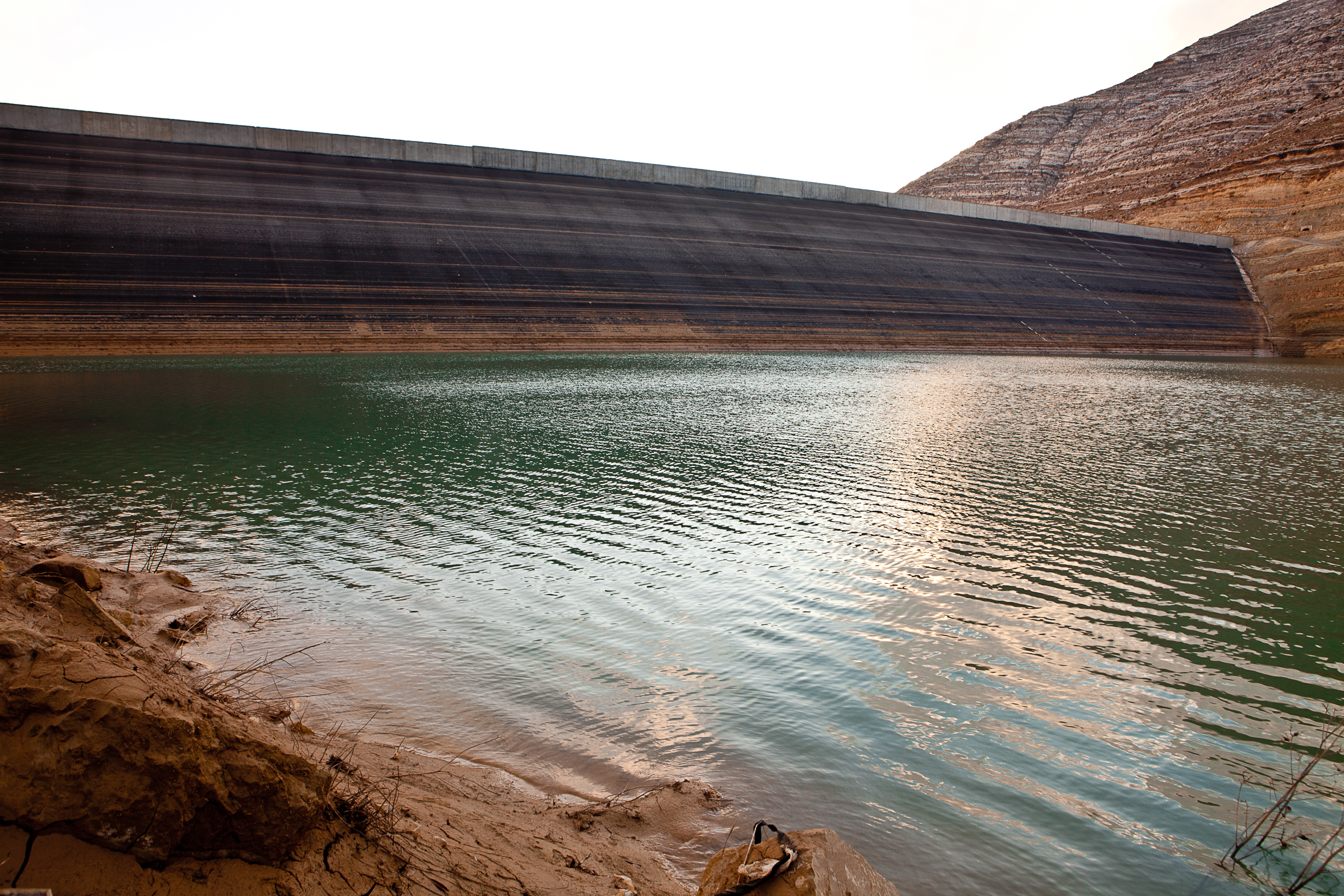
The minuscule amount of water in the Chabrouh dam is the only water storage achievement the Lebanese government has made since the 1960s (Photo: Sam Tarling)

Pierre may be covered in grease, but he is a happy man. Since he joined the family business five years ago, this has been his best year to date. “Actually, it’s been one of the best years ever,” he says. Pierre and his family are in the water transport business, and through the summer and into the autumn he has been busier than ever, shuttling from one side of the capital to the other cashing in where successive governments’ lack of policy formulation has left the state unable to adequately provide a basic human necessity.

 
This year has been particularly dry due to the low amount of snowfall last winter. The season for private water supply typically starts around July and, in theory, ends in October when the first rains start to fall. As Executive went to print at the end of October, Pierre’s business was still booming. Last year, he bought a new water truck and says he has easily covered his investment. That’s because over the course of the peak summer season when water is sparse, prices have risen from a minimum of $6.60 per cubic meter (CM)  (depending on whether the water tank is on the ground or on the roof) to reach at least $13.30 per CM and up to $20 per CM at the end of last month, says Pierre with a smirk. His continuing success is not surprising given that the World Bank (WB) estimates that 75 percent of total household water expenditure in Lebanon is spent on water provided by the private water market. The sector as a whole is estimated to rake in some $87 million per year.

 
In theory, all households should receive an average of 1 CM per day, but in reality the amount of water that comes depends on two factors: the number of hours water is provided by the local water authority, if any, and whether the household decides it wants to follow the law. Because of the government’s previous apparent disinterest in organizing the sector, instead of meters and a pay-as-you-go system, households in Lebanon pay one annual lump sum that is disconnected from actual consumption. The cost ranges from $156.5 in Beirut and Mount Lebanon to $117.4 in the Bekaa. Businesses have a different tariff structure depending on the type of establishment.

 
The only mechanism in place to regulate supply is a “gauge,” basically a plastic hole fitted to the pipe that brings water to households. “Those who remove the gauge get more and those who keep it get less than 1 CM per day,” says Abdo Tayar, advisor to the minister of energy and water and the person spearheading the country’s water strategy formulation.


Depending on the season and the location, water is supplied daily from three to 22 hours per day, according to data from the Ministry of Energy and Water’s (MoEW) draft water strategy acquired by Executive. Speak to Beirut residents in the summer, however, and it is not uncommon to hear them complain of days on end without water. That’s because, unlike electricity, people outside the capital have considerably better supply than those inside it. Officially, residents of Beirut receive three hours of supply per day in the low season and 13 hours in the high season, while the residents of north Lebanon receive 22 hours of supply year-round. Perhaps due to the fact that a private contractor manages water distribution in Tripoli, the city receives running potable water 24 hours a day.


No good reason
The lack of water at the tap would perhaps be understandable if Lebanon was as arid as Jordan or Saudi Arabia. But Lebanon is the only country in the Middle East that does not contain a desert and comes second only to Iraq in terms of renewable water sources, according to the Food and Agriculture Organization of the United Nations (FAO). The three main river basins cover about 45 percent of the country and Lebanon is littered with springs and small tributaries.
But even with these resources, if water is mismanaged, the Lebanese might as well be living in the middle of the Sahara. According to the World Bank, “if no actions are taken to improve efficiency and increase storage capacity, it is estimated that the seasonal imbalance of water resources will lead to chronic water shortages by 2020.”


According to a report by the global water consultancy Global Water Intelligence, Lebanon is already a water-scarce nation, with renewable water resources estimated at 926 CM per capita per year in 2009: just below the 1,000 CM per capita per year threshold that defines ‘water poverty’. That too is expected to fall to 839 CM per capita per year by 2015 because of population growth, and that’s before climate change is taken into account.


“We are going into a phase where we are going to have less and less snow and more and more rain,” says Nadim Farajallah, professor of hydrology and water resources at the American University of Beirut (AUB). “Snow is what recharges our ground water; rain just runs off into the sea.”


Even with all these signs pointing to impending disaster, the real problem may in fact be far worse, since no one really knows the exact amount of Lebanon’s water resources. In the late 1960s and early 1970s, the United Nations Development Program (UNDP) mapped Lebanon’s underground geological structures, including its aquifers. Until today the country has not performed an assessment of how much water these aquifers actually contain or how they can be exploited, and the UNDP’s maps do not cover all of the country, according to Tayar at the energy and water ministry.


Farajallah adds that, “Money has to be spent on this. We need to look at each aquifer, characterize it, understand how much it yields and what is a safe yield. You have to extract as much as you recharge if you want to sustain your source.”
Lacking this research, Lebanon has to rely solely on geological data and extrapolate using a margin-of-error system to reach ‘guesstimates’ of resource levels. At present a project is being undertaken by the Lebanese Center for Water Management and Conservation, an $1.8 million joint UNDP and MoEW endeavor to turn these geological maps into hydrogeological maps. The Italian Cooperation, Italy’s official development agency, will pick up the tab.


The tables have turned
Meanwhile Lebanon’s water table, the level where groundwater rests in a given area, has been falling drastically across the county. To get an idea of the increasing severity of this problem, one need only consider that the water table at the AUB’s farm in the Bekaa rested at between 5 to 6 meters below ground-level in the 1950s, according to Farajallah; today that level has fallen to between 60 to 70 meters down. “That’s one meter per year or so and that’s a hell of a lot,” he says. The level is falling because the country is extracting more groundwater than can be replenished naturally, especially during a dry year such as this one. Tayar estimates that, on average, groundwater replenishment is around 500 million CM per year. This figure is being exceeded by usage due to drilling of unauthorized wells across the country in addition to lax and corrupt enforcement.


“Now there is a price mechanism! It’s known what the price is for protection from the local law enforcement agent” to tap into the government water source, says Tayar, who laments that the ministry does not have the authority to stop illegal drilling or hookups. Not only do illegal wells deplete the country’s natural resources, over-extraction also irreparably damages geological aquifers, adding to the burden of future generations.


In addition, the lowering of the water table in coastal areas creates a phenomena known as ‘saltwater intrusion,’ whereby water from the sea enters freshwater aquifers because of differences in underground water pressure. The process is very difficult to reverse and, in any case, “the harm has been done,” says Farajallah. “We are in Starbucks right now,” he says during an interview in Hamra. “I suggest you go to the bathroom, wash your hands then taste the water. It’s salty. And this is the case in many coastal areas from Beirut to Choueifat.”


The ministry estimates that the total number of private wells exceeds 42,000, as compared to the 620 officially sanctioned and government-owned wells. Private wells’ total yield is estimated at some 440 million CM per year while the government wells draw only 260 million CM. Due to the illegal nature of these wells, however, Tayar admits that their number could be as much as twice the official estimate.


“At the end of the day we can be as hardheaded as we want but the reason someone drills a well is because the government is not providing them with the right amount of water,” says Tayar. “It all goes back to this vicious cycle. I cannot come today and say, ‘close the wells now and bring the levels to equilibrium,’ because there is no alternative for people.” He adds that the issue will have to be resolved gradually, a process that will take a number of years.


Watch what you eat
Of all the problems illegal drilling causes, the most significant may well be its affect on the quality of groundwater. That quality is getting exponentially worse due to the fact that when many of Beirut’s homes were built, they were not connected to the sewage system. As a result people drilled what are known as dry wells and discarded their sewage into them. “Some people had generous contractors who gifted them a cracked dry well called a shattered well,” says Farajallah sarcastically. “That cracked well connected to subterranean water, groundwater, and this caused most of groundwater to be polluted by sewage.”


Since 52 percent of groundwater in the country is being used for irrigation, this means in some areas water contaminated with sewage is being used to water crops. Hardly an appetizing thought. “The layer above groundwater might be contaminated but soil acts as a filter. But if it’s discharged directly, as is the case with a lot of the dry wells, that’s a major problem,” says Farajallah. “Just look at the number of gastrointestinal flus and problems that we have.”
The logical solution to this problem would be to have a proper wastewater treatment system in the country.


Typically some 80 to 85 percent of household water is returned as wastewater and, of that, anywhere from 60 to 80 percent can be reused and even purified to the point where it is drinkable. To reach that point wastewater requires three levels of treatment — something which does not seem to have been the priority of successive governments. A World Bank report released last year described second level treatment as “inexistent.” Most collected wastewater is discharged untreated into rivers and the sea, costing the country an equivalent of more that 1 percent of GDP (around $340 million) due to environmental degradation, according to the World Bank.

Although the percentage of wastewater network coverage is 6 percent above the Middle East and North Africa average of 48 percent, the portion that actually gets treated is an abysmal 4 percent, according to the MoEW’s estimations. The frequency of bacterial contamination also varies throughout the country, ranging from 0 percent in some rural areas to 90 percent in urban centers, according to official data. According to an international development expert, who requested anonymity due to the sensitivity of their relationship with the government, the amount of coliform bacteria — commonly used as an indicator of sanitary quality — in Beirut’s tap water is around 80,000 particles per milliliter. The expert added that the global standard for potable water is no more than 100 particles per milliliter.

Sewage and stormwater pour onto the public beach in Beirut (Photo: Sam Tarling)

Surprisingly, the problem is not a lack of funding; “The amount of money spent by donors on wastewater treatment is phenomenal and we have practically nothing to show for it,” says Farajallah. The issue centers on the fact that water laws are not fully applied and there is little coordination between stakeholders, such as international donors, the Council for Development and Reconstruction (CDR), the MoEW, regional Water Establishments (WEs) and municipalities.


In the early part of this decade, laws were passed that created five regional water establishments to operate within policy set by the ministry. Wastewater is a perfect example of how this has not happened. Today, most wastewater services are provided and financed by municipalities and small private sector operators.


Law 221, the most recent water reform law from 2000, says that the MoEW should “design, study, and install major water facilities,” but in practice the CDR oversees the building of wastewater treatment plants and then hands them over to the MoEW, says the World Bank. The latter is also in contravention to the law because WEs are supposed to handle “collection, treatment, and disposal of wastewater,” but do not do so because of a lack of resources and capacity. All institutions were meant to be integrated into the WEs two years after the law was passed, but by that time the WEs had only just been set up.


The CDR has also built several wastewater treatment plants which lay idle because “of limited capacity and unfinished water supply network,” according to the World Bank. The Bank financed a plant in Baalbek that was supposed to serve 15,000 people, but has remained nothing more than a concrete ornament since 2000 because of delays in the construction of a wastewater network. Other plants suffer the same fate because they don’t have the electricity, the staff, or the money to run them once the funding for construction runs out.Further evidence of the lack of planning or seriousness on the government’s behalf is the number of vacancies at the MoEW and the WEs. Of the 4,050 staff needed, only 1,334 of the positions are filled at present and the government has put a freeze on new hiring.


“Changing the organizational structures of the WEs will be a long process that will require government approval,” says Manfred Scheu, principal advisor at the German Agency for Technical Cooperation,  which is currently aiding the ministry in its draft strategy. “We don’t know which way this will go [politically] and the minister also has his own political agenda.”


But even with all these complications, the draft strategy for the sector notes that within the WEs, routine preventative maintenance of the water network can make up as little as 0.1 percent of total capital costs of civil works. Given that around 48 percent of water in the distribution and collection network is unaccounted for due in part to poor maintenance and antiquated infrastructure, that this investment is so meager speaks volumes about the priority of reform. Furthermore, only network assets in Beirut and Mount Lebanon are fully documented, with the average age of pipes in these areas around 30 years old, while Farajallah claims that there is a section of Beirut’s network in the Corniche El Nahr area that dates back to the Ottoman times.“Saving on distribution is similar to trying to find a new resource,” says Tayar. “The customer doesn’t care if you are treating the pipe or building a dam. In the end they care about more clean water in the tap.”


Damn Dams
Ultimately, even if groundwater is managed well, the networks are maintained and upgraded, and the MoEW and WEs are reformed, the country will still need to store and skillfully manage its surface water. At the moment the country has only around 235 million CM of dam storage capacity, which represents some 6 percent of total renewable water resources. The equivalent ratio of dam storage capacity to renewable water resources in neighboring Syria is 117 percent and in Egypt, a country that is mostly desert, that number is 295 percent.


Most of the storage capacity in Lebanon is in an aging dam in the Qaraoun district on the upper Litani River, which has a technical storage capacity of 220 million CM, though the effective storage capacity is 160 million CM. The Qaraoun dam, built in the 1960s, is rarely cleaned, if at all — this causes sediment to build up at a rate of around half a meter per year, decreasing the amount the dam can hold, according to the international development expert.


As Tayar explains, many of the areas that are upstream from the dam also discharge their untreated water into rivers that feed the dam, thus increasing the amount of polluted water that is then siphoned off to citizens for irrigation.
According to the Food and Agriculture Organization of the United Nations, “geological conditions make construction of storage dams difficult.” Lebanon’s newest dam at Chabrouh (with 15 million CM in storage capacity) had to undergo a “surgical operation,” says Tayar, to close off areas of the dam’s basin that contain carbonate rocks that leak water into the ground, significantly increasing the cost.


He estimates that around 60 to 70 percent of Lebanon is covered by such rocks, called karstic formations, which would require reservoir basins to be made watertight to avoid leakage, causing construction costs to skyrocket.
Tayar insists that no dams will be proposed in the upcoming strategy until they are deemed economically and technically feasible. However, the alternative would be to build costly desalination plants on prime real estate next to the sea and pump salt into the ocean, killing sea life and damaging the marine ecosystem, says Farajallah.


At the moment the only completed plan to improve water management comes in the form of a document that covers the period from 2000 to 2010 called the Integrated Water Resource Management (IWRM) plan.
“It wasn’t really a strategy, it was mostly about construction of dams,” says Scheu from the German development agency. The current minister seems to be following this strategy, though he has met much resistance from the finance ministry, who say that these projects are too expensive for the debt-laden state. Currently two dams and their reservoirs are being built at Brissa in North Lebanon and Qaisamani in the Mount Lebanon area with planned completion dates in 2011 and 2013 respectively; their combined storage capacity will be only some 2.5 million CM, according to Tayar.


Dams are costly to build, but they are also costly to maintain. Like wastewater, if a dam is built and there are no staff to run it then the investment effectively becomes money down the drain. “Dams are not necessarily a fix if organizational structures are not addressed,” says Scheu. Moreover, long and expensive conveyance structures will have to be built to transport water from the dams to households and businesses.


Last month the Lebanese press reported that the World Bank had granted Lebanon $200 million to re-route the Awali River, near Saida, to Beirut. When Executive contacted the World Bank for confirmation, it turned out that only the initial proposal specifications had been approved, and the loan application had been sent to the appropriate board of directors for approval.


The CDR has chosen Washington-based consultant MWH to perform a feasibility study for the project, the initial cost of which is estimated at some $350 million and aims bring an extra 260 million liters of water per day to Beirut. This would help close the capital’s water deficit, which in October stood at an estimated 368 million liter per day. That is, of course, if the project receives financing.


Fortunately for Lebanon, it has a host of willing international financiers, many of whom have already pumped millions of dollars into developing the sector. Just last month the energy minister announced that Iran would invest in Lebanon’s energy and water sectors to the tune of around $450 million.


But what Lebanon really needs is technical assistance and organizational reform, which will not always come from donors. “Arab and Iranian donors are different from Western ones and they won’t necessarily insist on organizational reform,” says Scheu.


Other sources of income are being mulled by the MoEW, which is eager to transition away from lump sum payments to metered billing systems. This would naturally bring revenues in line with consumption and create a sense of the economic worth of water among the population. But Tayar insists that this will have to be done gradually and piloted in specific areas that are provided with the 24-hour service first. Currently, only 10 percent of Lebanon’s consumers have meters but they still pay the standard lump-sum fee.

All that precious water just runs into the sea (Photo: Sam Tarling)

“Starting 2011, if you build a new house, you can no longer apply for a gauge. It will disappear and only meters will be operational,” says Tayar. But it doesn’t necessarily follow that a metered billing system will be in place; it is a highly sensitive political issue and requires a cabinet decision.


Other sources of revenue include a wastewater tariff to cover the costs of managing wastewater, which are now only partially covered by municipal fees. Because irrigation makes up around two-thirds of Lebanon’s total water usage (groundwater plus surface water) and “irrigation practices are much worse than water supply practices,” according to Tayar, improving the efficiency of irrigation tariff collection will go a long way in making Lebanon’s water sector economically viable. Presently, more than half the irrigation schemes in the country do not have “adequate operations and maintenance,” according to the draft strategy, and most small and medium-sized schemes have no formal organization at all.

Southern sabotage
Whatever action Lebanon takes to bring its water sector up to scratch, it still has little control over how Israel will react to developments on this side of the border. The only understanding that exists is a tacit agreement between the Arab League and Israel drafted in the 1950s called the Johnston Plan, whereby Lebanon would draw only 35 million CM from the Hasbani River, which was proposed but never ratified.


In August of 2002, Lebanon announced that it would draw an additional five million CM from the Hasbani River, which is upstream from Israel and forms the headwaters of Lake Tiberius and the Jordan River. Then Israeli Prime Minister Ariel Sharon claimed that the action was a threat to Israel’s security and threatened all out war against Lebanon, prompting a deluge of international mediation to pacify the situation.
“When the Israelis saw that we were taking less than 10 percent of what was allowed, they shut up,” says Farajallah. In the end, Lebanon buckled under the pressure and only partly implemented the project, though Lebanese politicians claimed it a victory over the “Zionist entity.”


“We are not following any plan except for the natural plan. The water is coming up on our land and we have the right to use it according to our needs. No one can tell us how much we can use and there are — to this date —no agreements on how much we can use,” says Tayar defiantly.

The plan of all plans
Many experts have praised the strategy currently being prepared by the ministry as a good first step. So far, a baseline assessment has been completed and supply-demand forecasting is currently being conducted. The ministry aims to complete a comprehensive strategy and investment plan and present it to cabinet for approval by the end of this year. According to Tayar, the plan will include some sort of private sector participation that will likely come in the form of a build-operate-transfer contract. That will also require a draft public-private partnership law to be passed by Lebanon’s sluggish parliament, which has only managed to pass two piecemeal reform laws since it was sworn in well over a year ago.


Even if cabinet approves the plan, it means little by itself, as funding cannot be provided by the state until parliamentary ratification of a national budget, something that has not occurred since 2004. Previous experience shows that this has acted as the main stumbling block to reform; the implementation of the cabinet-approved electricity reform plan is stalled for this very reason. If recent talk of a cabinet reshuffle pans out, any and all cabinet-ratified plans not yet voted on by parliament would promptly be thrown out the window.


Given the abysmal state of the water sector, the answer to why it has not been a priority for successive governments, or the people who voted them into office, may be more entrenched than the problem itself. “Because basically people don’t care,” says Farajallah. “I cannot [think] of another reason.”


First published in Executive Magazine’s November 2010 issue

The democratic deficit

A long and detailed description of the Arab World's democratic failures (Photo: AUB)

The late Winston Churchill once said: “Democracy is the worst form of government, except for all the others that have been tried.” To this day, the governments of the Arab World are still primarily dabbling in the latter. To understand why, an ambitious research project was launched by the American University of Beirut’s professor Samir Makdisi and the Dubai Economic Council’s Ibrahim ElBadawi, resulting in a new book, entitled “Democracy in the Arab World: Explaining the Deficit” (Routledge; 331 pages; $78.60), which comprises their own work alongside 18 renowned scholars.

Funded by a $339,000 grant from the Canadian International Development and Research Center (IDRC), the three-year research project employs a double-pronged approach to the issue of why the Arab World has been so slow to embrace true representative government.

Firstly, Makdisi, ElBedawi and World Bank Economist Gary Milante develop their own cross-country model (EMM model) by testing various elements specific to the Arab region with the objective of identifying which of them explain the persisting Arab “ democracy deficit” despite the region’s notable socio-economic development in the past 5 to 6 decades. Among others, these elements include regional wars, oil rents, religion and colonial history—something the researchers coin as the ‘Arab Dummy’ variable.

The three scholars then run econometric regressions within these parameters using a variety of existing tools and indices to measure the extent to which real democratic government has taken hold in the region. The most notable conclusions drawn from this study are that oil wealth and conflict, particularly the ongoing Palestine conflict, are the most relevant factors constraining the democratization process in the Arab region.

“These are the specific characteristics of the Arab region that explain the democracy deficit unlike other regions where settlements of conflict and economic development led to the democratization process,” says Makdisi. Given the importance of the conflict factor, he believes that if the Palestinian question in particular is justly resolved then oil wealth, which has been used to co-opt elites and maintain autocratic power, would be insufficient in preventing the rise of pro-reform groups who would, in turn, demand a change in existing social contracts.

Using the EMM model, members of the research team then apply it to specific country case studies to probe to what extent the major conclusions of the cross country work apply in Iraq, Sudan, Lebanon, Algeria, Egypt, Jordan, Syria and the Arabian Gulf.

“In most cases oil and conflicts are identified as explanatory variables, though to varying degrees from one country to another” says Makdisi. The research concludes that countries in close proximity to the Arab-Israeli conflict suffered much more from its negative effect on the democratization process than countries further away such as Algeria or the Gulf counties. At the same time, these oil rich countries have been able to protract their autocratic rule through what the Arab Planning Institute Economist Belkacem Laabas and University of Algiers Professor Ammar Bouhouch coin the ‘authoritarian bargain’: the tradeoff between economic welfare and political rights coupled with the fragmentation of opposition movements.

One of the more telling aspects of the research is that it empirically supports major scholarly work that discount “culturalist” explanations for undemocratic regimes in the Arab World, especially by scholars from outside the region. “It is noteworthy that other societies in the developing world  have similar social characteristics attributable to Arab World, yet they still made  the transition to democracy,” says Makdisi.

That said, the research does include the analysis of several prominent non-Arab scholars but draws mostly from the work of independent Arab scholars both inside and outside the Arab region. One inherent theme that runs throughout the study is that the true significance of the rentier thesis (the impact of oil wealth on governance) can be properly understood only if situated in the socio-political context of the countries concerned.

Another significant finding is that “as a religion, neither Islam nor Christianity turn out to be significant explanatory factors as to why we have had persistent autocracy, contrary to what some writers have claimed ” explains Makdisi. “That does not mean that religion is not ‘instrumentalized’ to further governments’ own interests to stay in power.”

Indeed, as the University of Westminster’s Abdelwahab El-Affendi notes in the book, the notion that “an individual or class of individuals is better placed to resolve matters of dispute than the community as a whole contradicts another Islamic tenant: that no priesthood is permitted or acceptable.”

The abuse of region is only one of the many facets the work identifies as a tool of autocratic rule. Throughout the research, a vicious cycle is revealed whereby powerful autocrats claim they are the last line of defense against fundamentalism, external powers support them, opposition movements are crushed or divided, civil society and elites are co-opted, and the cycle repeats itself each time opposition to autocratic rule arises.

Having identified major elements behind the persistence of the Arab democracy deficit, Makdisi and Elbedawi have now been tasked with identifying the conditions that would lead to a transition from autocracy to democracy. As a result of their findings, the IDRC has approved a further grant to produce a sequel to the current study using the same methodology. The research is expected to take 2.5 to 3 years and research teams are currently being assembled.

“We found out that the method we used—a thematic paper followed by case studies—was quite useful and efficient and were lucky that we able to assemble a really good research team,” Makdisi says. “We plan to follow a similar approach in the new project to uncover the conditions that ought to prevail for the Arab World to transition from a state of autocracy to a state of democracy.”

First published online by the American University of Beirut

Lebanon’s other government

One has to wonder what they are doing in there

By Sami Halabi

During the civil war, when the residents of Lebanon would give directions, they could always rely on one landmark from which to guide visitors to their homes — the mountain of garbage that had built up in each neighborhood over the years of violence and absence of a functioning state. Today those mountains may be gone, but other remnants of those terrible years are still as pungent as the stench of rotting trash.

After the war ended, Lebanon’s public institutions were literally in a shambles. “We used to go to general directors of ministries and they would say to us, ‘before you talk to me about computers there is the window that needs fixing because the employees are freezing’,” says Nasser Israoui, project manager of United Nations Development Program (UNDP) at the Office of the Minister of State for Administrative Reform (OMSAR).

Recognizing the dire need for reform, in 1992 an agreement was made between the Government of Lebanon and the UNDP to begin a joint partnership at the finance ministry, aimed at reforming the institution. The agreement was the start of what became known as the ‘UNDP program.’

As Executive went to press the program consisted of 67 projects, and is now influential across ministries and public administrations throughout Lebanon. Their activities range from clearing mines to drafting laws, effectively creating “a different executive arm that could provide policy formulation as well as policy implementation in key ministries,” says Hassan Krayem, policy specialist and portfolio manager of the governance program at the UNDP.

The expansion of the projects began at the Office of the Minister for Administrative Reform (OMSAR), which itself was created as a result of a needs assessment study of public administrations carried out in the mid-1990s by the Lebanese government with money from various donors.

At the time, in order to channel donor money for reforms, a UNDP unit was established at OMSAR. “It was supposed to play the role of a catalyst; this was the plan,” says Israoui, who doubles as the director of the technical cooperation unit at OMSAR. “Unfortunately, this did not take place.”

Fat and dysfunctional government

Since the UNDP unit which today comprises around 40 percent of OMSAR’s staff — was created, the organizational structures at most ministries have not been made more efficient. Of the 18 new organizational structures proposed to ministries by OMSAR, only the environment and sports ministries have implemented them.

The problem is that OMSAR has tiny teeth, if any. Unlike the other ministries, it was not created by any law but exists only as a legal entity through a vote of confidence it received from parliament and the budget it receives from the finance ministry. It cannot impose reform policies on public administrations nor can it, for instance, actually enter into ministries to review staff performance and then recommend they be promoted or fired. The only way OMSAR can effectively push through reform is if the minister, currently Hezbollah Member of Parliament Mohamad Fneish, takes the case to the cabinet that then, with a two-thirds majority, can impose reform on public institutions. That scenario has yet to occur.

Without new organizational structures, ministries are subject to the haphazard dictates of whichever minister happens to be on the top of the pyramid — and there have been many, given the amount of times the cabinet has been reshuffled since the civil war. What this also means is that a review of salary structures is impossible, which has been identified by every person Executive interviewed for this article as one of, if not the largest, hurdle to civil service reform.

The lack of a proper organizational structure has also resulted in a bizarre situation in which ministries are bloated and over-staffed and yet, at the same time, chronically understaffed in key positions, and therefore they cannot fulfill the basic functions of their mandate. This does not look to be changing anytime soon because of the government’s apparent, yet unwritten, policy of halting new hires in public administration, with the exception of the security services and the army.

If public administrations remain bodies of sectarian patronage then scenes like these from the civil war look all the more likely (Photo: AFP/KHALIL DEHAINI)

“You know that further employment is [essentially] not allowed,” says Israoui. “There is some but it is limited.”

According to a source at the UNDP who spoke on condition of anonymity, in the Lebanese civil service there are three levels of employees: those within the organizational structure, contracted employees and temporary workers. The first two categories are subject to the authority of the Civil Service Board (CSB), which regulates public sector employment and is independent of any ministry, including the labor ministry, but reports to the prime minister’s office. The temps, however, are not regulated by the CSB and are appointed by the ministry.

The issue is that, more often than not, the number of contractual workers and temps exceeds those required by the departments.  This, in effect, results in staff employed at the ministries and in public administration without a position, receiving salaries paid for by the people who in turn suffer from inefficient public services.

It’s an open secret that these ‘workers’ — many of whom do not do the jobs they were hired for — are often little more than political appointments, turning civil service bodies into patronage departments. For instance, the latest plan to reform the electricity sector in Lebanon noted that Electricité du Liban, the state-owned electricity company, “employs around 2,000 contractual and daily workers, many of whom are political appointees and unqualified workers.”

“If you want to recruit an effective team that can implement reforms, new policies and can speed up the delivery of services and so on… in the structure of the current state you need civil service reform, a new salary scale, new ethics and probably it will take years,” says Krayem with a half sigh.

Karim Makdisi, associate director of the Issam Fares Institute for Public Policy (IFI) and assistant professor of political science at the American University of Beirut, suggests that Lebanon’s political class needs to be pragmatic about getting rid of the ineffectual workers they themselves hired.

“Between yourselves,” he says, as if speaking to the political patrons, “pay these guys off in a lump sum. If someone has been in a ministry for 10 years and was a political appointment, and they are not coming to the office, either fire them or figure it out.”

“It’s more than patronage; its control, its power,” Makdisi adds. “If you are [Prime Minister Saad] Hariri or [Parliamentary Speaker Nabih] Berri you come and you say ‘when you work for me, in or out of government, you are my guy, you are not a Lebanese government employee.’ As long as you have that mentality, all the reform business is nonsensical.”

The other civil service

Until the government gets its act together, the UNDP projects are continuing to do much of its work. The stated purpose of the projects is to fill specific gaps at the various ministries and public administrations, build their capacities, then pull out and let the government bodies do the work themselves. As yet they have not had the opportunity to pull out, effectively creating a counter-bureaucracy that circumvents the malfunctioning public institutions.

“We try to make sure that what we are providing [in terms of staff] is not available and could not be available because of the lack of civil service reform and the salary scale,” says Krayem, adding that “99 percent” of their staff is Lebanese, unlike most countries the UNDP works in. Though not universally true, UNDP staff tend to meet the qualifications of the high-level advisory positions they fill, and demand corresponding salaries.

As part of some of its projects, the UNDP ends up providing basic services to the public instead of the ministries or municipalities doing so. In collaboration with the Council for Development and Reconstruction (CDR), headed by current Future Movement MP Samir el-Jisr, (which itself does much of the work the public works ministry should be responsible for), the UNDP has commissioned pavement repairs, purchased septic trucks, built storm water conduits and rehabilitated public parks.

According to the IFI’s Makdisi, when Rafiq Hariri came to power in the early 1990s he “consciously” created a counter-bureaucracy with teams of advisors and quasi-government institutions including the CDR and Solidere, to circumvent the inefficient and patronage-based state structure, but also to consolidate power.

“The logic at the time was too much red tape and too much Syrian influence and ‘I’m a businessman and just want to do my thing’. What happened over time is they replaced these teams with UNDP,” he says. “The creation of counter-bureaucracies has its logic up to a point. The problem is that at best, you are talking about a transitory period within which you are training your people so that they can take over within a plan. Those of us who cared to know at the time knew that it was not going to happen, and it didn’t.” The CDR was not available for comment.

“These UNDP projects have been criticized many times as parallel administrations,” says Mazen Hanna, economic adviser to the prime minister, who did not reject the idea outright but suggested that such criticism is politically motivated rather than rooted in actual opposition to the UNDP projects. “Most of the ministers that criticized UNDP projects did not criticize them when they became ministers. In the absence of a civil service reform overhaul the need for UNDP projects will always remain.”

Some of the projects that are ongoing are partnered with opposition ministers, but many — if not all — of the project documents are missing the opposition minister’s signature. This was the case with the “Country Energy Efficiency and Renewable Energy Demonstration Project for the Recovery of Lebanon” (CEDRO), that would in theory be signed by the opposition energy minister, but instead carries the signatures of only the UNDP and the CDR. In this case, the energy ministry is categorized under “other partners.”

What’s more, the financial scales are heavily tipped toward the projects in the ministries controlled by the ministers from the parliamentary majority, as well as the CDR. The most expensive project the UNDP carries out is at the finance ministry and is budgeted at $18.5 million, followed by a project aimed at increasing decentralization and strengthening strategic partnerships between municipalities of the North and the South, budgeted at $11 million through CDR, with another project at the Ministry of Economics and Trade rounding out the top three at $8.7 million.

How the deal works

Today, in order to start a UNDP program in a public administration, an agreement has to be made between the UNDP and the public body on what is to be done, how long the project will take, and who will pay for it. Depending on the public institution, the project must “reflect the policy of the national coordinator who is either the minister or eventually the CDR,” says Samir Nahas, senior economist at the UNDP project in the office of the prime minister.

Funding for projects comes from three sources: the government, international donors, and the UNDP itself. The amount of money spent has seen exponential growth, increasing by 4.6 times since 2004 and last year reaching $39.1 million. Of late the lion’s share of the money spent has come from “international donors,” who contributed $34.3 million last year.

The UNDP’s breakdown of the money individual government bodies have “committed” to projects since 2004 shows the Ministry of Finance has spent $20.50 million, the Ministry of Telecoms has spent $5.9 million, the Office of the Prime Minister spent some $3.1 million, CDR has $1.8 million, and the Ministry of Agriculture $100,000, totaling $31.4 million. But separate UNDP data for government contributions since 2004 pegs it at $27.7 million — a discrepancy of $3.7 million.

The reason for this, Krayem explains, is that much of the funding from ministries and government bodies comes through a maze of separate bilateral agreements with donors that are then funneled to the UNDP programs. Hence, figuring out how much the government is allocating from the national budget is nearly impossible to do without going into the books of every ministry to find out where all their donor money is coming from and going to.

Still, a closer look at the donor list reveals a strong connection between some UNDP projects and the prime minister’s private business interests. Solidere, for example, contributed $120,000 to the UNDP this year. Krayem explains that the money was an in-kind contribution for an environmental campaign, and as such insists that there is no conflict of interest. The “Institutional Support to the Ministry of Environment,” project began this year under Future Movement Minister Mohamad Rahal.

“Political affiliation is none of our business; we work with Berri or Hariri,” says Krayem who stressed that the UNDP is “apolitical, but not naive.”

…but for how long?

Politics aside, there is little doubt that Lebanon has benefited greatly from the expansion of UNDP projects. At the moment many of the projects are being evaluated to see whether they will be renewed, extended, changed or discarded at the end of the year. The projects include those at the finance ministry, the Ministry of Economics and Trade, poverty reduction at the ministry of social affairs, support to mine affected communities, support to the Lebanese parliament, strengthening the electoral process in Lebanon, and improving the performance of the justice ministry, among others.

While Hanna says it is unlikely UNDP projects will ever become larger than their affiliated public institutions, he believes that they will continue to grow at the same pace they have since 2004. Krayem disagrees, noting that thanks to the country’s economic growth and increasing per capita income, Lebanon could soon graduate to the UN designation of ‘net contributing country’ (NCC), which would make it ineligible for certain levels of developmental support. The UN press office in New York, however, said Lebanon’s case was “far from decided.”

“The argument has been made and sold to the UN that the developmental needs of Lebanon are not affected by the GDP growth because there are imbalances such as regional imbalances and so on,” says Hanna. Makdisi also agrees that the transition to NCC will have no effect. “We have a class of political elite who are very adept at building royal palaces and begging for money from abroad,” he quips.

Conditional love

“The problem is that the system is malignant and the UNDP are doing the minimum to keep it afloat and give it a certain respectability,” says Makdisi. Hanna adds: “You have this patient [Lebanon’s civil service], thank god you have this doctor because without this doctor this patient will die.”

Getting around patronage and sectarianism is a minefield that the UNDP walks through every day. (Photo: Jihad Samhat)

One way to force the issue forward would be for the UNDP to offer further assistance on a conditional basis, but Nahas says it is not the UNDP’s job to impose reform on the government. “We cannot intervene if there is a director general or a staff that is not performing, this is their duty,” Krayem adds.

Without that reform the ministries and public administration bodies continue to work without a system to measure their output or effectiveness. Only the environment ministry and the public works ministry have taken on pilot programs to implement systems similar to the Key Performance Indicators used by the UNDP.

Ministries also do not have human resources (HR) departments, although a law has been proposed by OMSAR to implement HR departments in all ministries. As such, the only way that their performance can be evaluated is by the various ministers and heads of administrations. This runs contrary to the constitutional principle of administrative decentralization enshrined in the Taef Accord.

More fundamentally, what the Taef Accords also proposed was the implementation of a process to abolish political sectarianism. This has yet to happen and the ongoing sectarian division of the government hampers the creation of open, effective governing bodies.

“As long as I have Shia, Maronite, Sunni, Greek Orthodox and all the politicians and their interests, that’s it — you have a system that is essentially dysfunctional,” says Krayem. “You cannot imagine that your children will live in this system. But this is what I thought when I was young and I’m sure my father thought the same when he was young too.”

First published in Executive Magazine’s October 2010 issue.

Dealing with the devil

(Illustration: Executive Magazine/Karim al-Dahdah)

by Sami Halabi

Summer in the Middle East is typically a time when life slows down;  business deals are put off until everyone has finished their vacations and the weather has cooled off. So in August when Credit Suisse issued a statement that it was embarking on a $1 billion-plus fund “with a small group of Credit Suisse’s key shareholders,” it perhaps thought that no one would notice.

Not so. Almost immediately the Israeli press picked up on the announcement and began to report that the Jewish state’s economic prowess had once again managed to circumvent the Arab boycott. The reason being that Credit Suisse’s largest shareholders are the Qatari government’s sovereign wealth fund, the Qatar Investment Authority (QIA) and the Saudi Olayan Group, who own 8.9 percent and 6.6 percent of Credit Suisse respectively, alongside Koor Industries (3.24 percent owners) — part of influential Israeli businessman Nochi Dankner’s empire.

Then it was the Western press’ turn to jump on the bandwagon with Reuters reporting that Koor’s parent company, Dankner’s IDB Group, would put up $250 million through its subsidiaries Koor and Cal Insurance — each contributing $125 million — to be matched by an equal contributions from “Credit Suisse and two of the bank’s largest shareholders.”

A sensitive issue

The QIA and the Olayan Group did not respond to Executive’s repeated requests for comment, while Credit Suisse said that they “don’t disclose or comment on the parties.” The query apparently raised some eyebrows, as several days after the request was made Executive was contacted by Credit Suisse’s Middle Eastern Public Relations contractor to confirm if it intended to cover the story.

“At a time when Israel is not exactly popular around the world, particularly the Arab world, the agreement by two large investment companies from the Gulf states to cooperate with an Israeli group is no trivial matter. It can even be assumed that they will come under fire for it,” wrote Israeli columnist Irit Avissar in business newspaper Globes on the day the announcement was made. “For the Saudis this is less worrying. There it’s a matter of a private body that can always use the Qatar government as a fig leaf for the approval of an investment alongside an Israeli company. The participation of Qatar, however, has real significance, because that is a matter of a sovereign fund of a very rich and important Arab country.”

The fact that the announcement came at a time when Israel and the Palestinian Authority were debating whether to re-engage in direct peace negotiations has prompted some to suggest that the impetus for the deal was a political sweetener for the Israeli’s via the Qataris.  “[Qatar’s] role in the peace process is to lubricate and the only thing they have to lubricate with is money and increasing normalization by trying to incentivize the Israelis,” said Karim Makdisi, professor of political studies and associate director of the Issam Fares Institute for Public Policy at the American University of Beirut. “It’s like a woman lifting her skirt and showing you her leg saying: ‘Come on board, and you are going to get a lot of pleasure out of this.’”

It is difficult to gauge whether the move is in line with the QIA’s previous investment strategy because, given that the fund is considered one of the world’s less transparent SWFs, few people are really sure what that strategy is. According to the Linaburg-Maduell Transparency Index developed by the United States-based think tank the Sovereign Wealth Fund Institute, the QIA features on the lower half of the index with a score of 5 out of 10.

“The exact execution of the investment strategy of the QIA is very opaque,” said Sven Behrendt, Associate Scholar at the Carnegie Middle East Center. “There is no information about the strategic asset allocation, like other SWFs publish. Therefore one can only refer to anecdotal evidence.”

Profits over politics

According to Ashby Monk, co-director of the Oxford SWF Project, what that anecdotal evidence suggests is that pure economics rather than political considerations were the impetus for the deal. “I think the QIA saw a unique and compelling investment opportunity, and they took it,” he said. “I really doubt that the QIA is being used as a pawn in some sort of financial diplomacy.”

Monk explained that because the QIA, Olayan and IDB are all major stakeholders in Credit Suisse, it would most likely mean they received better terms and will sit on any investment committee that will make decisions regarding where to place capital.

That would mean that representatives of a Qatari state-owned agency, a Saudi company (albeit based in Greece), and representatives of an Israeli conglomerate will be sitting around the same table mulling investments. It’s not hard to imagine this not going over well with the Arab public, given the ongoing occupation of Palestinian lands.

At the same time, a number of non-Arab SWFs, such as the Norwegian Government Pension Fund, have excluded Israeli companies from their portfolios in response to their actions in the occupied territories.

“What is ironic is that you have an increasingly active global society that is just beginning [to boycott the occupation],” said Makdisi. “This [deal] is the opposite. The Arabs are saying to the Israelis: ‘Come join us in the middle and we will be your main markets, your main buyers of technology and at the same time we will have a common initiative to fight terrorism and the whole Iran/Hezbollah/Shia issue.’”

First published in Executive Magazine’s October 2011 issue.