Provisions for disabled persons were one of the reforms scuppered by Lebanon's politicians (Photo: AP)
When things go wrong, progressive types normally try to fix them. But in Lebanon, this simple logic is rarely followed; more often than not we go along with the situation so as not to stir up tension, in the hopes that somewhere down the line things will fix themselves. But our problems don’t get fixed — they fester.
The Lebanese still adhere to an archaic and dysfunctional municipal system based on the dictates of an Ottoman sultan, with a dash of French colonialism thrown in for good measure. Looking at our current administrative process — in which it takes 67 signatures to fix a truck belonging to a municipality, according to economist Marwan Iskandar — it’s obvious that applying an old system to a new world just doesn’t work.
Change is painfully slow in this country, where political power is tied to sectarian affiliations and local loyalties, and people’s sense of disenfranchisement is so ingrained that it becomes self-fulfilling. Lebanon’s political leaders have a vested interest in maintaining the entrenched patronage systems in their sectarian fiefdoms, which ensure that no major decisions are taken without their consent.
Citizens suffer as a result; around $480 million stuck in the Beirut municipality’s coffers that could be used to develop the city has been tied up for months because the mayor, Abdelmounim Ariss, and the governor, Nassif Kaloosh, are from opposing parties and can’t agree to sign the same piece of paper.
The election process itself is no more democratic than the system of governance. A significant portion of last month’s municipal elections were over before they started, with 15 percent of the seats won uncontested — amounting to 56 council seats and 199 mayoralties. The polls were supposed to be a platform to continue the government’s piecemeal electoral reforms that were introduced in last year’s parliamentary elections. Proposals ranged from the introduction of pre-printed standardized ballots and campaign finance reforms that prevent vote buying, to proportional representation and quotas for women to make for a more balanced outcome.
The much needed reforms would have provided a more democratic and equitable outcome for Lebanon’s voters. However, seeing the status quo that so benefits them threatened, our politicians engaged in the time honored tradition of stalling the matter by reviving age-old excuses that reforms such as lowering the voting age (opposed by all the Maronite-led parties) and allowing non-residents to vote (opposed by non-Christian-led parties) would upset the sectarian “balance” of the country, even though there is scant evidence as to the sectarian impact of either. The constitutional deadline for the elections was duly ignored until it was too late and the reforms had to be abandoned.
With electoral reform dead in the water, lawmakers then went on to neuter the democratic process further with “consensual lists” that allowed the interior minister to announce the “results” of some contests before the actual ballots were cast. And where the Free Patriotic Movement and Hezbollah didn’t get their way with the lists, instead of running a campaign based on policy to defeat their opponents, they packed up and pulled out. The Future Movement and the Nasserites didn’t do much better; after they couldn’t come to agreement over how to divvy up the spoils, their supporters decided to have a punch-up in the polling stations.
But all the blame cannot be laid squarely at the feet of our politicians. After all, if they can get away with making a mockery of the democratic process and still get people to come out and vote for them, then why wouldn’t they take advantage of the situation?
With every year that passes of politics-as-usual, we complain that things aren’t getting any better. But if we genuinely want to see reform, there is no other option than to do what the politicians always tell us will tear the country apart: end confessionalism and change our political and administrative system.
We need to change our mindset and realize that what we let fester will never fix itself — or we should simply shut up and stop complaining.
First published in Executive Magazine’s June Issue.
Protestors gather at Sergels Torg square. (Photo: Assaad Thebian)
By Sami Halabi and Assaad Thebian
The central Sergels Torg square in Stockholm is not the place you would normally expect to hear the words “stop the blockade,” or “boycott Israel,” or even “In our souls and with our blood we support you Palestine,” in Arabic no less.
But that is what happened as thousands of people descended on the square on 31 May in support of the Freedom Flotilla, the name given to the convoy of six passenger and aid ships attacked by the Israeli military in international waters early that morning.
Predominantly Palestinian and Turkish flags flew high above the square as thousands of Swedes of all backgrounds gathered to protest Israel’s actions.
“This is something that Israel has been doing for a long time and it’s obvious that this is contrary to international law no matter how you view the conflict,” said Magnus Alfonson, 25. The sense of anger amongst the crowd was evident in the somber manner that they gazed upon the speakers who stood atop a staircase surrounded by demonstrators many wearing traditional Palestinian kuffiyeh scarves.
Sweden has had rocky relations with Israel in the last year after a Swedish journalist alleged that Israel had stolen organs from Palestinians for use in transplants during the 1990s. Sweden, as did Turkey, Denmark and Greece and several other countries, also summoned the Israeli ambassador in Stockholm for questioning over the fate of some 11 Swedish citizens that were among the passengers of the flotilla which included one Swedish-owned and flagged vessel.
“We want a clarification over what has happened,” Swedish Foreign Minister Carl Bildt told Sveriges Radio. “We know that there are Swedes on some of the ships and we want to know what has happened to them. There appears no reason to question media reports that a Turkish vessel has been boarded, that a fire fight occurred and that people have been killed.”
One of those citizens is world best-selling Swedish author Henning Mankell. Another is Emile Sarsour, a dual Swedish-Palestinian citizen born in a refugee camp in Syria, according to his daughter Samaa Sarsour, a 26 year-old activist and organizer of the protest. While at the demonstration she stated she had just received a phone call from the Swedish foreign ministry telling her that the Swedish embassy in Israel had been denied access to her father and that he was at the Beersheva prison in Israel. She added the official on the phone said the Israeli authorities had said that “maybe” they would gain access to her father the following day.
“It’s obvious that no matter where you stand on the issue, this is a crime against a nonviolent organization,” said Daniel Free, a Jewish Swede also present at the protest.
“Israel must be brought to the international court of justice,” said Zaida Catalan, legal advisor for the local Green Party in the Swedish Parliament to resounding applause before the crowd dispersed.
As for the Swedes still being detained by Israel, their fate remains unclear. However, their resolve may be less ambiguous. “When I told my father I was scared before he left,” said Sarsour, “he said to me that if he as a Palestinian could not do this; who else would?”
First published on Electronic Intifada’s website on June 1, 2010
As the bubble forms, Lebanon's economic policy makers look the other way (Photo: Sam Tarling)
By Sami Halabi
The economic implications of going all-in on Lebanon’s banks
If the global financial crisis taught the world anything, it was that the banking world and the real economy are two arms of the same body. But while countries around the world use both those arms to haul themselves out of recession, Lebanon has for years relied almost solely on its banking sector to drag the country’s economy forward.
“The most powerful section with regards to contribution to [gross domestic product] is the banking sector,” says Simon Neaime, professor and chairperson of the economics department at the American University of Beirut. “If the banking sector is not doing well, Lebanon does not do well.”
Luckily for Lebanon, the sector has been performing marvelously as the alpha banks held $122.17 billion in assets at the end of March 2010, according to the Bankdata financial services. That figure represents a 24.7 percent rise in the past year.
This is also significant for the job market, as the banks are currently the largest private sector employer in the country, according to Nassib Ghobril, head of economic research and analysis at Byblos Bank. Indeed, at the end of 2009 the banking sector accounted for nearly 20,000 jobs, a year-on-year increase of 6.2 percent according to preliminary 2009 results from ABL.
This claim may be somewhat undermined by government figures from 2007 which show that the sector only made up some 2 percent of total private sector employment and 1.6 percent of total employment. Current official statistics on Lebanon’s job market are unavailable due to the government’s apparent inability or disinterest in updating figures.
The ability of employees in the banking sector to contribute to GDP through consumption is dependent on their pay, which totaled $667 million in 2008 (ABL’s latest available figure), accounting for 2.4 percent of total real GDP that year. That works out as an average monthly salary of just under $3,000 per employee for that year.
Employee pay is agreed on a yearly basis between ABL and the Union of Syndicates of Bank Employees (USBE), which is under the General Labor Union. The difference between the highest and lowest paid salaries is currently unavailable as the banks keep them confidential, according to George Hajj, president of the USBE.
Profit over productivity
By nature, the primary means by which a banking sector supports the economy is through lending to allow for consumption and/or investment. This creates jobs that contribute to GDP through further consumption and investment.
The most recent consolidated figures from the Banque du Liban (BDL), Lebanon’s central bank, show total lending to the private sector at the end of February reached $33.2 billion from financial institutions, $25 billion of which came from commercial banks.
As per the latest estimates from the Ministry of Finance, GDP in 2009 hit $34.5 billion, roughly comparable to the $31.6 billion of active loans in the economy at the time.
According to Ghobril, when banks decide how much they will lend to each sector of the economy, they look at how much each sector contributes to GDP and allocate their loan portfolio correspondingly. Yet this approach may not be the most conducive to boosting overall output, as banks limit the amount of loans to more productive sectors such as agriculture and industry.
“When banks give out loans they are after profit, and directing those loans to productive sectors in the economy is not a lucrative business,” says Neaime, explaining that these returns take longer to mature, given that it takes time for the borrower to translate the loans into business growth to make repayments; turnaround on consumer loans, among others, is much shorter.
“When you buy a car you contribute to GDP when you make the purchase but afterwards, that’s it,” he adds. “It’s money lost.”
The most recent figures at the end of February showed lending to agriculture at just 0.8 percent of total lending. But there are some extenuating circumstances at play in Lebanon’s agricultural sector.
“You don’t have companies to lend to, you have small farmers,” says Ghobril. As such, lending to a large part of the agricultural sector is included under the classification “individual lending,” which makes up 22.1 percent of total lending.
Agriculture could be seen as a missed opportunity for the banks, given that despite infrastructure constraints, the sector has been growing. According to Bank Audi, during the first quarter of this year agricultural exports hit $48 million, a 38.7 percent jump in value over the same quarter in 2009, with a corresponding 21.8 percent increase in volume, indicating that the higher value traded was attributable to more than just inflation.
Industry takes a larger share of lending, comprising 11.5 percent of total loans at the end of February 2010, down 1.9 percent since the beginning of 2008. Figures provided by Bank Audi would suggest that this sector has also been showing growth potential, with exports up 11.3 percent in the first quarter of 2010 year-on-year.
Industry has its own problems, however, according to Ghobril, who says the sector is not broken down into sufficiently accurate subcategories, or ‘codes,’ to allow the banks to manage their risk portfolio and allocate more loans to encourage growth.
The Ministry of Finance generally lacks a methodical breakdown of each sector’s contribution to the economy in its GDP calculations, though Ghobril says the Central Administration for Statistics (CAS), Lebanon’s official body for statistics, is currently working on a program to unify subsector codes in the economy.
“As banks we don’t know the subsectors of each industry and their exact size or number. There are overlaps between numbers and codes,” he says.
Nader Keyrouz, head of economic statistics at the CAS, says that the unified codes have actually been completed and are in use at the finance ministry, and have been disseminated to the private sector but are yet to be implemented.
More real estate eggs in banks’ baskets
From what is known about Lebanon’s economic sectors, the lion’s share of loans go to real estate. At the end of last February, loans to the sector totaled $12.2 billion when combining loans for construction, housing and rent.
Using the finance ministry’s latest GDP estimate at the end of 2009, loans to the sector amounted to around 33 percent of the economy at the time. Bank loans to real estate have increased 59 percent from the beginning of 2008 to February 2010.
In light of this recent rapid growth in Lebanese bank exposure to the property market, especially given the catalytic role real estate around the world played in the global financial collapse, one might think it prudent for the banks to show restraint in approaching future growth lest this bubble burst, but alas, there is little to be found:
“I am not at all concerned about any real estate bubble in Lebanon… whatever the banks’ exposure,” says Freddie Baz, chief financial officer at Bank Audi.
There is some rationale behind this thinking, as developers can only leverage their projects by 60 percent and the local market is less speculative than, say, Dubai in 2007. But no matter what precautions are being taken, prudence does not seem to be the trend in the market today. During the first four months of this year construction permits hit 5.1 million square meters, 59 percent more than the total issuance of 2009.
Should something trigger price deflation, or if a slowing economy impacts debtor’s repayment facilities, the consequences could spiral.
“I see it backfiring soon,” says Neaime. “I see a bubble forming because the banks are all venturing into that business and inflating prices, and when you do that there is risk of a crash.”
According to Ramco, a local real estate advisory group, in the five years to February 2010, property prices increased some 120 percent on average at the lower end and 150 percent at the higher end.
Debt impediment
It is understandable that banks focus their lending portfolio on the more profitable, transparent, and — at least in the short-term — less risky segments of the economy. After all, it is not the banks’ role to protect the public economic interest. Yet, when it comes to Lebanon, government policy since the end of the Lebanese Civil War has produced a situation where the government and the banks are “co-dependent,” according to Moody’s investor service, and thus there are many in Lebanese society who hold the banks partly responsible for the current debt situation.
Moreover, because liquidity levels are at an all-time peak and interest rates on deposits in local currency are relatively high, continuing to bankroll the government by buying up treasury bills has become a profitable option — even if it means increasing the volume of their exposure to government paper.
“Let’s not fool ourselves, for the time being, with that much in-flow of money and growth in deposits, the Lebanese economy does not have the means to absorb or to use this money,” says George Abou Jaoude, chairman and general manger of Lebanese Canadian Bank. “And the banks do not have a choice but to go into sovereign securities. Of course, we are trying to go into some sovereign tools abroad, but the return is much lower than the Lebanese ones.”
Last year the government paid out $4.27 billion in debt servicing, while total expenditures amounted to $11.6 billion, finance ministry figures show. This means that more than $1 out of every $3 the Lebanese government spent last year went to pay the interest on money the government owes, largely to Lebanese banks.
At the end of March, the latest available figure, local commercial banks held $29.5 billion in claims on the Lebanese sovereign, according to the BDL, while the gross public debt stood at $51.5 billion.
The future amortization schedule of the debt shows that this year the government will need to roll over $11.1 billion in loans; next year it will be more than $12.8 billion.
A crowd is gathering
As any couple knows, honeymoons don’t last forever. And the situation of late has been something of a honeymoon — one where deposits have grown, spurred by the safety and high interest rates that Lebanon’s banking sector offered during the global financial crisis, and its corresponding ability to lend to the growing public and private sectors.
There are signs that the good times may be coming to a close, however, with the International Monetary Fund predicting growth slowing to 6 percent this year and 4.5 percent in 2011. Mild troughs are not a problem in diversified economies — Lebanon’s, however, is not.
Since banks lend to the private sector according to how large it is and slowing economic growth means the same for private sector growth, banks will be lending Lebanese businesses less. The attractiveness of the Lebanese banking sector — and the trend of high deposit growth — may be susceptible to a slowing economy, not to mention the distraction of new investment opportunities abroad being created by the abatement of the financial crisis.
The BDL has also recently eased restrictions on lending to non-residents, making it more attractive for the banks to lend outside of the economy. While Lebanese interest rates are still high compared to global standards, the trend of falling rates could eventually sour the attractiveness of placing deposits in Lebanon.
Last July, interest rates on Lebanese lira deposits stood at a weighted average of 7.02 percent; in March they had fallen to 6.11 percent. Similarly, the weighted average of dollar deposit interest rates fell from 3.19 percent to 2.86 percent. It is apparent that market sentiment still deems these rates attractive, however, as capital inflows rose 65.4 percent in the first quarter of 2010 relative to 2009, totaling some $4.3 billion.
In the 2010 budget proposal the government projects hiking the deficit by 35.5 percent to $4 billion, which, to a large extent, will have to be borrowed from domestic banks.
Furthermore, government contribution to GDP — basically government spending minus debt servicing — is set to increase by 20 percent to $9.12 billion, or 24 percent of the finance ministry’s total estimated nominal GDP for 2010. Ghobril argues that funding GDP increases through public debt is “absolutely not” sustainable and keeps the banks cautious which, in turn, stems economic stimulation through private sector lending.
Neaime says that: “When government spending goes up, interest rates rise and consumption and investment go down because there is a crowding out effect on private consumption and investment.”
“We are already in a problematic situation but we are benefiting from some short-term factors which are contributing positively to the economy,” he adds. “But these are effects that will soon vanish.”
So while things are good now, it would seem prudent for both the banks and the government to address their, and the economy’s, wider structural issues before they find themselves looking back and saying “what if?”
First published in Executive Magazine’s June 2010 Issue
Its all smiles until its time to do some real governing (Photo: Sam Tarling)
Lebanon’s public figures play games instead of getting serious about government
by Sami Halabi
Optimists have lauded the sight of Lebanon’s politicians playing a game of football together, under the banner “we are one,” as a sign of good faith to mark the 35th anniversary of the Civil War. But for those of us less buoyant in nature, the sight was a slap in the face. We would rather see our public figures stop playing games and start getting serious about governing the country.
The players — a mixture of ministers, members of parliament and members of the Lebanese Football Association — managed to muster “unity” for a full 30 minutes, the duration of the match.
However, once the final whistle was blown — much to the relief of Lebanon’s heavier public figures — the youngest player and only goal scorer, Phalange MP Sami Gemayel, did little to contain his contempt for the opposing team’s captain, Hezbollah MP Ali Ammar.
“It seems that Ali Ammar’s defense strategy is a failure,” Gemayel was quoted as saying in the press, ostensibly alluding to the discussions over a national defense strategy currently being mulled at the National Dialogue sessions.
Playing foul-for-foul, Ammar was quick to boot the ball back into the other end: “Our defense strategy is only directed against the Israeli enemy, and our team did not want to defeat the team of PM Hariri because he is the Prime Minister,” he retorted.
Notably absent from the game were the public, who have been banned from football matches since 2005 due to fears of sectarian violence pouring out into the streets. The irony of this, of course, is that some of the same politicians waddling haplessly across the pitch were the ones to stoke sectarian tensions in the first place.
Thus, with the stands empty, the absence of the public from the political field of play — from parliamentary committees to national dialogue sessions — was extended from the figurative to the literal.
The fact is that many of the player-politicians at last month’s “unity” match have done more to reinforce Lebanon’s sectarian divide through sports than anyone else, given that many own sporting clubs and/or interfere with appointments at the various sports federations.
And while our public figures kick out cash for personal prominence in Lebanon’s sporting arena, when it comes to supporting sports as a national institution — through the Ministry of Youth and Sports, for example — the ball gets deflated, with thread-bare funding for the ministry making it little more than a pawn in the greater struggle for power in Lebanon’s cabinet.
In front of the cameras, of course, the player-politicians told a different story. All agreed that sports needed to be encouraged in Lebanon, though as a former member of Lebanon’s national rugby league squad myself, as well as a development officer for the sport, this doublespeak looked clearly offside.
During a meeting with an adviser to a former sports minster, our team was promised only partial funding for travel expenses if Lebanon made it to the 2008 world cup finals; qualifiers would not be funded at all. When Lebanon hosted an international tournament in 2004 and the lights cut out in the middle of a game, then-President Emile Lahoud had to intervene to get them turned on again; a massive poster of Lahoud was later draped over the grandstand for the final, which Lebanon won against France.
If Lebanon’s politicians truly wanted to encourage sports in the country, they could start by giving the people access to “public” municipal sporting facilities — currently off-limits to those without the right political connections or money to pay.
It was the public who paid some $100 million to reconstruct Camille Chamoun stadium, only to be barred from its first event of the year, as the politicians played their “unity” match. Perhaps the referee should have given them all red cards at the opening whistle and consigned this self-congratulatory sham to an early shower.
First published in Executive Magazine’s May 2010 issue
Lebanon's current tobacco legislation stubs out common sense (Photo: Sam Tarling)
Industry lobbyists fight policy change as farmers’ subsidies smoke millions
by Sami Halabi
The Lebanese government has developed a habitual pattern of behavior in regards to progressive policy: the idea is lit with good intentions, smoked by vested interests and political squabbling, then forgotten like ash flicked away in the wind. When not tossed aside entirely, major policy initiatives are often simply relegated to an indefinite sentence in a bottom drawer somewhere in parliament.
There have been signs recently that government may be trying to curb this damaging addiction, however, in light of the tobacco control legislation currently being mulled by politicians.
The first puff
The draft law on tobacco control was first proposed in 2004 by Member of Parliament Atef Majdalni – who was also the acting chairman of the Public Health Parliamentary Committee at the time — as well as MPs Nasser Kandil, Ghattas Khoury and Ahmad Fatfat, only to find itself promptly shelved.
In March 2004 Lebanon signed, and later ratified, the World Health Organization (WHO) Framework Convention on Tobacco Control (FCTC). The country has since missed every deadline for the staged implementation of the convention, with none of its articles having yet been applied (see story on page 76).
In 2006, under a new cabinet and parliament, another draft law was again submitted for consideration, a copy of which was obtained by Executive. This new draft was a diluted version of the first, removing clauses pertaining to testing tobacco before sale and confiscation of materials in contravention of the law, and limiting the authority of inspectors to implement the law.
According to the document, these amendments were made after consulting with the Regie Libanaise du Tabac et Tombacs (Regie) — the Lebanese government entity under the Ministry of Finance in charge of tobacco imports and exports and the licensing of farmers, wholesalers and retailers — as well as the syndicate of advertisers, syndicate of doctors and the Ministry of Public Health (MOPH). Even this watered-down version was shelved, however, as the country spiraled into conflict and political stalemate from 2006 to 2008.
Without the new legislation, Lebanon’s tobacco regulation is based on the six-article long Law 394, issued in 1995, which falls well short of the international obligations mandated in the FCTC. The current law states that health warnings should cover 15 percent of advertising media (print, outdoor, TV and cinema) and read: “The Ministry of Health warns: Smoking leads to serious and fatal diseases.”
Notably, it does not forbid the sale of tobacco to people under the age of 18, but bans handing out free samples to this age group.
Starting again
At the beginning of 2009, the draft law was still gathering dust in a government drawer. Executive’s investigation uncovered that the parliamentary Administration and Justice Committee of the previous government went back to the original 2004 legislation and began the entire amendment process over again – work which has continued under the Administration and Justice Committee of the current government. This amendment process includes “consulting and listening to opinions of stakeholders,” according to a source on the committee, who spoke on condition of anonymity.
Bales of tobacco are stored at the Regie for sale to international tobacco (Photo: Sam Tarling)
These stakeholders include international tobacco companies whose lobbyists sit in on committee meetings — a fact confirmed by several sources close to the proceedings. Lebanon’s three largest tobacco importers, Philip Morris International, British American Tobacco (BAT) and Japan Tobacco International declined the opportunity to contribute to this article.
“The tobacco lobby, like all the lobbies, will try to stop anything that might threaten their business,” says Yassine Jaber, a former minister of economics and trade and current MP in the Amal party.
George Jabbour, president of the International Advertising Agency’s Lebanon chapter, conceded that members of the advertising industry have also lobbied members of the committee, though he disagrees with the ethics of this.
“You cannot change the facts of life, and this is a fact of life,” said Jabbour. “Today, there is a trend and there are proven facts that cigarettes are not a good thing.”
The source on the committee said civil society groups who work on tobacco control issues were not invited to give their opinions.
They went on to explain that a sub-committee, under former minister and MP Samir al-Jisr, has been formed with the purpose of carrying out proceedings without the involvement of industry lobbyists. This sub-committee met twice in April in the presence of members of the Regie and the MOPH.
The absence of an official tobacco lobby at sub-committee meetings is, however, is a matter of switching hats: an international tobacco lobbyist, who asked not to be identified, confirmed that the Regie asked Jihane el-Murr, BAT’s head of corporate and regulatory affairs, to attend sub-committee sessions under the auspices of a “representative” of the tobacco industry, rather than a lobbyist.
The committee source confirmed that subcommittee negotiations are revolving around the details of the advertising ban, the definition of public space, fines on violators, forbidding sales to persons below 18 and the obvious display of cigarettes at retail points.
Tobacco taxation and smuggling
Notably absent from discussions is a hike in tobacco taxation, normally a cornerstone of tobacco control policy.
According to a Turkish international tobacco representative, when tobacco control legislation was introduced in Turkey — which had comparable smoking incidence to Lebanon — consumption dropped some 5 percent. However, when taxes were applied, the market saw a 20 percent fall in consumption.
The government could have, technically, proposed a budget this year including increased taxes on tobacco — it did not (see page 76). The stated reasoning behind this decision, and the impetus to keep tobacco prices low, is the fear of increased smuggling across Lebanon’s porous borders.
“England, a developed country surrounded by water, has a tobacco market of which 30 percent is supplied through smuggling,” said Mohamad Daher, head of the Regie’s anti-smuggling unit. “What about us, whose sea, land and air borders are completely open? How much smuggling do you think we have?”
In the late 1990s then-Prime Minister Salim el-Hoss spearheaded a raise in the tobacco tax. Smuggling soared and the government lost revenue, forcing Hoss to backtrack on the measure. However, another official present at subcommittee meetings, who also spoke on condition of anonymity, attributed the increase in smuggling to Syrian control over Lebanon’s borders at the time, as well as politicians’ protection of smuggling rackets.
The Regie is the only body in Lebanon authorized to license wholesalers and retailers. Presently, there are around 490 licensed wholesalers in Lebanon, who must pay the Regie $10,000 for a license, prove that they have a place to store merchandise and open their books up for spot inspections, according to Khalil Dugan, legal advisor to Regie Chairman Nasif Siklawi.
But as far as licensing retailers goes, nothing has been done for decades. “Because the amounts are small, [the government] deems them negligible,” says Daher. “If you are going to chase people for one or two cartons then you need 1,000 men, and they don’t exist. If you see cigarettes at smeneihs [stores licensed to sell only food], all those cigarettes are smuggled.” Daher’s unit consists of up to 50 inspectors for all of Lebanon.
Farming fear
The combination of increased smuggling and a decrease in consumption would no doubt have widespread economic, health and social effects on Lebanon. But there is one sector in society that stands to lose out more than anyone else.
According to the Regie, Lebanon currently has 24,000 licensed tobacco farmers spread throughout the country, some 57 percent of whom are located in the south. Farmers receive a subsidized set rate for their crops through the Regie’s ‘Price Support Program,’ depending on the quality and type of tobacco they grow.
The price farmers are paid, however, has not changed for 15 years according to MP Jaber, whose electoral support in the south stems from many of those same farmers. At present, farmers in the south and the Bekaa Valley receive an average of $7.46 and $6.04 per kilogram, respectively, for the same type of tobacco, according to the Regie. Farmers in the north produce another type of tobacco used in the nargile, or water pipe, and are paid an average price $6.04 per kilogram.
The total amount paid out to farmers last year was $52.6 million, according to the Regie, an increase of 3 percent on 2008, with the south counting for 61 percent of production last year. Total production of tobacco in Lebanon last year reached some 7.7 tons.
According to the World Bank, on the international market the average price per metric ton of tobacco is $3,500, meaning that the Regie lost some $3,330 per metric ton of tobacco it sold last year, totaling losses of some $25.6 million.
The tobacco bought by the Regie is sold on to international tobacco companies according to a barter system, whereby international tobacco companies buy a share of Lebanon’s tobacco output equal to that of their present market share.
The arrangement constitutes a net loss for the Regie, which still manages to be a profitable organization through money funneled to it from the finance ministry and other activities, including the sale of the local Cedars brand, which is produced at its headquarters in Haddath using Lebanese tobacco.
Meanwhile, the government raked in around $189 million in tobacco tax revenue in 2008, according to the latest data from the World Bank and Lebanese Customs.
Money ain’t everything
While the arrangement is a monetary loss for Lebanon, it does serve several functions that are socioeconomic and political in nature. Farmers are ensured a fixed and steady income, allowing them to stay on their land. This prevents further migration to Lebanon’s cities, which are already struggling to provide infrastructure for urban living (see ‘Development disorder’ on page 58).
To boot, this arrangement helps the main political parties in the south — Amal and Hezbollah — to provide for their key constituents, both keeping the parties in power and maintaining a population base near to the border to stand against Lebanon’s main military threat — Israel.
“In the south our role was more important during the [Israeli] occupation, and even now it is still important,” said a high-ranking member of the Regie, on condition of anonymity.
In a bargain that is renewed annually, international tobacco companies have, for years, enjoyed secure access to the Lebanese market by buying the country’s relatively low-quality tobacco. Marwan Iskandar, economist and managing director of MI Associates, and several other sources who spoke off the record, said that the companies actually discard a portion of this tobacco due to its poor quality.
“In the north we are planting something that does not have a place in the international market,” said the source at the Regie. “We are trying to sell it to the countries that do not know tobacco well.”
The source added that Lebanon used to lose some 500 percent on sales of northern tobacco, though current losses are between 200 and 300 percent. Abdul Mawla el-Mawla, tobacco technology manager at the Regie who is also responsible for buying and selling all of Lebanon’s tobacco, denies that the tobacco is still being discarded, as he claims quality has increased over the years to a level that “has become acceptable” to international companies.
But if tobacco legislation is enacted and consumption decreases, as is expected, a domino effect may occur.
“The international companies will tell me that ‘you are not selling as much for us,’” says Mawla, implying they will change the arrangement. “If my revenues fall, who is going to take Lebanese tobacco? What do I do with the farmers?”
Irrigation irritation
Amal MP Jaber, who holds a parliamentary seat allocated to the Nabatiye district, says he doesn’t see the link between tobacco legislation and his constituents’ livelihoods. He is, however, aware that the situation cannot continue forever. “Nobody in the south of the country is fond of planting tobacco. Tobacco is the most difficult type of crop you can ever dream of; the whole family works 7 days a week to make it,” he says. “Farmers hate the whole system of [growing] tobacco, they hate the way they have to work so hard and how they are humiliated by having to wait in [long] lines when they sell their crops to the Regie.”
According to the World Bank, the average labor days per hectare needed to cultivate tobacco in Lebanon is 610, as opposed to 25 for cereals and 242 for fruits and vegetables.
The bank also estimates that tobacco constitutes a third of household revenue for tobacco farmers, with around 40 percent of them working off-farm and 23 percent rotating tobacco with other crops such as chickpeas and fava beans. “Why do people [in the South] choose tobacco? Because they have no alternative,” says Jaber. Tobacco is a ‘dry plant’, which means it is rain fed and does not require irrigation, an asset currently lacking in much of South Lebanon.
What is vexing about the situation is that there are solutions and the legal infrastructure to facilitate them is already in place. In 1950’s, the government created the Litani River Authority (LRA), mandated to enact projects along the river and around the region. Later, Law 221 — entitled the Water Authority Law — was passed. Its implementation decrees gave the LRA the mandate to irrigate 42 percent of Lebanon, including all of the south and southern Bekaa, not to mention supplying 7 to 10 percent of the country’s electricity through hydropower and providing potable water to 20 percent of the population.
Apparently, the government had other priorities. “If we calculate over the years how much money we have paid to subsidize the planting of tobacco, we could have done the Litani river project five times over,” says Jaber. “Unfortunately, there has not been a sense of responsibility…”
Environmental experts have begun working with the government on proposals to expand the Litani river projects and Jaber added that after receiving $50 million in funding from Kuwait, “we are halfway there.” Whether it will take another 60 years to make it the rest of the way remains to be seen.
In principal, everyone agrees
All the stakeholders Executive interviewed for this article said they were in favor of enacting the proposed tobacco control law, but its actual application will be another issue.
“We are with stopping smoking, and sections for smokers, and all of the elements of the law, and with a complete awareness program; but we have to be realistic. There are people who are addicted,” said Mawla, who advocates having a grace period to implement the law, as do members of the advertising and hospitality sectors.
Rima Nakkash, assistant research professor at the faculty of health sciences and coordinator of AUB’s Tobacco Research Group believes that a grace period will only allow for piecemeal reforms and give stakeholders the chance to dilly dally around the law and maintain the status quo.
With or without the grace period, if the proposed tobacco control legislation is passed without being neutered by amendments, smoking rates and tobacco consumption will undoubtedly decrease in the mid to long term.
“By that time we will have finished the Litani River project,” said Jaber. “God willing, by that time we won’t need to have tobacco plants.”
First published in Executive Magazine’s May 2010 issue
Tax hikes loom as the Lebanese government faces up to $51 billion in debt
By Sami Halabi
Among the more developed countries of the world it is customary to hold the nation’s constitution as sacrosanct, with governments that violate it swiftly shown the door by way of the ballot. The Lebanese constitution, on the other hand, is more a set of rough guidelines that successive governments have invoked when it suited their purposes, ignoring the tedious elements, such as those that deal with drafting the national budget.
Articles 81 to 86 of the constitution specifically lay out the process for Lebanon’s government to pass a budget. Accordingly, the budget for any year should be proposed by the Council of Ministers, Lebanon’s cabinet, during the second regular session of parliament in October of the preceding year. Negotiations can then be extended until January, at which point, if no agreement is reached, “the Council of Ministers may take a decision, on the basis of which a decree is issued by the president.” This enacts the budget as it was submitted to the Parliament.
“When the constitution states such an article, that means that neither the cabinet nor the parliament can violate it,” said Wassim Mansouri, lawyer and constitutional expert. “What has been happening for years now is that they have been violating this.” According to Mansouri, no legal body can actually punish these constitutional violations because none has jurisdiction to do so; that includes Lebanon’s Constitutional Court, which only deals with issues relating to the elections, not the actual constitution. What successive governments have been doing instead of adhering to the constitution is to follow the rule of the “provisional twelfth,” whereby the government spends the same amount each month as they did in the most recently approved budget — meaning the one passed in 2005.
“Now you tell me that it is mentioned in the constitution, but at that time they did not know that there would be [this amount] of political wrangling,” said Raya Hassan, Lebanon’s finance minister allied with the parliamentary majority. “If there is no budget the only way a country can spend is by the principle of the provisional twelfth, otherwise how would you be able to spend?”
Now that Lebanon has a cabinet, without the excuse of pending elections or a lack of quorum to put off the issue, Hassan has been handed the prickly task of drafting the budget and managing some $51 billion in public debt.
But new projects require new money and that does not grow on olive trees.
Perhaps the most controversial proposal on the table is increasing Lebanon’s value added tax (VAT) from 10 percent to 12 or 15 percent, part of the reforms proposed at the Paris III donor conference, in which Hassan was heavily involved before becoming the finance minister. The proposal is highly unpopular with many segments of society and across the political spectrum.
According to a study by the Lebanese Economics Association (LEA), an increase in VAT by 2 percent would more than double the percentage of the population living below the extreme poverty line from 3 percent to 6.6 percent. People who live in “extreme poverty” are defined as earning less than $2.40 per day and being unable to meet basic food and non-food needs.
A 5 percent rise in VAT would send 8.9 percent of Lebanese into extreme poverty. The number of people living at or under the “upper poverty line” (defined as earning between $2.40 and $4 per day) would also be expected to increase, from the current rate of some 28 percent of Lebanese, to between 30.9 percent (with a 2 percent VAT increase) and 34.7 percent (with a 5 percent increase). What makes matters worse is that most of the revenues from any VAT increase would not come from the poor — it will just create more of them.
“VAT is imposed on consumption, so the more they consume the more they pay; but the poor people don’t consume that much, they don’t really pay a lot of it,” said Jad Chaaban, acting president of the LEA and co-author of the report. “The problem is whenever they spend a bit more they are immediately subject to the tax.”
While Hassan has not officially announced that she is planning to include a VAT increase in the next budget, she does concede that there is little more she can do to increase government revenues in Lebanon.
“You have very limited room today to think of any revenue measure except VAT,” said Hassan, who spoke to Executive on condition that figures from the budget would not be released.
In case she does decide to propose an increase, Hassan said she intends to “exempt” those living in extreme poverty and offer upper poverty Lebanese “mitigating” measures. One is exempting certain products from the VAT, and Hassan insisted Lebanon has the largest exemption base on earth.
According to the LEA, the exemptions on food items, which constitute almost twice the percentage of household spending for the poorest families (18 percent) than for the wealthiest (9.2 percent) “appear to be progressive.” However, other exemptions, such as those related to education and books, are “highly regressive.”
Then there are the more striking items which aren’t exactly the target investments of a pauper’s portfolio. Yachts and other excursion boats longer than 15 meters and owned by non-Lebanese are exempt from VAT, as is gambling, air transport, precious stones, sale and rent of built property, as well as banking and financial services. Hassan’s explanation for these exemptions was that they are also exempt in other countries for reasons that are both economic and technical.
The other way
Marwan Iskandar, an economist and managing director of MI Associates, said delaying a VAT increase “can be justified” in part, if the government’s treasury account surplus ($4.3 billion at the end of February) is used to cover half of this year’s projected deficit of some $4.2 billion, according to Byblos Bank. He suggested that the rest of the money could be generated from increasing revenues resulting from general economic growth, as tax revenues have grown 48.7 percent in the last two years. At the end of 2009, government revenue stood at some $8 billion, $5.98 billion of which came from tax revenue. Moreover, Iskandar pointed to another source of funds as being the $480 million currently tied up in the Beirut municipality’s account, due to political wrangling between the mayor and the mouhafiz, or provincial governor. He also reckons that some of the pledges from Paris III can still be secured, but doubts the seriousness of many of the donors since the pledges were made before the onset of the global financial crisis.
“[The government] have no right to tax us when they have assets which are underutilized,” said Iskandar. “They need to think about how they can activate the economy. The solution is not in taxation. The solution is attracting major investments in essential, important projects.”
He stressed the need to develop Lebanon’s water, oil refining and exploration potential — a prospect that is harrowing to others.
“Today we are not taking care of our agriculture, environment or industry,” said the LEA’s Chaaban. “If we find oil we will never take care of it; we’ll become more of a banana republic.”
Talk of increasing taxation seems even less warranted when many of the staples of good financial management are still not in place. According to the finance ministry, last year the government transferred 4.3 percent of GDP ($1.5 billion dollars) to Électricité du Liban (EDL), the state-owned electricity company, with 94.4 percent of that figure going to reimburse the Kuwait Petroleum Company and Algeria’s Sonatrach, Lebanon’s fuel and oil suppliers, for gas and fuel oil purchases.
Hassan said the country’s primary expenditures were split equally between salaries, debt servicing and the cost of EDL. That being the case, one would think that the government would hedge against any future increase in fuel costs as major airlines do to predict their future financing options. However, the Lebanese government still does not have a program to hedge its fuel purchases, which totaled $1.55 billion in 2009.
“It could be something that needs to be explored but today you have structural problems that you need to address irrespective of hedging against an increase in fuel prices. We don’t even have cost recovery; we are not [even] at this stage,” said Hassan in reference to EDL.
Tax evasion is also rampant in Lebanon, with many businesses and individuals keeping two sets of books, one for themselves and one for government auditors. The government has made some headway in terms of tax collection, with the ratio tax collectors to the general population being within internationally accepted bounds, according to the LEA’s Chaaban. But public auditing methodology is outdated, still following Lebanon’s decades-old public accounting law. The finance ministry is now beginning to implement a risk compliance audit system, whereby auditors are not required to assess each and every business — a task that caused public audits to lag behind their respective tax years — but study only segments of the economy that are prone to tax evasion.
An indebted surplus
Ultimately, the issue of Lebanon’s public debt is what weighs heaviest on the budget, with interest payments constituting the largest expenditure item in 2009 at some $3.8 billion. In late-February a media frenzy ensued in Lebanon over the financial management of the governments treasury account, the national equivalent of a personal current account. It was then that the account was found to contain a $4.3 billion surplus [6,500 billion Lebanese lira], while at the same time the VAT increase was being floated as an idea to increase government revenue.
“I didn’t understand the logic behind this and neither did many people in the banking sector,” said Nasib Ghobril, chief economist and head of research at Byblos Bank.
The LEA’s Chaaban added that: “If you hold this [borrowed] money and you don’t invest it you are paying [interest] on it anyway, you have to invest it in the right way. They want to keep it as a buffer which doesn’t make sense.”
Responding to such criticism last month, Hassan called a press conference where she stated that the surplus was “pre-funding” that would not increase the amount of payments at the end of the year and would be used as a buffer to pay off future debt for a period of three months.
Back to basics
While media reports have quoted the level of expenditures in the upcoming budget at anywhere from $10 billion to $13.6 billion, the finance ministry has remained tight-lipped on a final figure. Aside from enacting procedural reforms, many other options are also on the table, including raising taxes on interest profits in the banking sector and levying higher taxes on Lebanon’s booming real estate sector.
“Taxation serves as a correction facility for sectors that have gone out of control,” said Chaaban. “You cannot keep taxes low on real estate investment. It’s a crime. It’s wrong.”
Quite predictably, real estate executives have balked at the proposal of raising taxes on their operations. Currently taxes in Lebanon specific to real estate fall on consumers, not developers.
As Executive went to print, Hassan confirmed that individual ministerial budgets had been set. In the end however, any budget that does emerge will not be one based on performance because, with the exception of the education ministry, the finance ministry has yet to implement a performance-based budget using key performance indicators (KPIs) to evaluate expenditures.
Not having such a system in place to appraise a ministry’s performance is tantamount to floating money down a river and hoping it arrives where it is intended. The lack of standards also neuters the public’s ability to judge their ministers’ performance come election time. Making matters worse, state-owned entities like the Regie Libanaise de Tabacs et Tombacs, the body which controls the tobacco trade, and Ogero, the incumbent fixed-line telecom operator, are granted unmonitored lump sum payments by the finance ministry, with any surpluses later annexed to the treasury after these entities close their books.
Lastly, entities such as the Central Fund for the Displaced, the Council for the South, and the Council for Development and Reconstruction are funded outside the budget and approved by special laws and ministerial decrees. While there is some financial rationale behind this, given that some foreign financing must adhere to donor guidelines and not government ones, Hassan believes that the amount of government spending outside the budget could exceed 20 percent of total spending.
With so much at stake, so much being wasted and structural reforms only beginning to emerge, the prospects for Lebanon’s public finances are far from rosy. If no new budget is passed — as has been the case for the last five years — no new major government projects can take place in the country; meaning Lebanon’s people and businesses will have to remain content with the country’s decrepit infrastructure, among a multitude of other failings.
Without a budget, “We will not [be] able to do much,” said Hassan. Indeed if the status quo does persist, Hassan may find herself submitting next year’s budget before this year’s — at least then, it might be constitutional.
First published in Executive Magazine’s April issue.
Lebanese telecoms remain in tatters while government dithers over reforms
By Sami Halabi
The Lebanese know little of modern telecommunications due to their governments disinterest in implementing serious reform of the sector (Photo: Sam Tarling)
Shame is a word used to describe the painful feeling arising from the consciousness of something dishonorable, improper or ridiculous. All of which seem to apply to Lebanon’s telecommunications sector — once the beacon of Middle Eastern telecommunications.
To get an idea of how far Lebanese telecommunications has fallen, a small case study can be considered. In January 1995, Lebanon was at the forefront of the regional telecom industry, with some 512,000 mobile subscribers and 612,000 land-line subscribers. At this time the United Arab Emirates had just introduced mobile telephony and had 737,000 fixed service subscribers, according to the International Telecommunications Union (ITU), the United Nations agency for telecommunications which works with governments and the private sector to promote best market practices. Last month, Etisalat, the UAE state-owned mobile telecom company announced that it had reached 100 million subscribers across the 18 countries in which it operates. Lebanon has just reached around 2.4 million subscribers, around half of the population. Fixed line penetration totaled only 750,000 in March 2009 according to the World Bank.
Riad Bahsoun, telecom expert at the ITU, said Lebanon might reach 100 percent market penetration in second-generation mobile telephony in 2014. That is just four years before the end of Global System for Mobile’s (GSM) generation lifecycle, the measure by which a technology can exist as relevant in a market. In other words, it will take Lebanon another four years to fully adopt what is, even now, relatively obsolete technology, and even that limited progress is nowhere near certain.
Bahsoun, previously identified by the media as a contender for telecom minister, estimates that because best practices have not been followed in Lebanon since 1994, some 12,000 potential jobs have been lost and between $10 billion to $12 billion in revenue squandered. Last year Etisalat made $8.4 billion in revenues and reached a mobile penetration rate of over 200 percent in the UAE alone.
“We lost money, we lost chances, we lost jobs and we lost our dignity,” said Bahsoun.
What now?
Whatever the opportunities lost, one thing is for sure: the wholly government-owned and controlled sector has been making a pretty penny off its current pricing structure, which by far exceeds prices offered in neighboring countries.
According to Lebanon’s finance ministry, $1.36 billion was transferred to the national treasury from the telecom sector’s surplus last year, which exceeds the figure of $1.27 in revenues announced to the press by the telecom minister Charbel Nahas in February. The prices of bandwidth in Lebanon are also amongst the highest in the world, with one megabit per second (Mbps) of dedicated bandwidth costing consumers and businesses $1,350 per Mbps per month.
“If an Internet Service Provider (ISP) is located in Kuwait, Qatar, Bahrain, the UAE or Saudi Arabia, the cost [of dedicated bandwidth] is $100 per Mbps per month,” said George Jaber, director of business development and partnerships in the Middle East North Africa at TATA communications.
But it is not just government ownership that impedes the telecommunications sector from achieving rates of growth similar to neighboring countries. All decisions related to pricing and revenue sharing are decided upon by the 30 member Cabinet, comprising Lebanon’s fractious political elements, while the sector’s governance structure has facilitated political interference, allowed the public sector to maintain its grapple-hold, and made decision making a long and tiresome affair.
Thus, it’s little surprise that Abdulmenaim Youssef, the head of Lebanon’s incumbent public operator, Ogero, also heads the Directorate of Operations and Maintenance at the Ministry of Telecommunications (MOT), whose job it is to oversee Ogero’s operations. Youssef has held both positions for half a decade and cannot be removed from either without a cabinet decision.
The current Telecom Minister, Charbel Nahas, was handpicked by the opposition leader Michel Aoun in a long, drawn-out battle that held up the cabinet’s formation for five months. No one from the ministry, including both director generals and the minister, responded to Executive’s repeated requests to comment.
“Ogero has the capacity today to offer more than two megabits per second. [They could offer] up to 4 Mbps, but they cannot do it because they do not have the tariff structure,” said Gaby Deek, president of the Professional Computer Association of Lebanon (PCA), a non-profit ICT association. The tariff structure cannot be put in place until agreed by the cabinet.
The issue becomes even more egregious when one considers that “half of government revenue from telecom last year was taxes,” according to Deek, who is also a member of the Lebanese Broadband Stakeholders Group, a local lobby group that pushes for broadband in Lebanon. Nahas has repeatedly stated that he seeks to separate commercial activities from taxes in the sector, but ultimately it is not his decision alone.
Change price, change structure
The only recent respite for the sector came in February 2009 when the cabinet decreased longstanding tariffs on mobile communications to levels that are still well outside of regional norms.
A recent World Bank report found that “these price reductions combined with MOT investments into mobile networks, together with the new management fee structure (which creates incentives to expand the subscriber base) have resulted in renewed marketing efforts by the managers of the two mobile service providers, a shift from pre-paid to post-paid subscribers, and recent increases in mobile penetration, yet there was no improvement in the quality of service to the consumers who are still suffering poor quality of service.”
The report also stated that a 10 percent increase in broadband penetration would result in gross domestic product growth between 1.2 percent and 1.5 percent “on a recurring basis.”
The “new management fee structure” the World Bank refers to was an agreement between the Lebanese government and the country’s two mobile operators, Alfa and mtc touch, who currently manage the mobile networks. The yearly one-time renewable contracts had accorded Alfa $6.75 per subscriber and mtc $6.66 per subscriber, in tandem with an aggressive expansion plan implemented by the operators and the ministry. As Executive went to print, the expansion was still underway and a second phase “is being discussed with the MOT to increase capacity up to 1.7 million customers,” for each operator, said Claude Bassil, general manager of mtc touch.
The MOT implemented a revenue sharing agreement with the operators for a period of six months, starting February 1, whereby each firm receives a monthly fee of $2.5 million plus 8.5 percent of revenues generated by the networks. The contracts can be renewed twice for a period of three months at a time.
“Since it is a revenue sharing model, the more revenues the MOT gets, the more revenues mtc touch gets,” said Bassil. “It is, however, more challenging than the previous model because then there was latent demand which we were capturing. But now we have to maximize revenues and increase ARPU [average revenue per user], which has never been easy anywhere in the world.”
Bassil’s company has repeatedly stated that it seeks to acquire a mobile license to own and operate their network, but this has not come to pass and Lebanon’s finance minister has stated to the media that privatization would not occur this year and was only a possibility in 2011.
“Until the privatization process is activated, we will do our best to continue managing MIC2 [the official name of mtc’s network],” said Bassil, who claims his company constitutes 57 percent of the mobile market. “Like any reasonable contract, the current management agreement allows for any party to request an adjustment or a review of certain conditions in case of major changes.”
Even though both mobile operators have expressed their continuing “commitment” to the Lebanese market, one can only wonder how long the operators will have the appetite to stay in a market while not being able to own their operations and set their own prices.
A new plan, sort of…
On the surface, not all the news coming out of the sector is disheartening. In late January, Minister Nahas presented a plan to raise the legal bandwidth in Lebanon from 2 Gigabits per second (Gbps) to 120 Gbps, a dramatic increase of Internet capacity in Lebanon. Lebanon’s total bandwidth is unknown due to the presence of grey and black market participants that make up “40 to 60 percent of the market,” according to Habib Torbey, head of the Lebanese Telecommunications Association (LTA).
All of this will come at a cost. Nahas has stated that he and the finance ministry have agreed to spend $166 million on the expansion plan and include the figure in the next budget, which has yet to be approved by the Cabinet or by Parliament. Lebanon is also expecting to finally connect itself to the International Middle East Western Europe 3 (IMEWE3) network by May, according to the minster. A submarine cable extending from Tripoli to Alexandria, Egypt, would link Lebanon to the network and effectively allow the country to stop relying on Cyprus for an international Internet connection via the CADMOS cable.
Despite media reports stating that Lebanon’s bandwidth will increase to 30 Gbps upon connection, documents obtained by Executive show that the actual capacity of the cable is 300 Gbps upon connection and can increase to 3,840 Gbps. An official from one of the companies investing in the cable, who spoke on condition of anonymity, said that Ogero had invested some $45 million in the cable. The official also said that because Lebanon will only be connected via one of the three fiber pairs — a subdivision of a fiber optic cable — the initial capacity Lebanon will have access to is 120 Gbps, which can be upgraded later to 1.2 terabits per second.
Many in the country are welcoming the addition to Lebanon’s infrastructure, yet it is still “not enough to meet current demand, especially if we intend to have real broadband,” said Mahassen Ajam, commissioner of Lebanon’s Telecommunications Regulatory Authority (TRA).
The finance ministry could not confirm, however, either the cost of the expansion plan or that it did indeed include the IMEWE3 connection, as a spokesperson at the ministry said Ogero is given a lump sum each year to spend at its discretion. Moreover, several experts have contested the proposed timeframe for connecting Lebanon to the cable on technical grounds.
Despite repeated requests to the press office at the telecom ministry for details on the expansion plan, none were forthcoming.
“They haven’t given us a single detail [either] which shows you that something is not right,” said Torbey who is also president of GlobalCom Data Services, which owns Inconet Data Management (IDM), one of Lebanon’s largest ISPs. “If we are not up to speed with the details, then that means that there is not much in terms of details.”
According to the PCA’s Deek, the expansion plan is comprised of 23 projects. Contacted directly by Executive, Imad Maatouk, a department head at the general directorate of construction and equipment at the telecom ministry, would not confirm how many projects comprised the expansion plan, but stated that the ministry was still “studying” the plan. Maatouk also explained that the ministry was still in the process of issuing the tender book and added that “the minister is an economist, so surely his budgeting will be based on things that are very clear.”
Nonetheless, the lack of information has led some to cry foul.
“Because of the inaccuracy of the design it plans to use, the telecom ministry will spend a minimum of $166 million on this project, while it can build a more advanced network for a maximum of $40 million,” said Bahsoun, who is also a member of the International Telecom Council of Lebanon (ITCL), a group of Lebanese nationals in the diaspora who are high-level telecom executives and lobby for best practices.
The cost of the project is also much higher than the $64 million scheme proposed by the last Telecom Minister, Gebran Bassil, in March 2009.
Youssef — the head of Ogero and the MOT’s directorate of operations and maintenance — and Minister Bassil (Michel Aoun’s Son-in-law) were at loggerheads over implementation of the $64 million project.
An intelligence briefing document from the office of the former telecom minister, dated August 27, 2009, obtained by Executive, states: “The project is opposed…by Dr. Youssef, but this everyone knows [sic].” The document also states that, “The managers who are in charge of implementation, Naji Andraos and Aurore Feghali are apparently deliberately delaying the implementation for political reasons.”
Notably, the $64 million plan did not include details regarding the technology, or cost, of the “access layer,” the final crucial link between the telecom infrastructure and the user. Similarly, the structure of the access layer in the current $166 million plan had yet to be finalized, according to Maatouk.
Regardless of what form the access layer will take, the gap in proposed spending is still significant and unexplained. “It makes a big different because up to three-fourths of the cost of the initial $64 million of what was being proposed was related to digging; now it is $166 million and no one knows why,” said Bahsoun.
He explained that in 2002 the ITU presented the Telecom Ministry with an national backbone plan that did not apply the traditional method of creating several “rings” on the national and metropolitan levels, but instead went from the customer to existing infrastructure while allowing a redundancy buffer to ensure continuous service.
“This is what specialist’s call the cost of ignorance and this explains the large gap between the two budgets for the same project,” said Bahsoun. “As we all know, ignorance indeed is very costly.”
Without proper information, no one knows for sure when Lebanon’s telecom troubles will start to clear. The only thing that is certain is that the longer the current situation persists, the more opportunities the country misses.
“You cannot imagine after the crash of Dubai, how many companies contacted us to evaluate the possibility of switching their headquarters to Beirut,” said Torbey. “The single obstacle that prevented them from doing so was the poor performance and high prices of telecom connections.”
First published in Executive Magazine’s March Issue
With an end to sectarianism in Lebanon the political and religious class would lose its raison d'etre (Photo: Matthew Cassel)
Every society has its embarrassing moments. Lebanon seems to be based on them. Take for instance a recent study debunking the myth about the consequences of Lebanese women married to foreign men being allowed to pass on their nationality to their husbands and children. The popular argument is expounded as such: If these women were allowed to pass on their nationality, the sectarian make up of Lebanon would drastically change because of the sheer amount of Palestinians that would be naturalized, thus upsetting the delicate sectarian “balance” of the country.
In typical Lebanese fashion, the issue does not stand alone in the context of wider regional conflicts. If all of these stateless Palestinians were naturalized, then they would lose their right of return as they did in Jordan.
So how many Lebanese women are married to Palestinians? Two percent. And, to make matters worse the largest group of foreigners married to Lebanese women is actually Syrians, not Palestinians.
The results are first and foremost embarrassing since we Lebanese do not even know the makeup of our population. It is also telling of how sectarian fear spreads like cancer within the public consciousness and produces the political and social discourse in the country. What it also explains is why the recent proposal to establish a committee to abolish political sectarianism has created such uproar.
One would think that a society that has suffered the ills of sectarian conflict would enthusiastically do away with the political concept that has constrained, not only their political progress, but their economic and social one as well. But don’t be fooled.
This embarrassing political construct is older than Lebanon itself. It was etched into the constitution’s preamble some 20 years before independence and states that political sectarianism is to be abolished according to a “gradual plan” starting with the formation of the proposed national committee. That said, politicians bringing it up now is little more than political posturing.
The figure spearheading the proposed committee, speaker of the parliament and head of the Shia Amal Movement Nabih Berri, has much to lose if such a thing ever occurred. Logic would dictate that any committee would begin by proposing to implement tenants of the Taif accord — which ended the country’s 15-year civil war — that address abolishing sectarianism. One of them states that a senate would be setup “on a national, not sectarian, basis,” comprised of “all the spiritual families” that would have power over “crucial issues.”
However purposefully contradictory this may be, it does not take away from the fact that the speaker’s power would be significantly diminished by such a council. So why is he proposing to take measures to abolish political sectarianism. Well, this is where the political sword-fighting begins.
Since the Lebanese vote along sectarian lines (whichever way their sectarian leaders tell them to), the country’s Sunnis, Christians and Druze are convinced that the burgeoning Shia population will swallow them up if government posts are open to be open to anyone, and voted on by everyone. Knowing this, and the fact that most of those factions want to strip the Shia population (and Hizballah in particular) of their arms, Berri has floated the idea in the hopes that his opponents would forget about the issue or at least tone it down.
To complicate matters further, Berri has also proposed lowering the voting age in this year’s municipal elections. While the municipal elections are not legally based on sectarianism, in effect they maintain it since the different parts of Lebanon are also mainly populated by one sect or another. Lowering the voting age to 18 would give more influence to the country’s Shia population, who have been the fastest growing community in Lebanon and, consequentially mean, more of them voting in the elections.
By doing this, however, Berri may have opened a can of worms he cannot shut. His ally, and the only Christian party in the opposition, Michel Aoun is now in open conflict with him over the measure and Hizballah is in damage control mode.
Not to be outdone, the parliamentary majority has demanded another electoral reform by proposing to allow the Lebanese Diaspora to vote. According to popular consensus and not empirical evidence this population is comprised mainly of Christians. Such a move would tip the sectarian scales back in the Christian’s favor. The only trouble is that no one really knows the sectarian makeup of Lebanon’s Diaspora since records have not been kept outside of Lebanon, not to mention within the country.
The cherry on top comes from Lebanon’s novice Sunni prime minister, Saad Hariri. Having learned a thing or two about Lebanese politics since his father, a former Lebanese prime minister, was assassinated, Hariri stressed that any agreement on these issues should be based on “consensus,” the Lebanese code word for indefinite procrastination.
However disingenuous Lebanon’s so-called leaders’ intentions are regarding the abolition of sectarianism, the issue is a dangerous one for both the country’s leaders and its population.
Typically, Lebanon’s politicians have had a wide array of talking points to steer political discourse away from any structural reform. It’s easy to point fingers when you are occupied by both Syria and Israel and car bombs are almost as frequent as seasonal allergies.
Even through the threat of war with Israel is ever-present, neither Israel nor Hizballah seem to have the appetite for another war in the short term. The results of this, and the relatively stable security situation in the country, have muted the usual political arguments related to security and occupation. Although Hizballah-led opposition bloc was defeated in last June’s elections and was powerful enough to prevent the formation of a new government for almost six months, it did not have enough political momentum to adequately counter renewed calls for disarmament by the parliamentary majority after their election victory. As such, calls for the abolition of political sectarianism by the opposition are little more than political posturing, as opposed to any real commitment to the measure.
Recent statements by opposition leader Michel Aoun about abolishing sectarianism “without getting into classifications,” or as a package deal that would see all reforms tackled at once, seem to point to an agreement by the opposition to push the issue forward despite differences over the details. Thus, some would say the opposition is now ready to show all its cards and going all in on the matter. But while flowery all-encompassing statements are the forte of politicians, the reality of the matter is that if a basket of reforms related to the abolition of sectarianism are enacted, Lebanon’s political and religious class will lose their raison d’etre.
Fifteen years of civil war followed by 20 years of civil strife have cemented the role of Lebanon’s leaders as bulwarks of their communities. If any serious sectarian reform begins to occur, hereditary inheritance and the defense of the tribe will cease to be sufficient reasons for these figures to retain their statuses. That is a prospect Lebanon’s politicians can hardly be expected to accept.
As long as talk of abolishing sectarianism remains mere lip service, Lebanon’s relative politicians will likely protract the status quo. But if that boat begins to rock, Lebanon’s political elite will most likely seek to readjust the political paradigm back towards issues of security and occupation — and of course blame each other for consequences or yet another round of sectarian malaise. It’s up to the Lebanese not to be duped once again and not to forgive their politicians and religious figures; for they know exactly what they do.
First published on Electronic Lebanon on February 11, 2010
Lebanon's political and religious leaders have little to gain from the abolition of sectarianism
By Sami Halabi
As Mediterraneans, we Lebanese like to compare ourselves to our Italian counterparts in more ways than one: our food, our way of life, our weather; the list goes on. But one, perhaps less desirable, similarity is just starting to be addressed by our Mediterranean cousins. Last month, an Italian judge ordered a father of a 32-year-old to pay his daughter’s allowance, which came to $490 per month, as well as $16,850 in arrears or risk having his assets confiscated. The ruling was slammed by Italy’s Minister for Public Administration — who described the ruling as “a slap in the face of good sense” — calling for a new law to force Italy’s bamboccionas, roughly translated as ‘big babies’, to leave home by the age of 18.
Generally speaking, laws that dictate to the public how they should conduct their lives are antithetical to free societies; but considering that more than 59 percent of Italians under the age of 34 still live at home, the proposed law could be a welcome exception.
Looking to our own country, a similar pattern of refusing to fly the nest emerges. The lack of a census makes hard numbers impossible to come by, but the phenomena of the bambocciona in Lebanon is perhaps embodied in a well known Arabic proverb: “Those who live with their parents [can] take it easy.”
Taking it easy, however, has far-reaching economic consequences. Without incentives for progress, societies naturally become inefficient and lose economic footing. Just look at the former Soviet bloc’s economies during the Cold War or that of Cuba’s today. Conversely, societies that push their youth to “find their own path” not only encourage (or force) them to find a job, retain it, and develop their own ideas independently from their family; they also, in effect, encourage integration within society that breaks down cultural stigma and religious discrimination.
With a little help from the Allies in World War II, the Italians managed to scrap their most deplorable political construct: fascism. Even with the horrors of a 15-year civil war, the Lebanese have still not managed to do away with their primary political ailment, sectarianism, since it reared its ugly head in the mid-1800s.
The conflation between the bambocciona and the protraction of sectarianism in society is significant in the Lebanese context since children are first and foremost susceptible to their parents’ ideologies. In a seemingly endless and vicious cycle, children raised in a sectarian household pick up the bitterness of the previous generation, add their own context to it, and inevitably hand it over to their children. What’s more, young men and women typically leave the nest only when they are married, usually to someone from the same sect and political mindset, thus compounding the problem and making any break of the cycle virtually impossible.
It is almost laughable to observe Lebanon’s political class squabbling over the establishment of a committee to merely study the abolishment of political sectarianism, let alone sectarianism in general. Firstly, those spearheading the initiative — the parliamentary opposition and more specifically the parliamentary speaker — have little political interest in implementing tenants of the Taif accord, which mandated that a non-sectarian senate be formed who’s head would rival the speaker’s for political influence. Hence, it’s quite obvious that the call is little more than a political parry to the parliamentary majority’s thrust over the issue of Hezbollah’s weapons.
For their part, the Christian parties in the parliamentary majority and opposition are up in arms and clinging to the rights accorded to them by the institution of political sectarianism. Those with the most to gain from sectarianism, the country’s religious figures, predictably balked at the mere suggestion of setting up the committee. The last time civil marriage was proposed, the Sunni mufti rejected it outright, as did the Maronite patriarch out of “solidarity” with his Muslim counterpart. To top it off, the prime minister could only muster the sentiment that any agreement should be based on a “consensus,” the Lebanese code word for indefinite delay.
With all this bickering in the political sphere just to establish a committee, waiting for our “leaders” to resolve the issue is tantamount to “Waiting for Godot.”
While enacting policy in Lebanon to force youths out of their homes and into the real world may be a tad excessive — not least given the economic hardships Lebanon has faced since the end of the civil war — creating the societal structures to produce a healthier and more economically vibrant country has to start somewhere. It’s not going to start in the halls of government, so it might as well start at home. Babies have to stop crying sometime, no matter how big they become.
First published in Executive Magazine’s February issue.
The cracks began to show when energy prices began to rise and the Lebanese government revoked safeguard measures
by Sami Halabi
Uniceramic once ruled on high in the Lebanese ceramics market. Established in 1973, the company’s fortunes began to fade as it entered its fourth decade of operations — a combination of subsidized imports, record high energy costs, the removal of safeguard measures and an inability to relocate operations outside Lebanon saw Uniceramic’s market position fade.
Today it no longer exists
According to Lebanon’s Ministry of Economy and Trade (MOET), by mid-2006 the company constituted 82 percent of local ceramics production. While this may be an impressive figure, when the total size of the industry is taken into account, it becomes less awe-inspiring. According to government figures, in 2003 local production of ceramics stood at 48 percent of total market share; by 2005 it had dropped to 31 percent.
“Prices fell even though production costs went up. This was reflected in Uniceramic’s decreased profits and with returns on investment registering losses for three consecutive years,” said an official from the Trade Remedies Investigative Authority (TRIA), who asked for anonymity, as they were not authorized to speak to the press.
The TRIA, overseen by the MOET, is the government body that investigates and makes recommendations as to whether measures should be taken to protect certain strategic industries.
With surging imports of ceramic tiles flooding the market and costs soaring for the energy necessary to fire the ovens used for ceramics manufacturing, Lebanon’s industry simply had no way to compete with countries such as Egypt and China, which enjoy cheaper labor and energy. As such, in March 2006, the Association of Lebanese Industrialists (ALI) put forward a petition to request safeguard measures be applied to the ceramic tile industry. The subsequent TRIA investigation, completed by May of the same year, found that between 2001 and 2005 imports of ceramic tiles had risen by 63 percent, which it classified as a “significant rise.”
A debate over how much and what kind of protection should be adopted promptly ensued. Lebanon is not a member of the World Trade Organization (WTO), mostly due to matters related to intellectual property and other compliance issues. The country does, however, apply many of the organization’s trading rules, as well as those of the Greater Arab Free Trade Area (GAFTA), that seek to eventually abolish tariffs between most Arab nations.
As a safeguard measure, Lebanon decided to adopt the WTO’s “most favored nation” policy that, basically, states that all countries must be treated equally. Accordingly, in September 2006 the MOET, then under Minister Sami Haddad, proposed to the Council of Ministers that an ad valorem safeguard measure of 20 percent, or a minimum of $2 per square meter (whichever was higher) be applied to ceramic imports for a period of three years, even when these were arriving from GAFTA countries. The Council of Ministers agreed to levy the tax but only for a period of one year, according to official documents obtained by Executive. Both Syria and Egypt promptly filed complaints with the Lebanese Government and the Arab League.
This was not the first time the Lebanese government had granted Uniceramic or the ceramics industry its protection.
They also enjoyed protection up until the post-war government headed by Salim el-Hoss “removed customs on everything, even whisky,” said Joseph Ghorra, chairman and largest shareholder of Uniceramic.
Ghorra explained that the political initiative to protect his industry in 2006 came largely from the late Industry Minister Pierre Gemayel, who was also the main proponent of a bill aimed at protecting national industries from cheaper foreign imports.
“If [Gemayel] had not got into a huge political fight with [then Prime Minister] Fouad Siniora, nothing would have happened,” said George Gorayeb, general manager of Lecico, now Lebanon’s largest ceramics manufacturer, which also benefited from the safeguard measure. (Ghorra actually helped setup Lecico and still owns a stake). Gorayeb said Gemayel was able to get the protective measures instituted for one year, but “when he died, so did [the measures].”
Two months after protection was granted, gunmen assassinated Gemayel in his car.
A little more than two weeks later, on December 8, Lebanon replaced its aging anti-dumping legislation with the “Law on the Protection of National Production.” Under the new law Lebanese industries would be protected from dumping, subsidized imports and substantial increases in imports.
The law looked to be a boon for Lebanon’s industrial sector, long overlooked by policy makers as a potential driver of the country’s economy.
“As long as this was in place the company was making money,” said Fadi Abboud, president of the ALI and Lebanon’s current Minister of Tourism, in reference to the safeguard measure. However, even though the safeguard measure may have kept Uniceramic alive, the company wasn’t exactly kicking.
According to disclosure figures obtained from Zawya Dow Jones, the company had managed to accumulate $8.2 million in losses by the end of 2007, despite having enjoyed the safeguard measure until September of that year.
A large part of this loss was seen to be a result of the company’s cost structure, which relied heavily on the consumption of natural gas. The other culprit was Uniceramic’s loss of market share — resulting from cheaper import prices in lower-end ceramic tiles.
“Egypt is the biggest cause of the flood that started in Beirut on the lower-end of the market,” said Gorayeb, whose company also manufactures ceramics in Egypt.
During the period from 2004 to 2007, Egyptian ceramic tiles constituted a total of 37 percent of total imports, with the rest coming from China, Spain, the United Arab Emirates and Italy, according to the TRIA.
Egyptian ceramics producers are the recipients of longstanding government supplied gas subsidies, which rose from $2.6 billion in Egypt’s 2004 fiscal year, to $11.41 billion in the 2008 fiscal year. Gorayeb explains that as of 2009, his Egyptian factories paid 6 cents per cubic meter in costs, while in Lebanon he pays $1. This, he says, allowed Egyptian products to undercut prices and sell at around 50 cents per square meter below Uniceramic’s prices.
When the company did apply for safeguard renewal in August of 2007, one month before the measure was set to expire, the TRIA began a second investigation, covering the period from 2004 to 2007.
“The picture that emerged during this review was that imports continued to grow, though at a slower place, amounting to 32 percent for the entire investigation period — this is almost half the rate of increase under the initial review,” said the TRIA official.
By September of 2007, the safeguard had lapsed and industry leaders began to get jittery as energy prices continued to skyrocket.
“We asked [the MOET] why did you stop [the measures]? This company will go bankrupt,” said Abboud. “They said: ‘We did not stop. When we gave [protection] to Uniceramic, the implementation procedures had not been issued. In the beginning we did it to placate Pierre Gemayel. [Now] we are going to give it back according to the procedures.’”
The implementation procedures, which total 103 articles, were eventually issued detailing how an investigation would proceed. This time it seemed the investigation would not be a short and sweet affair for the ceramics industry.
“They did not implement [the decree]. They kept asking us to give them numbers…and they didn’t implement it,” said Ghorra.
Others were less forgiving
“We put in a million applications but the people at the ministry are liars, and you can write that and underline it three times,” said Gorayeb. “They are trying to impose their own form of neo-liberalism.”
As Executive went to print, the TRIA had not responded to requests for comment.
While the investigation continued into 2008, Uniceramic was trying to keep its head above water. One of the tenets of the safeguard measure was that those enjoying its protection, such as Uniceramic and Lecico, could not raise their prices.
Nevertheless, real estate executives who spoke to Executive on condition of anonymity complained of a “30 percent rise” in Uniceramic’s prices. Ghorra denied this claim, saying that the perceived rise was due to a new product mix focused on the high-end segment, which Uniceramic was attempting to adopt to adapt their model to the new market realities.
However, as Abboud noted: “A factory cannot survive only on the upper-end, you have to have the bread and butter with an olive.”
The price-fix also came at a time when the market price of ceramics was surging. According to TRIA, during the first three months of the safeguard’s application the average price of ceramics had increased by 50 to 70 percent. The measure has been decried by the industry as yet another reason local ceramics could not take advantage of the increased demand and reconstruction subsequent to the July 2006 war.
“For those families that were forced to rebuild their homes, it is part of the Ministry’s responsibility to ensure that they have access to building materials, such as ceramic tiles, at reasonable prices,” said the TRIA official.
Realizing that their model was unsustainable, Uniceramic attempted to move its operations away from Lebanon. Instead of diversifying its product-mix, as Lecico currently does with its Egyptian production, Uniceramic deemed the market oversaturated and the company attempted to set up shop in gas-rich Qatar.
“The Qatari [Energy and industry] Minister Abdullah bin Hamad al-Attiyah was generous enough to give us a license without a Qatari partner,” said Ghorra, though he added that, “When people saw that we did not have a Qatari partner they started to make things complicated.”
Ghorra said Uniceramic is still actively seeking out a Qatari partner to restart the company in the Gulf.
By April 2008, the company finally threw up its hands and closed its factories in Lebanon’s Bekaa Valley; it also had let go of the majority of its 450 workers. Media reports at the time stated that the company was losing $15,000 per day.
Uniceramic laid the blame squarely at the feet of the MOET.
“Sami Haddad made us empty promises. He kept promising us till he couldn’t any longer and then he told me to take the machines and work outside Lebanon,” said Ghorra.
Haddad, who is now chairman and general manager of Byblos Invest Bank, denies that he made any such suggestions.
Victim of a crisis
Uniceramic's board of directors tried to move its manufacturing plant out of Lebanon
“They know what is in their interest and they don’t need my advice. They can manufacture something else,” said Haddad. “It is not very logical for us to try to compete in producing stable commodities. We cannot decide to produce a good with a higher cost, impose it on the consumer and not face competition.
“Don’t forget we were faced with a very strong inflationary pressure at that time; people were clamoring about and everything was expensive.”
It’s worth noting that while the second investigation was ongoing, Lebanon’s government was in the middle of a full-blown political crisis that culminated in the events of May 7, 2008. Masked gunmen from opposing political parties fought battles in Beirut and in the Chouf region. The fighting stopped a few days later, with Lebanon’s political factions eventually signing the Doha agreement, which paved the way to the formation of a new interim government. In July of 2008, Mohamad Safadi became the Minister of Economics and Trade and extended the investigation period to 18 months until February 2009 — the maximum duration allowed by the implementation decree.
“First it was [Minister] Haddad then [Minister] Safadi who asked us to wait until the elections were over,” said Ghorra, referring to the June 2009 elections.
By February of last year it seemed the final nail in Uniceramic’s coffin had been hammered. The MOET adopted the TRIA’s decision to reject the safeguard petition.
“At that point in time, help for the ceramic tile industry was to be found outside the Law of Protection of National Production, given that the main issue in the Uniceramic case is the high energy costs rather than the increase in imports,” said the TRIA official. The official also stated that price hikes subsequent to the lifting of safeguard measures, and the demand for ceramics after the 2006 war, also contributed to the decision.
Almost instantly, industry leaders cried foul, stating that the subsidies foreign importers were receiving were not taken into consideration in the decision.
When Executive contacted the WTO, a spokesperson confirmed that the organization allows any country to “seek the withdrawal of the subsidy or the removal of its adverse effects, or the country can launch its own investigation and ultimately charge extra [countervailing] duties on subsidized imports that are found to be hurting domestic producers.”
When asked if Egypt’s gas subsidies were legal under WTO standing regulations, the organization declined to comment.
Upsetting Egypt by imposing safeguard duties on their exports may not be a wise choice, given that the same gas Cairo offers at subsidized rates to Egyptian industries is now being piped to Lebanon’s power plants, saving the country’s debt-ridden government around $240 million a year in fuel oil expenditure.
“No one, especially in the Arab world, wants to discuss subsidies. The Ministry of Economy is trying to use every trick in the book and find reasons why we should not give Uniceramic any safeguard measures,” said Abboud, who was chosen for the post of tourism minister by opposition leader Michel Aoun.
The Ministry of Economy and Trade is still headed by Mohamad Safadi, a long-time member of Parliament and part of the ruling March 14 coalition.
A less than level playing field
The more blatant and pressing issue with regard to safeguards in the Lebanese economy relates to which industries are receiving protection from imports. Currently, cement and electric cables both enjoy a ban on imports due to trade licensing agreements issued by the Ministry of Industry in 1992 and 1977 respectively. These industries do not have to go through the laborious process of investigations and petitions that other industries seeking protection must endure.
“They say cement is strategic but are electric cables also? When we look we find out there are a lot of companies that are enjoying safeguard measures,” said Abboud. “There is no economic logic; it looks like it very much depends on who owns what.”
The Ministry of Industry did not respond to requests for comment.
What is even more incredulous is that some of the owners in these industries are the most influential political figures in Lebanon. Walid Jumblat, an MP and head of the Progressive Socialist Party (PSP), is chairman and general manager of Ciment de Sibline, a company with a production capacity of 1 million tons of cement per year. The PSP also currently holds three seats in Lebanon’s Cabinet, including the Ministry of Public Works and Transport, which relies on cement to develop its projects.
Jumblat owns a 19.16 percent stake in the company along with GroupMed, owned by Prime Minister Saad Hariri and his family, which has a 19.65 percent stake.
Holcim Liban, Lebanon’s largest cement producer, is partly owned by the Maronite church, which has a 4.13 percent stake. The company made $167 million of revenues in 2008.
Haddad called the banning of cement imports a “mistake” and agreed that protection was being applied selectively. “Uniceramic has been discriminated against unfavorably; other industries are being positively discriminated for. [In that] there is no doubt,” he said.
In September 2009, Uniceramic finally filed for bankruptcy with $12 million in liabilities. When capital losses are also taken into account, Ghorra says the company is down around $17 million. Uniceramic’s shares were delisted from the Beirut Stock Exchange in November of last year.
Nonetheless, Ghorra insists that since energy prices have now stabilized the company can be profitable once again, citing a study conducted by major international accounting and consulting firm Deloitte & Touche. Deloitte & Touche declined to provide the study due to confidentiality constraints. Ghorra was not available for further comment on the issue. Ghorra said that his company has sold Uniceramic’s name to Qatar for $1 million and is currently seeking both foreign and local investors to buy in.
“We are talking to two parties in order for them to buy the entire company, and we are willing to let them keep a part of the staff,” Ghorra said.
It seems the company is not just targeting the private sector for help.
“We did not knock on the prime minister’s door before, but we are knocking on it now,” he added.
As for Lebanon’s industrial sector, it continues to attract less investment and constitutes a decreasing portion of gross domestic product. It may well be the case that unless companies, let alone sectors, are treated equally then this trend will continue, and the fate of Uniceramic may well be replicated across other industries.
“Uniceramic was around for 30 years; in just a few years, energy prices increased, hit its budget and now it’s gone,” said Gorayeb. “We weren’t born just to close factories. We have to get to a point where we have logical solutions because what is happening is not logical.”
First published in Executive Magazine’s January 2010 issue

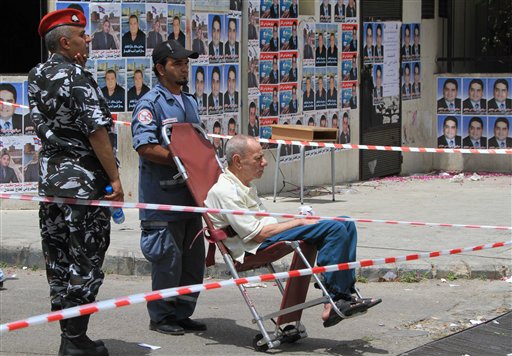
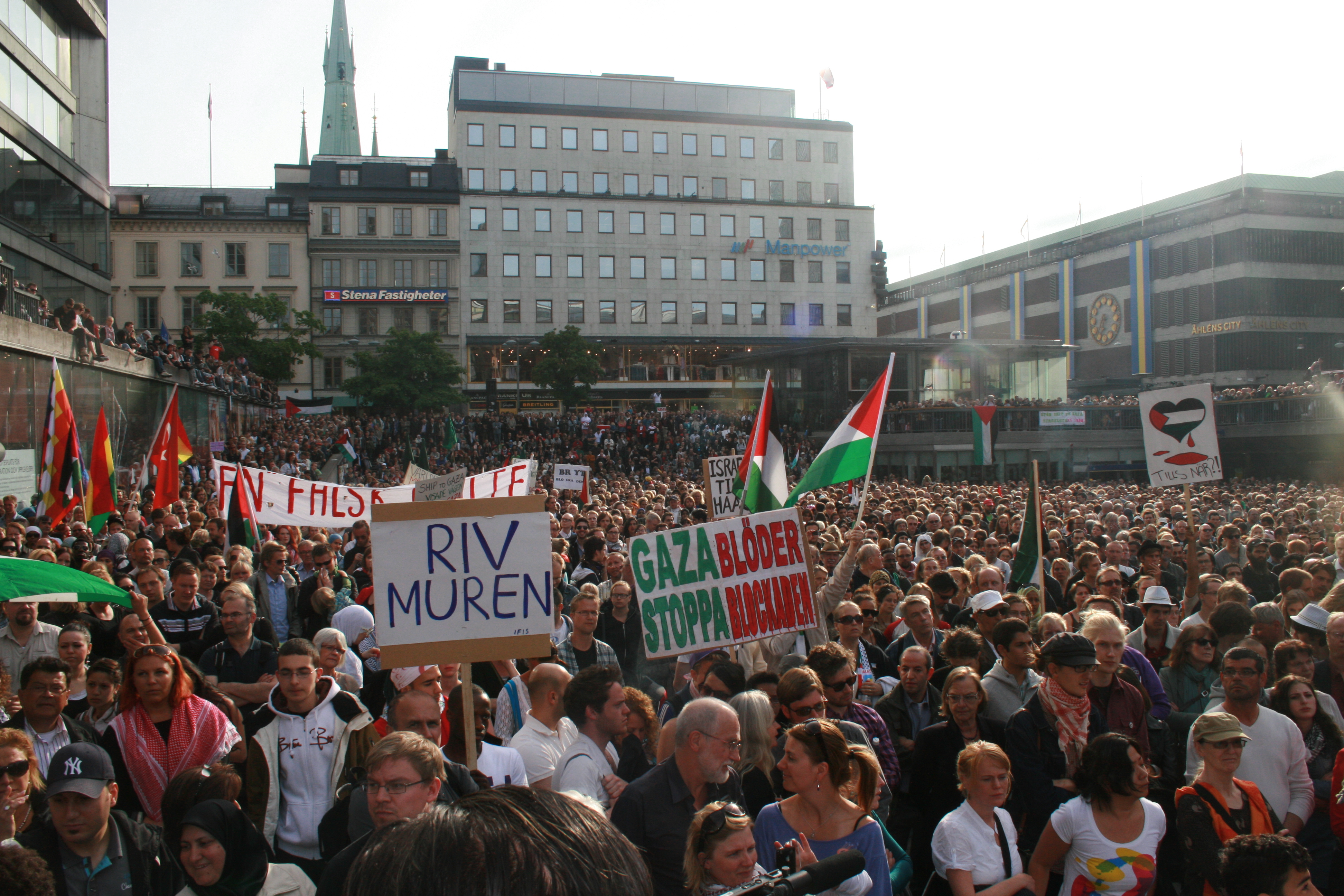

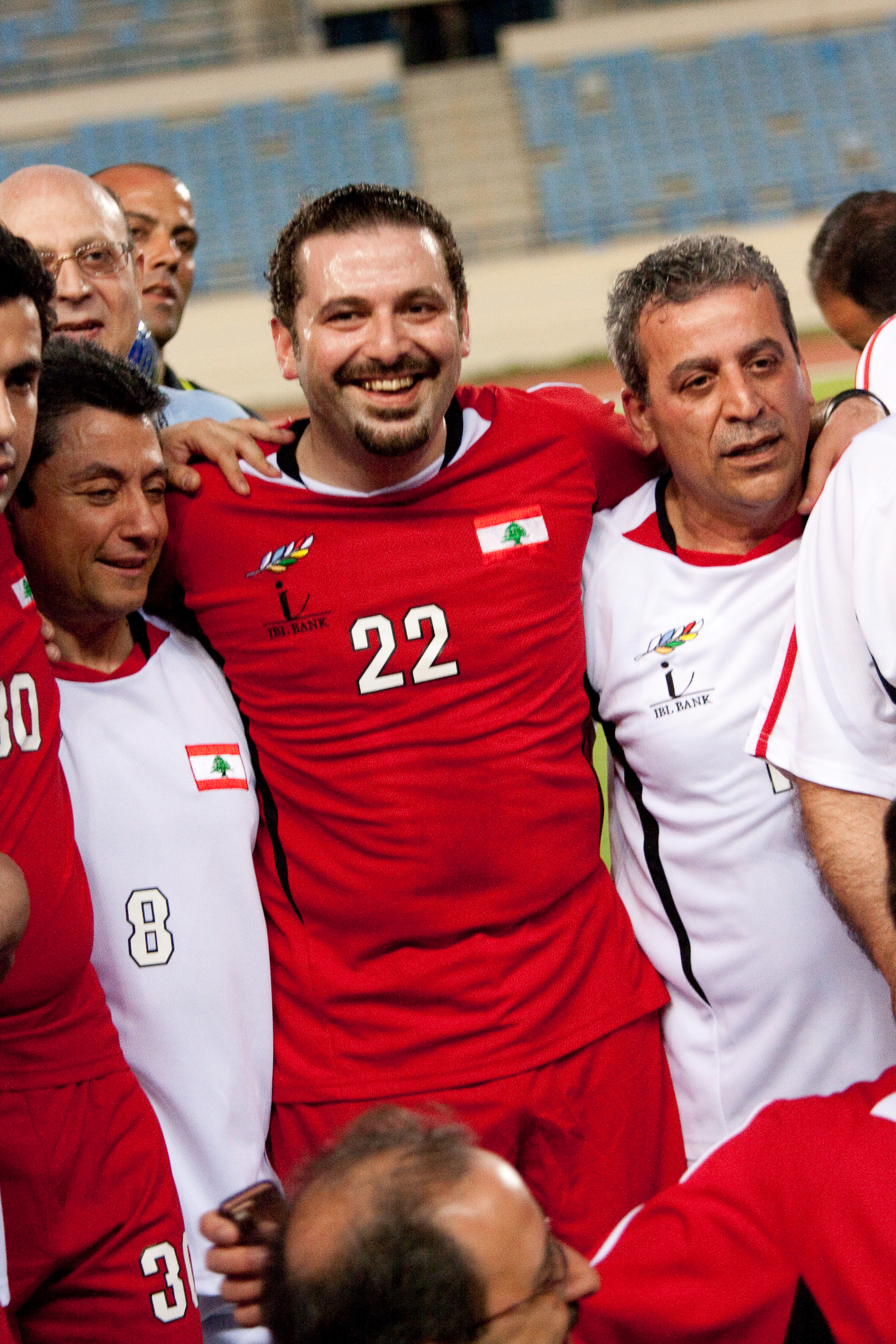

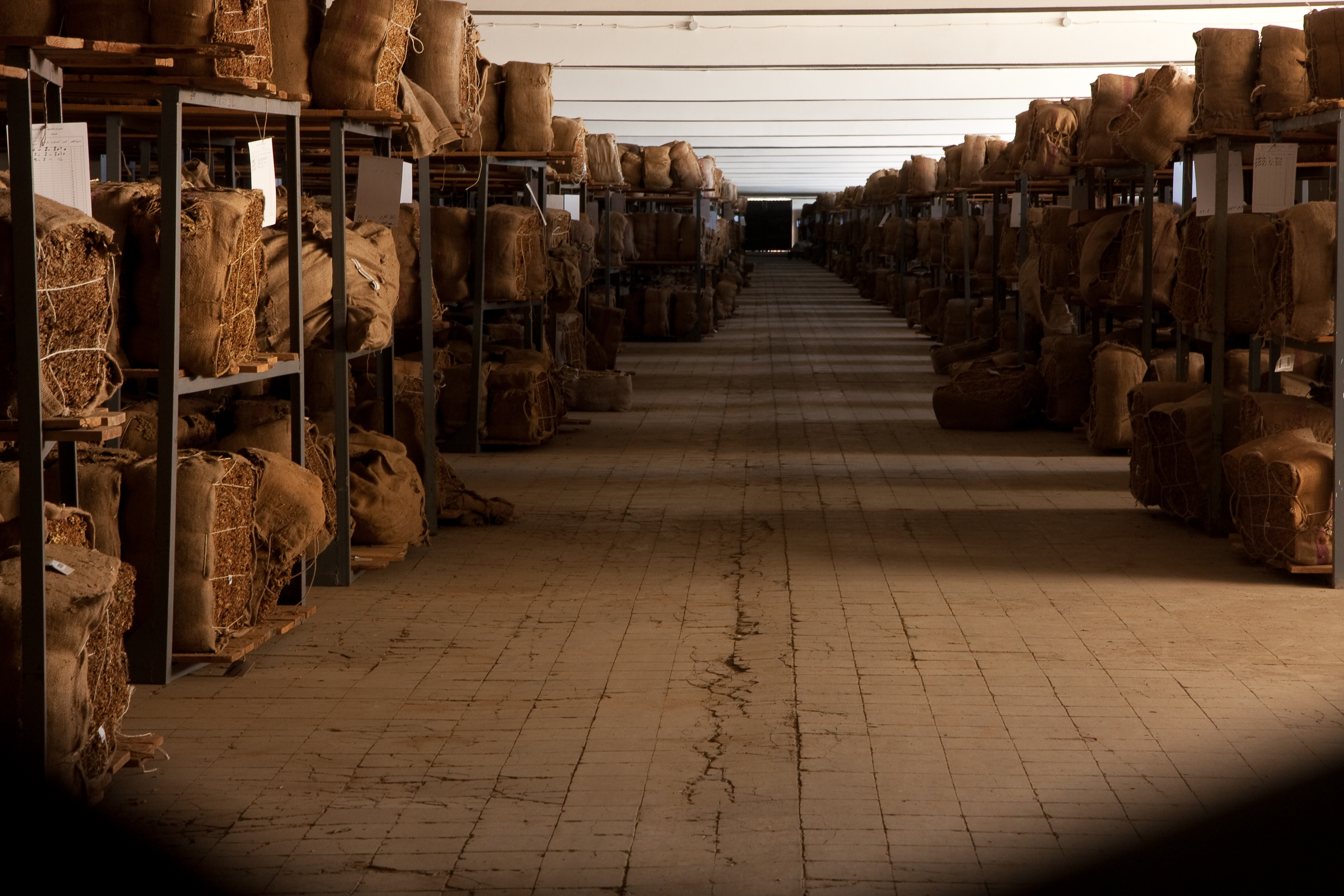





 Sami Halabi