Missing the target

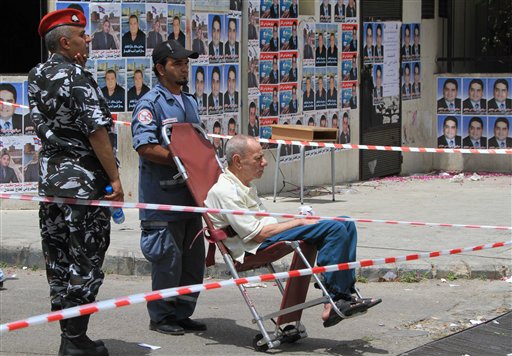
The legions of an increasingly ineffectual force (AP Photo/Hussein Malla)

The security situation last month has been so telling of the dearth of reform and progressive policy that it’s high time we to stand to attention. The Addisieh incident, which left two Lebanese soldiers, one Lebanese journalist and an Israeli officer dead prompting the American’s to withhold $100 million of aid to the Army was just the start of the rolling security snowball. Then, in a move which should be regarded as mostly a public relations stunt, Defense Minister Elias Murr and his father both placed $667,000 in an account to equip the Army hoping the Lebanese would fall in.

But before we consider shell out our hard earned cash, shouldn’t we get a sense of what we are getting in return? Currently, talk of military reform centers on weapons. In part the focus is well placed because, as the Addiseh incident proved, the Lebanese army is now capable of picking off some of the most well-equipped soldiers in the world, which was not the case during the Nahr-al-Bared battle when they lacked the weaponry they now have thanks to the Americans. The irony is however that if units had mobilized (with the intent of actually intervening) from Akkar when the gun battle in Bourj Abi Haidar erupted last month over a parking space or last year when similar clashes broke out in Aisha Bakkar, both situations could have been contained before they spread. It doesn’t take a security analyst to realize that the problem was hardly the weapons.

Both incidents produced the jittery feeling of impending war that we have grown all too accustomed too while  proving that our security is bankrupt. In fact, it is philosophy of “red lines” that persists in our country and keeps us confined in our socioeconomic and political constructs that is mostly to blame.

Many of the lines are obvious, ranging from the arms of the resistance to maintaining sectarianism power structures. But when the army and the security forces can’t intervene to stop a fight over a piece of unoccupied asphalt, then its time to pickup that red pen and start drawing again.

Instead the government’s response is that weapons should be collected from citizens. While in principle it’s a laudable initiative, the government can’t even collect taxes properly, much less the arsenals. The response is typical of a political class that is used to taking painkillers instead of seeing the doctor.

The right answer is genuine reform of the security apparatus that requires both cash and a basal reassessment that extends far beyond “more weapons.” But before we are asked to keep footing the bill, we need some assurances.

Incidents like the Bourj Abi Haidar clashes require the security apparatus to take timely decisions independent of the political class; otherwise there is little point in borrowing, begging or simply taking handouts to equip that apparatus. Secondly, the Addisieh incident proves that the security aid that comes to Lebanon needs to roll in without strings attached like the American aid that was pulled when we used it to defend (at least what we thought was) our territory. Now that Iran has tabled an offer to equip the Army, if we take them up on the offer will the Army have to protract its policies in the region or face the prospect of losing support again?

Even if we can to act quickly and posses weapons to deal with our pesky neighbor or a gang of ruffians, without structural reform we will miss the target. Because post-war economic architects decided that our economy would be built almost wholly on services, productive and vocational sectors have been largely ignored. The result is that unless citizens can afford good schooling, speak several languages, and have the right connections they are boxed out of private sector employment. This pushes them onto public sector and into the ranks of the security “services.” What results is an over-bloated army of lingering servicemen lying in their undershirts performing redundant jobs while draining the state’s empty coffers.

Hence unless these are the priorities for security in the country, we cannot be expected to extend tap our wallets to support a withering institution. Money talks. A lack of it talks even louder.

Give it to the people

MEA's pilots stage a 24-hour strike in April (AP Photo/Ahmad Omar)

For those of us who remember what it was like to fly with the national carrier in the 1990s, we recall the painful hours waiting in the plane on the runway for it to take off, the complex and tiresome ticketing process, and the unique elbowing techniques one would employ to get to the front of the check-in booth for a flight that was usually delayed. Thankfully those days are long gone. Today Middle East Airlines (MEA) has once again become a profitable and sound business representing our nation. Last year, when airlines were buckling under the pressure of the downturn, it brought in a record profit of $105 million, increased its passengers by 14.61 percent, and increased its revenue per passenger by 11.8 percent.

It wasn’t always this way. For 26 years until 2002 the airline was posting an annual loss. Ultimately this proved to be a blessing in disguise because when the airline became too much of a burden, and/or our government realized they would never ‘milk the cow,’ a political decision was finally taken to corporatize and downsize the company whilst retaining public ownership through the central bank.

The process was by no means painless and was politically charged from the get-go: around quarter of the company was chopped, routes were cut, many people lost their jobs, and we had to come to terms with the fact that our airline was not what it once was. Be that as it may, it’s better to grow into a profitable business than to whither away slowly in the red.

But to be truly Lebanese you need issues, and MEA has more than a few. Besides the one-day strike in April that cost the airline some $800,000 according to its chairman Mohamad el-Hout, the airline’s successful downsizing under his patronage left a rather dubious trail in its wake. Already this year the parliamentary opposition has lambasted Hout, for, amongst other things, appointing his relatives, friends, as well as members and MPs of the Prime Minister’s party to various positions at the carrier and turning the airline into “family institution first and an institution for the Future Movement second,” according to one opposition paper. In response, Hout argued that the MPs were technically qualified to hold their position and denied charges of nepotism. “I don’t see anything wrong if some of these staff carry the Hout family name,” he was quoted as saying. What the chairman ostensibly doesn’t see is that such statements and appointment do little to ally the fear that MEA is the ‘property’ of Lebanon’s Sunni’s, whether the accusations hold water or not.

In Lebanon once the sectarian ball gets rolling, there is little chance of stopping it. To avoid such a scenario, what should be done is simple: take action that draws MEA away from the sectarian government back to the people of Lebanon.  In business terms, that means making good on a promise to offer the people a stake in the company through a public listing. The decision is the central bank’s to make and its governor, Riad Salameh, has already said that he plans to raise $250 million through the sale of a 25 percent stake. What he also told me after the cabinet was formed in November was that he is waiting for “moral approval from the government.”

That approval has not been forthcoming, and neither has the promise of allowing other players to participate in the market once MEA’s monopoly on domestic traffic is up 2012. Indeed the current transport minister is seeking to extend it. But this market distortion makes little sense considering that our “Open Skies” policy allows foreign airlines to fly in and out of the country without restrictions while local airlines cannot. Moreover, Hout expects profits to dive 40 percent this year as a result of increased competition from foreign airlines.

Before that occurs and investment looks less attractive, it would seem logical to start pulling our national carrier away from narrow political and sectarian interests and, eventually, bring it fully into hands it belongs in—those of the people. What better time than now, when our economy is growing and investment is on the rise? If we start with our airline, we may, one day, finish with our country.

UPDATE: According to Bloomberg, on September 7 2010 Riad Salameh, Lebanon’s Central Bank Governor, announced that he was delaying the listing of MEA’s shares because of “unfavorable market conditions”  in Arab markets and (for some odd reason) the greek debt crisis. Given that the shares were meant to be listed on the Beirut Stock Exchange, which performs independently of Arab bourses and is so small that it needs large institutional listing, this should be seen as a sure-shot sign that MEA’s patrons have no intention of allowing the people to participate in the ownership of their airline. No surprise there.

The shadows of power

By Sami Halabi

Up close Lebanon’s energy overhaul looks like a boon for the sector; but in the distance an uglier reality awaits

Zouk, Lebanon (Photo: Sam Tarling)

Promoting one’s own vested interests has always been the mantra of Lebanese policy makers, and we’ve become accustomed to seeing them endlessly tie up progress until they come to an agreement on how to divvy up the spoils. So alarm bells ring when our so-called leaders finally agree on something.

On the surface the announcement that our cabinet agreed to Energy Minister Gebran Bassil’s 5-year electricity plan looks like a step toward reform. Ostensibly, the plan aims to end the country’s chronic blackouts and relieve the sector’s deficit burden from the government, which amounted to $1.5 billion last year.

But it is likely intended to preserve the minsters’ own interests — such as reinforcing the pillars of the sectarian system through which they secure their influence — before it serves the needs of the people.

What needs to be done is obvious. In production, transmission and generation the sector needs a complete overhaul, and there needs to be a purging of the political patronage systems endemic at Électricité du Liban, Lebanon’s state-owned electricity provider. To his credit, Bassil’s plan addresses these elements in detail and proposes fixes that, according to most experts, could alleviate our short-circuited sector. But before we start to borrow and spend $4.8 billion, we should ask ourselves if this time we do it by the book, or ‘a la Libanaise’.

The convoluted and dysfunctional process by which decisions in the electricity sector are currently made — or more accurately, not made — between the cabinet, the ministry and parliament, is not going to produce decisions that are free from political and sectarian influence.

For all the positive elements of Bassil’s plan, he is advocating against setting up a regulatory body to oversee the overhaul of the system until many of the changes have been implemented. Without the proper checks and balances we risk repeating the same type of ‘sector suicide’ we experienced with telecommunications, which now plagues our economic competitiveness and makes us the laughing stock of the regional telecom industry.

Allowing government to regulate the sector cannot continue, and yet the cabinet has approved the plan in question, provided that it also has the authority to oversee it.

Aside from the opaque manner in which public borrowing and spending of $2.5 billion to reform electricity is being carried out, if the cabinet is allowed to chaperone implementation, the other $2.3 billion being requested from the private sector will also likely be farmed out to sectarian interests, effectively slicing up our electrical pie. Without conflict of interest legislation and a truly independent regulatory body (not one that is also appointed through sectarian patronage,) the provisioning of electrical production and distribution will be subject to the same nepotistic tendering and distribution of power that typifies our existing institutions.

What’s more, if the practice of local distribution is adopted without ensuring that regional leaders do not monopolize the provisioning of electricity to local populations, there will be nothing to stop them from subjugating the people through greater dependency on them for basic services.

Some have suggested that sectarian loyalties are the only way to guarantee customers actually pay their power bill, but if the cost of tariff collection is strengthening an institution that tore this country to shreds and continues to stunt its potential, then I would personally prefer to live in the dark.

With new legislation covering public-private partnerships (PPP) now making the rounds to include the private sector in electrical reform, we have the opportunity to start protecting our economy from conflicts of interest, not just the “principles of transparency and equality among participants,” as the new PPP draft is proposing.

If we are to take the long strides we need to in order to solve our structural problems, such as electricity, once and for all, we cannot do so while ignoring what produced our predicament in the first place — unless of course we want to protect the candle-makers.

A similar version of this article was published in Executive Magazine’s August 2010 issue

Liberty on the line

By Sami Halabi

The Lebanese Parliament seeks to strip the people of their rights before granting them their long overdue privileges

Lebanon's lawmakers need to be reminded that now is not the time to take advantage of the people (Photo: AFP)

As most of us head to our beaches and balconies in the hopes of catching a summer breeze and perhaps a much-deserved siesta, our Parliament seems to be bucking the trend, having apparently awoken from its years-long slumber.

The country’s legislative branch, a collection of 128 sectarian officials representing a flawed and arcane electoral process, has been unusually busy of late. The 69-odd draft laws recently thrown at the foot of its door have been picked up by the corresponding committees and subcommittees, which comprise one of our most inefficient branches of government.

With so much work to do, one would think that Parliament would be a bustling hub of deputies and their staff scurrying from one office to another at all hours of night and day. But last April, as an experiment, I decided to knock on the office doors of each of the members of the subcommittee mulling a piece of legislation I was reporting on. Not one of the MPs was present in their offices after lunch, nor were there any staff on hand to receive me.

Eventually, a lonely lingering soldier on guard asked me what I was doing rushing back and forth through the building. After explaining myself he just laughed and said “god help you.”

Considering such utter disinterest in keeping functional working hours, or at least having some staff to do so, it’s a marvel how quickly laws are being put before parliament. This discrepancy would appear to be down to one of two things: either lawmakers have been too indifferent to take a look at proposed legislation, or they have been relying on their respective party’s policy buffs and intend to rubber stamp whatever their party tells them is best — neither of which is going to produce the reform we need.

Take the recent information and communications technology (ICT) law that, thankfully, has been put off for another month. The law, like most of those pending ratification, was intended to bring Lebanon into step with minimum international standards, in this instance relating to payments and accountability in electronic transactions. Instead, the administration and justice committee which oversees proposed legislation, used the opportunity to push a law to the floor that would stem our already limited freedom of expression, by calling for the formation of an authority — subject to a sectarian appointment system for executives — that would have the power to carry out unwarranted searches of any and all electronic information through a “specialized judicial police.”

The fear is that this authority will function as little more than an electronic Stasi, and perhaps unsurprisingly, concerned civil society and private sector actors were not contacted before the law was presented. If they had been, they would have certainly reminded our public officials that government does not just exist to take away people’s freedoms without offering them something in return. It’s no coincidence that the laws being pushed through are of the ‘take’ and not ‘give’ nature. Currently, long awaited and necessary legislation covering freedom of information and whistleblower protection still lies in a drawer somewhere in the quiet halls of Parliament. Taking people’s freedoms away rather than granting them seems to be the priority, before lunch of course.

The ICT law is but one example of the constant and ongoing attempts to curtail the rights that we Lebanese have come to enjoy, in many cases only because governments have either been absent or uninterested in lawmaking. But since the nature of being a public official is to be held accountable by the public, we should not be content with merely electing a Parliament. Perhaps we have become so accustomed to a government in crisis that we have lost sight of the goal of institution building and our inalienable right to question our officials, rather than allowing them to hold closed invitation-only sessions to mull legislation and hide behind layers of opaque sectarian bureaucracy. That age-old habit needs to come to an end.

And now that we have a semi-functioning parliament we cannot, and should not, simply bask in the sun while they run rampant over our rights. Government is not a one-way street, and at this point more ‘give’ and less ‘take’ is in order. The beach may have to wait.

First published in Executive Magazine’s July 2010 issue

Running out of steam

By Sami Halabi

A lack of a unified vision leaves an inter-GCC railway standing in the station

Right now the old Hejaz Railway looks far from being eclipsed as the Middle East's most famous railway

Of the five pillars of Islam, making the pilgrimage to Mecca was perhaps the most testing for those who lived in the time before planes and cars. Each bodily able Muslim who sought to enter heaven would trek through the sands of the Arabian Peninsula by camel caravan, braving the scorching summer sun or the freezing winter nights; from Damascus, this pilgrimage could take two months.  Then, in 1864, at the height of the Ottoman Empire, the Arab world’s Turkish masters proposed a grand idea. A waqf, or sacred Islamic donation, would be opened to all Muslims of the world to fund the Hejaz Railway, which would extend from Damascus to Mecca and allow travelers to make the trip in four days, and for less than 10 percent of the price.  Fast-forward to today, and the thoughts of current Arab rulers are on the same track as their northern predecessors. The Gulf Cooperation Council has decided that they will build a joint railway to link their countries. While the advantages of such a scheme would be enormous, especially in the commercial sense as the project is envisioned to be a cargo route first and a passenger route second, deciding that something should be done and actually doing it are proving to be very different matters.

Hard to decide

Planning for the railway began to gain steam in 2004, when the GCC Technical Committee’s (GCCTC) transport department, the body overseeing the project at the regional level, commissioned a preliminary study carried out by the American firm Parksons Brinkerhoff and the Kuwait-based Global Investment House. The study eventually proposed two routes for the project. The first would have run from Kuwait through Saudi Arabia to Bahrain, connect to Qatar via a new bridge over the water, then reach the United Arab Emirates and Oman. The second route ran from Kuwait to Oman overland and through Saudi Arabia and the Emirates, with a connecting track to Qatar and Bahrain; the latter plan eventually won out.

In February 2007, a consortium led by Systra of France, Khatib and Alami of Lebanon and Canrail of Canada was asked to perform a feasibility study covering topographical and statistical data, integration, financing and development options, legal models, as well as passenger and freight configurations.

The study, described as an “economic feasibility study” by a source who is part of the consortium and spoke on condition of anonymity, did not cover the potential problems that could ensue from the fact that every nation, which would be designing, funding, and implementing their own part of the project, also had the right to change specifications in its own territory.

“It was the case that the design would be done under the supervision of the GCC, but now the countries are seeking to design their own respective projects,” says Ibrahim al-Sbeiteh, director of transport at the GCCTC.

This is not the only issue that has led some to question the project’s feasibility.

“The multiple delays that we are seeing right now in the GCC rail network are probably also due to some liquidity problems that are down to the [financial] crisis,” says Philippe Dauba-Pantanacce, senior economist on the Middle East and North Africa at Standard Chartered investment bank.

The freedom to delay

Unlike the Ottomans, who had the luxury of administrative control over the entire area of the Hejaz, the authority of each country over their segment of track and the fractious nature of GCC decision making has made progress less than steady. Since the feasibility study was completed and approved by the GCC in December 2008, little headway has been made and divisions have begun to appear in other areas.

For example, the Gulf countries have still not implemented the common customs union that was agreed in 2003. Meanwhile, the prospect of a GCC monetary union that has been in the works for more than a decade was dealt a severe blow last year when the UAE decided to pull out, ostensibly angered when the council decided to host the Gulf central bank in Riyadh instead of the Emirates. Oman decided not to commit back in 2006.

“As we have seen in the GCC monetary union project, there are a lot of political hurdles within the GCC that constitute barriers to progress in these projects,” says Dauba-Pantanacce.

So, if track record is anything to go by, the planned completion time of 2017 may be little more than a chimera. The source on the consortium said the current completion date in 2017 would be pushed back. Construction was slated to start this year, but the project is still in the engineering design phase and, according to Zawya, companies are only expected to be prequalified for contracts this September, with detailed design contracts to be awarded in December during the GCC summit in Abu Dhabi.

The devil is in the details

In order for detailed design contracts to be awarded however, each country will still have to decide on the route that the track will take through their respective territories. Except for Saudi Arabia, which has already started its own national railway development, GCC states have yet to define the parameters of their respective railway segments.

A further cause of concern is the status of the world’s longest marine causeway between Bahrain and Qatar, which is jointly funded by both nations. In June, Reuters reported that the 40-kilometer, $3 billion project had been suspended “amid escalating costs and increased political tension,” with a sizable portion of that extra cost due to the decision to fit the causeway with a railway as part of the GCC common rail project.

The report was later denied by the assistant undersecretary for financial affairs at Bahrain’s Ministry of Finance and chairman of the Qatar-Bahrain Causeway Foundation, but such complications do little to inspire confidence.

Diesel or gas: fuelling the divide

Because the railway was envisioned as more of a freight project than a passenger one, the speed and volume at which goods can be moved through countries is of utmost importance to the eventual linkage and completion of the project.

According to the consortium source, the $25 billion estimated cost was based on a diesel powered standard speed across the railway. But the newest proposals by Qatar and Oman to opt for an electric line could throw a spanner in the works and bring the project back to the drawing board.

The shift is significant because of several factors. Despite sitting on some 23 percent of the world’s know gas reserves, the GCC, with the exception of Qatar, is facing a gas shortage due to rising demand primarily associated with power generation. Qatar opting to run an electric train is precisely the kind of wildcard that could see the project’s financial and technical scope become increasingly more complex to implement, not to mention the political tensions such a move would stoke.

“They [GCC nations] will have some difficult tasks to resolve, mainly on the processes, the support, the interoperability, and potentially on investment priorities. Interoperability will be the most important thing to agree on, at the GCC level,” says Ulrich Koegler, partner and member of the leadership team for Booz & Company’s Middle East transport and infrastructure practice.

“If you don’t have interoperability, at the end of the day you have truncated networks,” adds Koegler.

That prospect would also entail some costly fixes in order to accommodate a common network that meshes with individual country needs. Ostensibly, the reason Qatar and Oman need electric trains is because they are more interested than the other countries in the high speed passenger oriented options that such trains offer.

The economic feasibility study which was approved by the GCC was prepared on the basis of a speed of 200 kilometers per hour, which is around about the maximum speed possible with a diesel-powered train. Anything above that will require electric power. And the faster you go, the more you pay.

Speed or strength

The hitch is that ‘double stacking’ — the rail industry term for having two containers stacked on top of each other as opposed to one — is not possible on electric trains. Since the project was only deemed viable because of its economic advantages relating to freight, the use of electric trains throws the entire economic feasibility of the project into question.

Possible solutions to this issue include switching trains and containers at stations, or building separate tracks to accommodate for high-speed electric trains that would be used for passenger transport; the former would add significantly to time spent passing between stations on opposite sides of a border, while the latter would entail considerably higher costs. “The most important thing for us at the GCC project is that the specifications are the same and the timing is agreed upon — that’s all,” says Sbeiteh. “The tendency now is that the GCC line will be diesel with the exception of Oman and Qatar. The Qataris are envisioning that they will need another track for diesel.” The increased expense of the double-track plan could cause total costs to mushroom and threaten the overall scheme’s completion.

“Do we want to first put more money in a common railway system instead of, for instance, diversifying our economy?” asks Standard Chartered’s Dauba-Pantanacce.

Paying for it all

Ultimately, without a concrete cost figure, governments in the region will be hard pressed to allocate large amounts of money to projects that are contingent on others doing the same, though if the regional railway is to work at all, they will have to do just that.

“Rail is a massive investment and you will find very few companies willing to fund it, even if there is a subsidy or [service] availability model over many years because the amount of uncertainly… is transferred to the private sector,” says Fares Saade, principal with Booz & Company and member of their transport, engineering, and services practice.

The liquidity situation is also not homogenous across the region. Saudi Arabia is still flush with liquidity and knows that it will have to put up the lion’s share of the cash, according to Koegler.

Foreign funds

Countries with tighter liquidity conditions, such as the UAE, may consider offers such as the one made in June by the International and Commercial Bank of China, in conjunction with Beijing’s railways ministry, to offer financing, export credit and advisory services to the UAE. It now seems likely that they may use this option, as the UAE National Transport Authority and the Chinese government signed a memorandum of understanding to develop technical and regulatory aspects of the country’s railway in May.

Qatar has also signed a joint venture with Deutsche Bahn International to form the Qatar Railways Development Company (QRDC), which boasts initial capital holdings of $25 billion and constitutes the largest offshore commercial deal for the German railway giant. The Qatari government will own 51 percent of the company through Qatari Diar.

Kuwait seems to be the only country in the region that will opt for public-private partnership (PPP) arrangements, after starting an office to begin tending for such projects, says Koegler. “A rail system will have low or negative returns if you don’t take the socioeconomic benefits into account; and of course private players cannot play on socioeconomic benefits,” he concludes.

Then there is always the option of another waqf, but unlike the Ottoman attempt to fund its rail, this one might carry interest.

“If they don’t finance it through a direct injection of money and they go through issuing bonds, I think that would be creatively the most appropriate way to do it,” says Dauba-Pantanacce. “Having longer-term bonds in line with long-term cash generation projects like a railway is the most sound, recognized and applied methodology that we have seen elsewhere.”

Getting people to use it

Even if the technical, financial and political hurdles are overcome, the challenge of getting people out of their cars and onto the train will be a formidable one. Today, the only piece of mass overland transit in the GCC, the Dubai Metro, is still eerily empty for most of the day.

“There will definitely be a cultural reluctance from the local population to heavily use public transportation to make a long distance trip [of] more than two hours, because they have not been used to that,” predicts Dauba-Pantanacce.

Without the religious allure of the Hejaz railway’s final destination (which it never reached, getting only as far as Medina), a passenger element to the GCC railway will be little more than a convenient ‘add-on’ to the cargo element. But like the Hejaz, time and money will be the defining factor of how successful the project is.

It took the Turks and the rest of the Muslim world 44 years to build their most famous railway. The question is: how long will it take the Arabs to agree to do the same?

First published in Executive Magazine’s July 2010 issue

Star-crossed lovers

By Sami Halabi

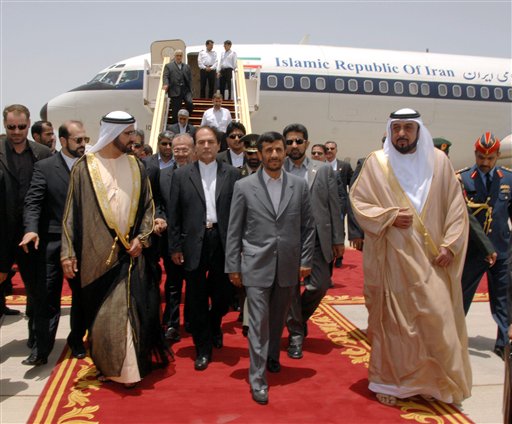
Iran's president making his first visit by an Iranian head of state in 2007 flanked by the rulers of Dubai and Abu Dhabi (Photo: WAN)

US pressure mars an ancient partnership in the Persian Gulf

When you have been in a relationship with someone for centuries, breaking up is hard to do. Sure, you may bicker over seemingly trivial problems in your marriage, but more often than not, your history with that special someone has you running back into their arms.

Take Dubai and Iran. The two were engaged in a trading love affair long before either nation even existed.

That relationship has been blossoming of late, with trade between the two increasing threefold between 2005 and 2009 to reach $12 billion, according to the Dubai Chamber of Commerce. But with the threat of new sanctions being imposed on Iran and the financial crisis stemming Dubai’s previously inflated financial ego, that could all be about to change.

No more smooth sailing

On the surface at least, recent international developments have only brought the old couple closer together, especially for Iran which, faced with economic sanctions imposed by the United Nations and the United States, has been able to use the ports of Dubai as a forwarding station to get around such impediments.

The UN has passed three sets of sanctions against Iran which encompass a wide range of materials it deems can be potentially employed in the enrichment of uranium, in addition to freezing the assets of persons it has identified as aiding Iran in its nuclear ambitions. The US has imposed its own set of more stringent sanctions and has forbidden its companies from engaging in financial and commercial transactions with the Islamic Republic.

Notwithstanding these restrictions on trade and financial activities, Iran seems to have come out relatively unscathed — so far. In April, The Wall Street Journal reported that only around $43 million in Iranian assets had been frozen in the US, which amounts to roughly a quarter of what the country makes in oil revenues in one day.

In recent years however, the US and their allies have taken a sharper aim at Iranian businesses or those that have dealings with Iran. In October 2007, Washington imposed sanctions on three large Iranian banks: Bank Melli, Bank Mellat and Bank Saderat. Since then, Iranian businesses in Dubai have been taking flak.

“The Iranian businessmen in Dubai are the ones being hammered badly by the sanctions,” says Morteza Masoumzadeh, a Dubai based-shipping agent and a vice president at the Iranian Business Council in Dubai. “The sanctions have had no effect at all on the Iranian government’s nuclear activities, as we can see, they are progressing every day.”

According to Masoumzadeh, some 400 Iranian businesses have closed since the downturn in Dubai. While he admits that some of these closures were caused by the emirate’s real estate bust, he says that “the majority of them have closed their businesses due to the restrictions on Iranian banks and the subsequent restrictions applied by the local banks.”

To make matters worse for Dubai, the past few months have seen a series of calls from Western nations — particularly America — for new and stronger UN sanctions. In March, US President Barack Obama called for sanctions to be imposed “in weeks.”

Since then, a wave of international companies have announced plans to scale back or cut ties with Iran, including international oil companies Eni, LUKOIL and Royal Dutch Shell, Indian refiner Reliance Industries, US construction and mining equipment maker Caterpillar and German carmaker Daimler, as well as KPMG, PricewaterhouseCoopers and Ernst & Young. But while these international pullouts may perhaps be a significant harbinger of things to come, it is businesses closer to home that stand to lose most.

“The [United Arab Emirates] is Iran’s most important trade partner, before Germany and China, so any sanctions would hurt both sides, especially Dubai,” says Eckart Woertz, the economics program manager at the Gulf Research Center.

The US State Department has also placed the UAE in the crosshairs, threatening in 2007 to classify the country as a “destination of diversion concern,” according to Bloomberg. The pressure seems to have worked to some degree, as last August the Emirates commandeered a boat from North Korea allegedly carrying weapons to Iran.

Arms smuggling, however, is not the concern of most traders, whose legitimate business between Dubai and Iran is threatened.

“We have tried to go through local banks here to get facilities, but we have reached the point where they prefer not to get involved with Iranian businesses,” says Masoumzadeh. His main complaint is that banks in the UAE have stopped issuing letters of credit (LC) to facilitate trade between the Emirates and their Persian neighbors.

“The UAE banks…won’t issue an LC to our overseas suppliers with the name of an Iranian port in it,” said Masoumzadeh.

The worst to come

Last month, some apparent progress was made on the international front concerning Iran’s controversial nuclear program, when the Islamic Republic inked a deal brokered by Brazil and Turkey to swap outside its borders low-grade nuclear material for enriched uranium to use in its power plants, something it had previously refused to do.

Nonetheless, the move seems to have been brushed off by the West; the next day US Secretary of State Hillary Clinton announced that she had agreed on “a strong draft” for UN sanctions “with the cooperation of both Russia and China.”

For the Emirates though, much will depend on what course of action Abu Dhabi decides to take when it comes to implementing a further round of sanctions, or imposing stricter controls on existing activities between Iran and Dubai.

“Abu Dhabi is less reliant on the Iranian trade and has traditionally played a leading role in the foreign policy formulation of the UAE since its unification in the 1970s. Dubai, on the other hand, has concentrated more on its economic role,” says Woertz.

Abu Dhabi has also been vocally hostile towards Iran lately over a long-standing dispute about oil-rich islands in the Persian Gulf that are currently controlled by Iran.

“Occupation of any Arab land is occupation… Israeli occupation of the Golan Heights, southern Lebanon, West Bank or Gaza is called occupation and no Arab land is dearer than another,” said Sheikh Abdullah bin Zayed al-Nahayan to the official UAE news agency, Wakalat Anba’a al-Emarat, in reference to the islands in late April.

The burgeoning capital has already put forward some $20 billion to save its little brother Dubai from defaulting on debt repayments, with estimates of Dubai’s total debt varying from a low of $80 billion to as high as $170 billion.

“The equation for Abu Dhabi and the UAE in particular is probably the toughest equation for any country in the world,” says Hady Amr, director of the Brookings Doha Center, referring to the decision to go along with tougher sanctions against Iran. “You can’t just lend your cousin money and then tell them to quit their job.”

According to the Iranian Business Council’s Masoumzadeh, 70 percent of his business has vanished due to existing restrictions on credit facilities. “If [the United Nations Security Council] comes up with a ban restricting shipping goods to Iran, for sure the other 30 percent of our business will also go.”

But, as the old adage goes, times of crisis always breed times of opportunity. The US trade ban on Iran currently does not apply to subsidiaries of US firms dealing with Iran if they do not have an operational relationship to the parent company. Even decisions by companies like Caterpillar, which ordered its subsidiaries not to sell goods to Iran, will not have a great effect on the supply of American goods to the country, given that the secondary market can hardly be controlled.

“As far as the Dubai customs are concerned, when a printer lands at the Dubai port, whether it is an HP, Samsung or Brother; its a printer, customs officials don’t care about the brand of the product as long it is not listed with the prohibited materials,” says Masoumzadeh, who added that the same applies at ports in Kuwait, Turkey, Indonesia and Malaysia. “The American administration can send out a circular to their producers saying ‘do not ship or sell American products to Iran’… but instead of buying HP products, end users in Iran buy Samsung. The Americans have, in reality, [just] eliminated their own producers from selling more goods.”

It is easy see that short-term profits are up for the taking: given that trade between Dubai and Iran has been increasing despite the sanctions, it seems increasingly likely that as international companies pack up and move out, regional companies can take advantage of the void left behind.

“You go in, you make a lot of money and then as the political pressure mounts you make a big fuss about why you are being asked to pull out,” says Brookings’ Amr. “If you are going to be asked to pay the price, you ought to be compensated. From the world that we are in, it seems that is a pretty successful way to do business.”

So, while the West may scold Dubai for its economic infidelity in its centuries old embrace of Iran, it is likely that the Persian allure will keep the emirate close — at least until a more attractive beau comes along.

First  published in Executive Magazine’s June 2010 issue.

The Tarbouche is back

By Sami Halabi

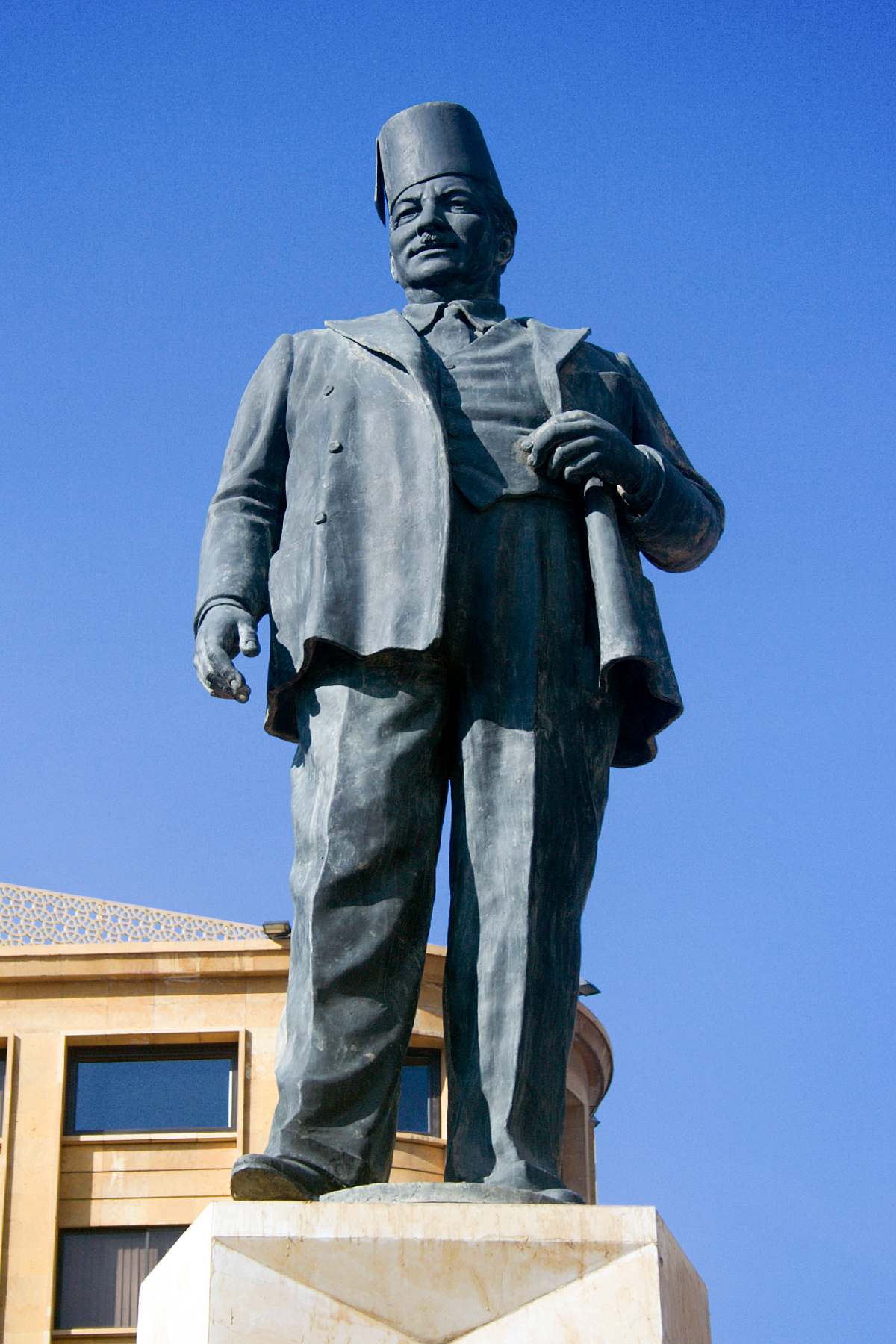
The statue of Riad el-Solh in downtown Beirut

Patrick Seale produces a 700 page epic about Riad el-Solh and the wider Arab struggle

Albert Hourani, the late Lebanese-British historian once wrote: “All states are artificial… they have been formed by specific historical processes, by human acts within a given physical environment over a period of time.” It is precisely those processes and acts that are laid out in great detail by Middle Eastern historian Patrick Seale in his latest book on the region, “The Struggle for Arab Independence.”

This 730-page history book reads more like a gripping novel, with its protagonist carrying the tale from start to finish. In addition to plotting the course of how myriad Arab provinces came to become the rigid collection of states that we today call the Middle East, Seale also chronicles the life of Lebanon’s prodigal, yet perhaps most important, son: Riad el-Solh.

The life of Lebanon’s first prime minister is recounted from the days of his grandfather Ahmad to his untimely death in Amman in 1951.

Seale, who spent six years researching material for the book, describes a dark and tumultuous period of Arab history, jumping back and forth between the life of his protagonist and the broader events happening at the time, to offer one of the most comprehensive books in English on Arab struggles against Ottoman, Western and now Zionist occupiers.

The book cites countless sources from historical works, intelligence documents and personal accounts to paint what is, at times, a rose-tinted picture of Riad el-Solh’s political life and the role he played in shaping Lebanon and the wider Middle East. Seale portrays Solh as an internationalist, an Arabist, a working class sympathizer, an anti-colonialist, a journalist and a lawyer all in one.

The only criticism he seems to have of Solh — which by the end of the book seems to be a veiled compliment of sorts — is that he was no accountant, as he squandered a large portion of his family’s fortune on his political career and the fight to free the Arab world from its occupiers. But as any journalist, including Seale, knows, there are always at least two sides to every story, and indeed to every person.

Seale also goes to great lengths to give credit to others who fought for Arab “independence.” A laundry list of Arab notables, politicians, kings, imams, and thinkers are mentioned, leaving the reader with the impression that each of these men could have their own 700-page tome.

Meanwhile, Seale gives special attention to the calculations of the Zionists and their collusion with the British in such detail that it is perhaps only topped by Ilan Pappe’s “The Ethnic Cleansing of Palestine.”

Interestingly, he describes Solh’s repeated meetings with notable Zionists such as Chaim Weizmann, Israel’s first president; David Ben-Gurion, its first prime minster; and Moshe Sharett, Israel’s second prime minister, who he first met as a young boy when the latter’s father was employed as a smallholder at one of the Solh family friend’s estates in Jericho.

Solh naively offered these men a pact with the Arabs, a fact which Seale admits, but again paints it as a politically astute calculation during the 1920s and early 1930s, despite the disastrous affects of Israel’s creation.

However, it is details such as Solh’s childhood meetings with Sharett that makes the book stand out as a work of both exhaustive research and refined story-telling. It gives due credit to a man who is described in the first half of the book as a bastion of the wider Arab, and to a greater degree Syrian, struggle — a Greater Syria which included Le Grand Liban, which became the Lebanon we know today.

Midway through the book, Seale describes Solh’s most significant change of heart, when he started to believe in an independent Lebanon, something that set him apart from his fellow Arab nationalists. From that point onward, the reader follows Solh’s every political maneuver to become the first premier of the country, as he navigates his way past colonial French occupation, hostile Maronite opponents and even his own family members. The chapter describing how he and Bishara el-Khoury, the British-backed first president of Lebanon, battled with the French in the final throws of their colonial project, is separated into rounds — 14 of them, each a page or two long.

Finally, Seale describes how King Abdullah I of Jordan, the great grandfather of the current king, who sought to end the fight with the Zionists, tricked Solh into coming to Amman to mend ties that had deteriorated, only to be assassinated in what Seale suggests was an Israeli plot.

Seale may at times overstate the importance or relevance of Solh, but he does give him more of the genuine credit he is due than the Lebanese seem to today.

Tellingly, his book ends with the commissioning of Solh’s statue in the heart of downtown Beirut — today, the statue serves as little more than an adjunct to a construction site.   

First published in Executive Magazine’s June 2010 issue

Derision of democracy

By Sami Halabi

Provisions for disabled persons were one of the reforms scuppered by Lebanon's politicians (Photo: AP)

When things go wrong, progressive types normally try to fix them. But in Lebanon, this simple logic is rarely followed; more often than not we go along with the situation so as not to stir up tension, in the hopes that somewhere down the line things will fix themselves. But our problems don’t get fixed — they fester.

The Lebanese still adhere to an archaic and dysfunctional municipal system based on the dictates of an Ottoman sultan, with a dash of French colonialism thrown in for good measure. Looking at our current administrative process — in which it takes 67 signatures to fix a truck belonging to a municipality, according to economist Marwan Iskandar — it’s obvious that applying an old system to a new world just doesn’t work.

Change is painfully slow in this country, where political power is tied to sectarian affiliations and local loyalties, and people’s sense of disenfranchisement is so ingrained that it becomes self-fulfilling. Lebanon’s political leaders have a vested interest in maintaining the entrenched patronage systems in their sectarian fiefdoms, which ensure that no major decisions are taken without their consent.

Citizens suffer as a result; around $480 million stuck in the Beirut municipality’s coffers that could be used to develop the city has been tied up for months because the mayor, Abdelmounim Ariss, and the governor, Nassif Kaloosh, are from opposing parties and can’t agree to sign the same piece of paper.

The election process itself is no more democratic than the system of governance. A significant portion of last month’s municipal elections were over before they started, with 15 percent of the seats won uncontested — amounting to 56 council seats and 199 mayoralties. The polls were supposed to be a platform to continue the government’s piecemeal electoral reforms that were introduced in last year’s parliamentary elections. Proposals ranged from the introduction of pre-printed standardized ballots and campaign finance reforms that prevent vote buying, to proportional representation and quotas for women to make for a more balanced outcome.

The much needed reforms would have provided a more democratic and equitable outcome for Lebanon’s voters. However, seeing the status quo that so benefits them threatened, our politicians engaged in the time honored tradition of stalling the matter by reviving age-old excuses that reforms such as lowering the voting age (opposed by all the Maronite-led parties) and allowing non-residents to vote (opposed by non-Christian-led parties) would upset the sectarian “balance” of the country, even though there is scant evidence as to the sectarian impact of either. The constitutional deadline for the elections was duly ignored until it was too late and the reforms had to be abandoned.

With electoral reform dead in the water, lawmakers then went on to neuter the democratic process further with “consensual lists” that allowed the interior minister to announce the “results” of some contests before the actual ballots were cast. And where the Free Patriotic Movement and Hezbollah didn’t get their way with the lists, instead of running a campaign based on policy to defeat their opponents, they packed up and pulled out. The Future Movement and the Nasserites didn’t do much better; after they couldn’t come to agreement over how to divvy up the spoils, their supporters decided to have a punch-up in the polling stations.

But all the blame cannot be laid squarely at the feet of our politicians. After all, if they can get away with making a mockery of the democratic process and still get people to come out and vote for them, then why wouldn’t they take advantage of the situation?

With every year that passes of politics-as-usual, we complain that things aren’t getting any better. But if we genuinely want to see reform, there is no other option than to do what the politicians always tell us will tear the country apart: end confessionalism and change our political and administrative system.

We need to change our mindset and realize that what we let fester will never fix itself — or we should simply shut up and stop complaining.

First published in Executive Magazine’s June Issue.

Thousands rally for Freedom Flotilla in Stockholm

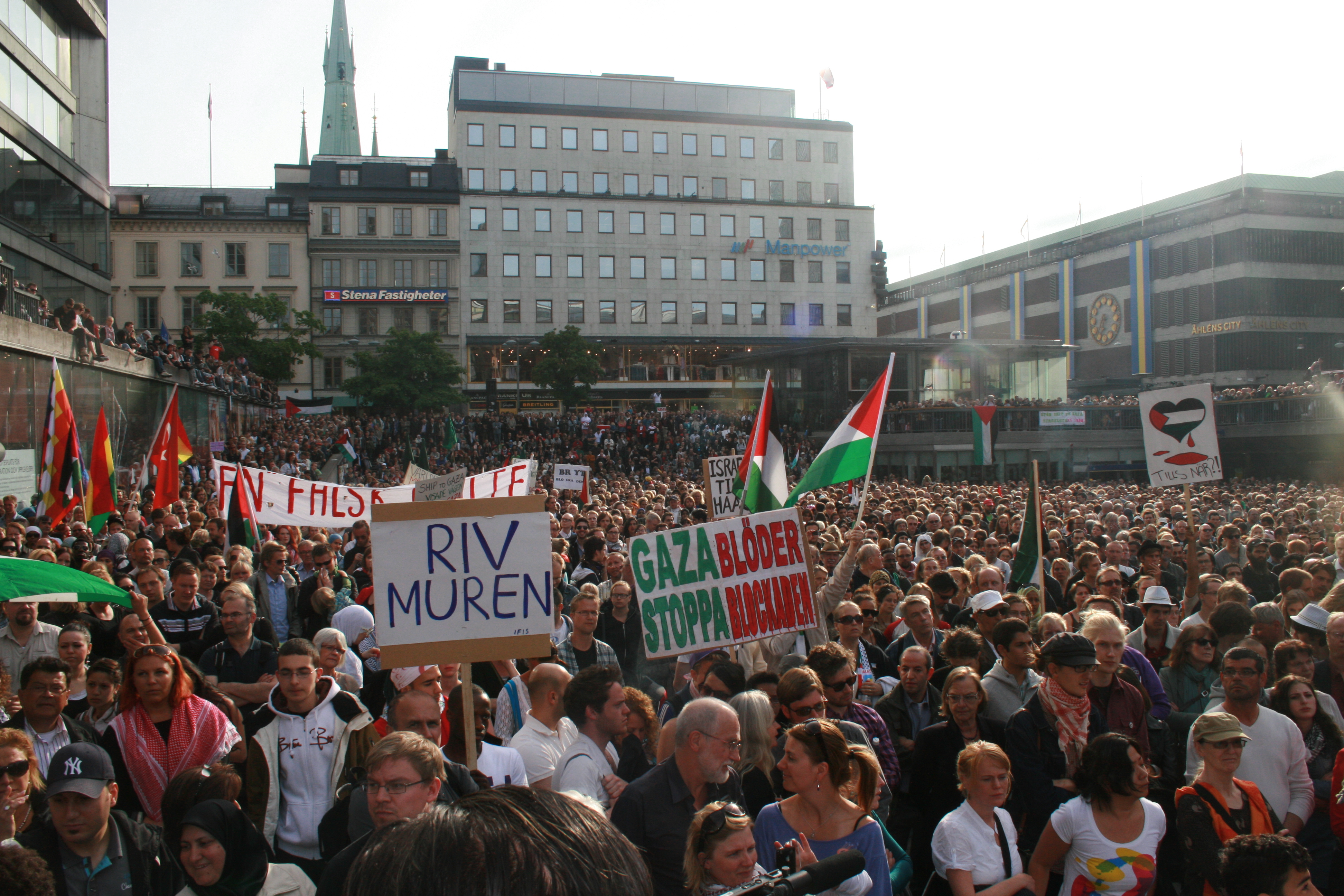
Protestors gather at Sergels Torg square. (Photo: Assaad Thebian)

By Sami Halabi and Assaad Thebian

The central Sergels Torg square in Stockholm is not the place you would normally expect to hear the words “stop the blockade,” or “boycott Israel,” or even “In our souls and with our blood we support you Palestine,” in Arabic no less.

But that is what happened as thousands of people descended on the square on 31 May in support of the Freedom Flotilla, the name given to the convoy of six passenger and aid ships attacked by the Israeli military in international waters early that morning.

Predominantly Palestinian and Turkish flags flew high above the square as thousands of Swedes of all backgrounds gathered to protest Israel’s actions.

“This is something that Israel has been doing for a long time and it’s obvious that this is contrary to international law no matter how you view the conflict,” said Magnus Alfonson, 25. The sense of anger amongst the crowd was evident in the somber manner that they gazed upon the speakers who stood atop a staircase surrounded by demonstrators many wearing traditional Palestinian kuffiyeh scarves.

Sweden has had rocky relations with Israel in the last year after a Swedish journalist alleged that Israel had stolen organs from Palestinians for use in transplants during the 1990s. Sweden, as did Turkey, Denmark and Greece and several other countries, also summoned the Israeli ambassador in Stockholm for questioning over the fate of some 11 Swedish citizens that were among the passengers of the flotilla which included one Swedish-owned and flagged vessel.

“We want a clarification over what has happened,” Swedish Foreign Minister Carl Bildt told Sveriges Radio. “We know that there are Swedes on some of the ships and we want to know what has happened to them. There appears no reason to question media reports that a Turkish vessel has been boarded, that a fire fight occurred and that people have been killed.”

One of those citizens is world best-selling Swedish author Henning Mankell. Another is Emile Sarsour, a dual Swedish-Palestinian citizen born in a refugee camp in Syria, according to his daughter Samaa Sarsour, a 26 year-old activist and organizer of the protest. While at the demonstration she stated she had just received a phone call from the Swedish foreign ministry telling her that the Swedish embassy in Israel had been denied access to her father and that he was at the Beersheva prison in Israel. She added the official on the phone said the Israeli authorities had said that “maybe” they would gain access to her father the following day.

“It’s obvious that no matter where you stand on the issue, this is a crime against a nonviolent organization,” said Daniel Free, a Jewish Swede also present at the protest.

“Israel must be brought to the international court of justice,” said Zaida Catalan, legal advisor for the local Green Party in the Swedish Parliament to resounding applause before the crowd dispersed.

As for the Swedes still being detained by Israel, their fate remains unclear. However, their resolve may be less ambiguous. “When I told my father I was scared before he left,” said Sarsour, “he said to me that if he as a Palestinian could not do this; who else would?”

First published on Electronic Intifada’s website on June 1, 2010

Banking with a stacked deck

As the bubble forms, Lebanon's economic policy makers look the other way (Photo: Sam Tarling)

By Sami Halabi

The economic implications of going all-in on Lebanon’s banks

If the global financial crisis taught the world anything, it was that the banking world and the real economy are two arms of the same body. But while countries around the world use both those arms to haul themselves out of recession, Lebanon has for years relied almost solely on its banking sector to drag the country’s economy forward.

“The most powerful section with regards to contribution to [gross domestic product] is the banking sector,” says Simon Neaime, professor and chairperson of the economics department at the American University of Beirut. “If the banking sector is not doing well, Lebanon does not do well.”

Luckily for Lebanon, the sector has been performing marvelously as the alpha banks held $122.17 billion in assets at the end of March 2010, according to the Bankdata financial services. That figure represents a 24.7 percent rise in the past year.

This is also significant for the job market, as the banks are currently the largest private sector employer in the country, according to Nassib Ghobril, head of economic research and analysis at Byblos Bank. Indeed, at the end of 2009 the banking sector accounted for nearly 20,000 jobs, a year-on-year increase of 6.2 percent according to preliminary 2009 results from ABL.

This claim may be somewhat undermined by government figures from 2007 which show that the sector only made up some 2 percent of total private sector employment and 1.6 percent of total employment. Current official statistics on Lebanon’s job market are unavailable due to the government’s apparent inability or disinterest in updating figures.

The ability of employees in the banking sector to contribute to GDP through consumption is dependent on their pay, which totaled $667 million in 2008 (ABL’s latest available figure), accounting for 2.4 percent of total real GDP that year. That works out as an average monthly salary of just under $3,000 per employee for that year.

Employee pay is agreed on a yearly basis between ABL and the Union of Syndicates of Bank Employees (USBE), which is under the General Labor Union. The difference between the highest and lowest paid salaries is currently unavailable as the banks keep them confidential, according to George Hajj, president of the USBE.

Profit over productivity

By nature, the primary means by which a banking sector supports the economy is through lending to allow for consumption and/or investment. This creates jobs that contribute to GDP through further consumption and investment.

The most recent consolidated figures from the Banque du Liban (BDL), Lebanon’s central bank, show total lending to the private sector at the end of February reached $33.2 billion from financial institutions, $25 billion of which came from commercial banks.

As per the latest estimates from the Ministry of Finance, GDP in 2009 hit $34.5 billion, roughly comparable to the $31.6 billion of active loans in the economy at the time.

According to Ghobril, when banks decide how much they will lend to each sector of the economy, they look at how much each sector contributes to GDP and allocate their loan portfolio correspondingly. Yet this approach may not be the most conducive to boosting overall output, as banks limit the amount of loans to more productive sectors such as agriculture and industry.

“When banks give out loans they are after profit, and directing those loans to productive sectors in the economy is not a lucrative business,” says Neaime, explaining that these returns take longer to mature, given that it takes time for the borrower to translate the loans into business growth to make repayments; turnaround on consumer loans, among others, is much shorter.

“When you buy a car you contribute to GDP when you make the purchase but afterwards, that’s it,” he adds. “It’s money lost.”

The most recent figures at the end of February showed lending to agriculture at just 0.8 percent of total lending. But there are some extenuating circumstances at play in Lebanon’s agricultural sector.

“You don’t have companies to lend to, you have small farmers,” says Ghobril. As such, lending to a large part of the agricultural sector is included under the classification “individual lending,” which makes up 22.1 percent of total lending.

Agriculture could be seen as a missed opportunity for the banks, given that despite infrastructure constraints, the sector has been growing. According to Bank Audi, during the first quarter of this year agricultural exports hit $48 million, a 38.7 percent jump in value over the same quarter in 2009, with a corresponding 21.8 percent increase in volume, indicating that the higher value traded was attributable to more than just inflation.

Industry takes a larger share of lending, comprising 11.5 percent of total loans at the end of February 2010, down 1.9 percent since the beginning of 2008. Figures provided by Bank Audi would suggest that this sector has also been showing growth potential, with exports up 11.3 percent in the first quarter of 2010 year-on-year.

Industry has its own problems, however, according to Ghobril, who says the sector is not broken down into sufficiently accurate subcategories, or ‘codes,’ to allow the banks to manage their risk portfolio and allocate more loans to encourage growth.

The Ministry of Finance generally lacks a methodical breakdown of each sector’s contribution to the economy in its GDP calculations, though Ghobril says the Central Administration for Statistics (CAS), Lebanon’s official body for statistics, is currently working on a program to unify subsector codes in the economy.

“As banks we don’t know the subsectors of each industry and their exact size or number. There are overlaps between numbers and codes,” he says.

Nader Keyrouz, head of economic statistics at the CAS, says that the unified codes have actually been completed and are in use at the finance ministry, and have been disseminated to the private sector but are yet to be implemented.

More real estate eggs in banks’ baskets

From what is known about Lebanon’s economic sectors, the lion’s share of loans go to real estate. At the end of last February, loans to the sector totaled $12.2 billion when combining loans for construction, housing and rent.

Using the finance ministry’s latest GDP estimate at the end of 2009, loans to the sector amounted to around 33 percent of the economy at the time. Bank loans to real estate have increased 59 percent from the beginning of 2008 to February 2010.

In light of this recent rapid growth in Lebanese bank exposure to the property market, especially given the catalytic role real estate around the world played in the global financial collapse, one might think it prudent for the banks to show restraint in approaching future growth lest this bubble burst, but alas, there is little to be found:

“I am not at all concerned about any real estate bubble in Lebanon… whatever the banks’ exposure,” says Freddie Baz, chief financial officer at Bank Audi.

There is some rationale behind this thinking, as developers can only leverage their projects by 60 percent and the local market is less speculative than, say, Dubai in 2007. But no matter what precautions are being taken, prudence does not seem to be the trend in the market today. During the first four months of this year construction permits hit 5.1 million square meters, 59 percent more than the total issuance of 2009.

Should something trigger price deflation, or if a slowing economy impacts debtor’s repayment facilities, the consequences could spiral.

“I see it backfiring soon,” says Neaime. “I see a bubble forming because the banks are all venturing into that business and inflating prices, and when you do that there is risk of a crash.”

According to Ramco, a local real estate advisory group, in the five years to February 2010, property prices increased some 120 percent on average at the lower end and 150 percent at the higher end.

Debt impediment

It is understandable that banks focus their lending portfolio on the more profitable, transparent, and — at least in the short-term — less risky segments of the economy. After all, it is not the banks’ role to protect the public economic interest. Yet, when it comes to Lebanon, government policy since the end of the Lebanese Civil War has produced a situation where the government and the banks are “co-dependent,” according to Moody’s investor service, and thus there are many in Lebanese society who hold the banks partly responsible for the current debt situation.

Moreover, because liquidity levels are at an all-time peak and interest rates on deposits in local currency are relatively high, continuing to bankroll the government by buying up treasury bills has become a profitable option — even if it means increasing the volume of their exposure to government paper.

“Let’s not fool ourselves, for the time being, with that much in-flow of money and growth in deposits, the Lebanese economy does not have the means to absorb or to use this money,” says George Abou Jaoude, chairman and general manger of Lebanese Canadian Bank. “And the banks do not have a choice but to go into sovereign securities. Of course, we are trying to go into some sovereign tools abroad, but the return is much lower than the Lebanese ones.”

Last year the government paid out $4.27 billion in debt servicing, while total expenditures amounted to $11.6 billion, finance ministry figures show. This means that more than $1 out of every $3 the Lebanese government spent last year went to pay the interest on money the government owes, largely to Lebanese banks.

At the end of March, the latest available figure, local commercial banks held $29.5 billion in claims on the Lebanese sovereign, according to the BDL, while the gross public debt stood at $51.5 billion.

The future amortization schedule of the debt shows that this year the government will need to roll over $11.1 billion in loans; next year it will be more than $12.8 billion.

A crowd is gathering

As any couple knows, honeymoons don’t last forever. And the situation of late has been something of a honeymoon — one where deposits have grown, spurred by the safety and high interest rates that Lebanon’s banking sector offered during the global financial crisis, and its corresponding ability to lend to the growing public and private sectors.

There are signs that the good times may be coming to a close, however, with the International Monetary Fund predicting growth slowing to 6 percent this year and 4.5 percent in 2011. Mild troughs are not a problem in diversified economies — Lebanon’s, however, is not.

Since banks lend to the private sector according to how large it is and slowing economic growth means the same for private sector growth, banks will be lending Lebanese businesses less. The attractiveness of the Lebanese banking sector — and the trend of high deposit growth — may be susceptible to a slowing economy, not to mention the distraction of new investment opportunities abroad being created by the abatement of the financial crisis.

The BDL has also recently eased restrictions on lending to non-residents, making it more attractive for the banks to lend outside of the economy. While Lebanese interest rates are still high compared to global standards, the trend of falling rates could eventually sour the attractiveness of placing deposits in Lebanon.

Last July, interest rates on Lebanese lira deposits stood at a weighted average of 7.02 percent; in March they had fallen to 6.11 percent. Similarly, the weighted average of dollar deposit interest rates fell from 3.19 percent to 2.86 percent. It is apparent that market sentiment still deems these rates attractive, however, as capital inflows rose 65.4 percent in the first quarter of 2010 relative to 2009, totaling some $4.3 billion.

In the 2010 budget proposal the government projects hiking the deficit by 35.5 percent to $4 billion, which, to a large extent, will have to be borrowed from domestic banks.

Furthermore, government contribution to GDP — basically government spending minus debt servicing — is set to increase by 20 percent to $9.12 billion, or 24 percent of the finance ministry’s total estimated nominal GDP for 2010. Ghobril argues that funding GDP increases through public debt is “absolutely not” sustainable and keeps the banks cautious which, in turn, stems economic stimulation through private sector lending.

Neaime says that: “When government spending goes up, interest rates rise and consumption and investment go down because there is a crowding out effect on private consumption and investment.”

“We are already in a problematic situation but we are benefiting from some short-term factors which are contributing positively to the economy,” he adds. “But these are effects that will soon vanish.”

So while things are good now, it would seem prudent for both the banks and the government to address their, and the economy’s, wider structural issues before they find themselves looking back and saying “what if?”

First published in Executive Magazine’s June 2010 Issue