Sami Halabi is a policy consultant who covers a range of policy issues and analyses development programmes, particularly in the Middle East and North Africa. Sami specialises in analysing policies and programmes in order to provide evidence-based recommendations to policy-makers and international development agencies. Sami holds a Master of Public Policy with Distinction from The University of Edinburgh.
Parliament seems to be the only part of downtown that doesn't get a good sweeping
How many Lebanese members of Parliament does it take to make a mockery of the people they supposedly represent? At most 128 (the number in parliament), but it usually takes only two: one to propose and the other to oppose. When that happens, the country’s carpenters’ ears perk up, knowing that they will soon be called to build larger drawers in which to stuff heaps of new parliamentary committee minutes.
As I write this piece there are about 340 laws waiting to be discussed and passed by the various parliamentary committees and subcommittees, only to reach the desk of one man who will decide upon the country’s legislative fate: Parliament Speaker Nabih Berri. This year Berri will celebrate 20 years as the headmaster of the playground that is the house of Parliament. Regardless of what one thinks about his politics, his all-too-familiar snapping voice from atop the pedestal in Parliament seems to be the only thing the children below fear.
While MPs are busy calling each other ‘dogs’ or comparing their compatriot’s respectability to that of their shoe, they still salivate over 10 seconds of Berri’s time to advance their particular piece of draft legislation and move it up his infamous list of priorities. With such a backlog, one would think Parliament meets quite often in order to get through its to-do list. But since committee meetings are held in secret, it is little wonder that all contentious issues are sent to them to be ‘studied’.
A walk past the empty and locked offices of Parliament shows how much our honorable MPs are slaving over the laws being thrown their way. Again to the carpenters’ delight, many of the 340-odd pieces of legislation are different drafts of the same law, proposed by a different MP or member of cabinet. The fact that the executive branch of government is even permitted to mingle in the affairs of the legislature is already an overt aberration of the constitution — which no one feels the urgency to apply anyhow.
The constitutional deadline for passing a budget into law will expire at the end of last month, exactly when the ministers involved will take their annual vacation. MPs too will take some time off, which are the only date in their calendar that seems set, given that Parliament still does not have a yearly work-plan. Even if the budget proposal is approved by cabinet and reaches the newly renovated Parliament building, do not assume its halls will be bustling with activity. More often than not committee meetings, not to mention sittings of Parliament, fail to meet quorum.
One of the few things Parliament did actually reach last month was its Internet quota, temporarily crashing the government’s online access. That may seem surprising, given that of 400-odd staff in Parliament it seems not one has the ability to digitize the content that their own institution produces — instead that is the task of a private company paid with public money.
By the time anything gets done in Parliament it is almost always too little, too late; not that it matters anyway. There is little point in passing laws, given that ministers choose when to apply them, and when to issue their notorious ‘implementation decrees’. This executive cop-out makes certain a non-elected cabinet, controlled by the country’s sectarian overlords, maintains real control. What it also means is that MPs can focus on their private businesses until they are asked to rubber stamp an agreed-upon text in Parliament. On the way out the door, they can also collect their salaries — something they, and their children, will do for the rest of their lives.
In such a state of affairs, it is little wonder that the institution that is meant to represent our democracy has become nothing less than a dysfunctional dictatorship. And now that the issue of the Special Tribunal for Lebanon’s funding is over, the parliamentary electoral law is likely to be tossed around in the media by politicians as their next ‘crisis’. But for the people who live in this country, where real incomes are falling and basic public services are lacking, the real crisis is that whatever the next electoral law or the next votes cast, the result will likely be the same: a body whose sole function is to give a vote of confidence to a non-elected cabinet.
Weapons, weapons everywhere and lots of wars to fight (Photo: Sam Tarling)
On the side of a busy street Abu Imad stands in front of his warehouse that appears much the same as any other. Inside, the air is humid and Abu Imad’s products are stacked in boxes from floor to ceiling. Just inside the entrance is a display area for customers who wish to view the goods on offer. But Abu Imad is not in the business of peas and carrots; he is one of the many arms dealers that have been making a killing off rising demand for weapons both inside Lebanon and next door.
The smell of white chalk and sawdust from newly opened boxes full of M16s are telltale signs that the trade is booming, as is Abu Imad’s smile as he brags about his best selling items and Lebanon’s history of armed struggle. With a tinge of nostalgia in his voice he explains how collectors items and handguns, such as the Glock 17 and Sig “Swiss” P210, no longer drive demand. Now the market is dominated by M16s, AK47s, Zakharov machine guns (smaller versions of the AK47) and rocket-propelled grenade (RPG) launchers.
Asked how and when prices began to rise, Abu Imad scratches his head and replies that between 2005 and 2008 prices were seen to have risen by some 100 to 150 percent on average, only to level out after the Doha accords. Back then he claims weapons were being bought by “the Salafis”, a terms he throws around liberally to describe anyone who opposes the Syrian regime. Then, with the onset of political tension in 2010 and the Syrian uprising last year, prices began to skyrocket on the back of an increase in demand and a cut in supply [see table]. Recently he says supply from Iraq has been disrupted, as has an intermittent supply from Jordan that actually came through Syria.
If you’ve got the money
Most of Abu Imad’s weapons used to come from Iraq, as he claims many of the police and army were selling off their firearms in exchange for much-needed cash. But recently he claims there has been an inflow of older M16s into the market. He suspects these are coming from sources that had access to US-made weapons through America’s allies during the Lebanese Civil War — when the boxes are opened a plume of white dust emerges, a sign they have never been cracked before; the M16s themselves have a thinner barrel than the more recent models, an indication the weapons have been in storage for a while. If true, this would lend credibility to the rumor that the current arms supply is being fed by parties selling off stockpiles to take advantage of rising prices.
One area where he is certain arms are being sold is the infamous village of Brital, just west of Lebanon’s ‘handle’ between Zahle and Baalbek. Brital has long been known as a hub for all types of organized crime: from guns, to drugs, to stolen cars. “Usually the Shia sell to Shia, the Sunni sell to Sunni, but those bastards in Brital sell to anyone, they just want money,” Abu Imad says, releasing a slew of Arabic curses aimed at various members of his competitors’ families.
As for buyers, he says that most in the market these days are the Syrian “Salafis”, but adds that “there is one guy, who comes around and buys up everything from all the middle men.”
According to Abu Imad, the most popular smuggling routes to Syria are through Akkar in the north, Arsal east of Baalbek and another area called Jurit Al Araseleh through Marsharia Al Qaa, which has become the most recent causeway for his precious and deadly cargo.
Asked about the Lebanese authorities’ attempts to stem arms smuggling to Syria, Abu Imad almost falls off his chair laughing. After composing himself he agrees that there have been more efforts and a few more checkpoints on the border but, he says, it is usually the Syrians, and not the Lebanese authorities, who catch the smugglers. The Ministry of Interior did not respond to Executive’s request for comment.
“They are useless,” Abu Imad says about the Lebanese security services because no matter what they do “it’s impossible to seal the border.”
First published in Executive Magazine’s January 2011 issue
Pro-regime demonstrators rally in front of the Syrian Central Bank in Damascus (Photo:Reuters)
A friend in need is a friend indeed, or so the saying goes, but when sticking up for your confidante means you find yourself in a heap of trouble, companionship can be more of a liability than an asset. The accord between Lebanon and Syria, as with any old couple, has seen its ups and downs, yet no matter how precarious the politics ever were, the economic bond between the two has kept the Levantine neighbors’ fates intertwined, especially when it comes to banking.
“It has always been the case because there was no private banking sector in Syria and they are still at an early phase in terms of techniques,” said Elie Yachoui, dean of the School of Business Administration and Economics at Lebanon’s Notre Dame University. “The Syrians have always done their transactions in Lebanon and gone back to Syria. It’s nothing new.”
What is new, however, are the widening sanctions being imposed on Syria by those near and far, as its economy and foreign currency reserves continue to buckle under international pressure. The United States, the European Union and Turkey have all recently imposed new sanctions on the Syrian government, its central bank and prominent members of the business community [see table]. The Arab League initially mirrored the moves in November after an initiative to impose similar sanctions, including asset freezes and travel bans, was leaked to the press. In theory, these sanctions were seen to be the most effective against the regime as most trade with Syria goes to its neighbors: close to 60 percent of its exports are to Arab countries. But the league’s sanctions were more or less declared dead on delivery.
“They said they were going to freeze the Syrian government accounts but they allowed the Syrian government to pull 75 percent of the accounts before the decision was made,” said Yachoui. “They say they want to sanction the Syrian central bank but then allow Syrian expatriates to send foreign currencies back to Syria. So from one side you sanction and from another you nourish.”
Ibrahim Saif, specialist on the political economy of the Middle East at the Carnegie Middle East Center think tank, agrees that the sanctions will have limited effect, “For the simple reason that those countries that seem to be very adamant about imposing the sanctions are not the countries that can effectively do it.”
As Executive went to press the Arab League was wavering and the list of sanctions was removed from the league’s website in December. Arab League Secretary General Nabil al-Arabi even released a statement last month denying that a ban on air travel would be implemented, given that discussions were ongoing between the league and the Syrian regime.
“Many countries will not be applying [Arab League sanctions] and even [regarding] the countries that want to apply them, we don’t really know if they have the know-how and logistics to implement those measures,” said Jihad Yazigi, editor-in-chief of The Syria Report. “So in this sense they are not extremely meaningful.”
The ones that bite
The sanctions that are proving consequential are those coming from the West that pressure Syrian access to foreign currency, such as a ban on Syrian oil exports to Europe. Already the Syrian pound has lost some 25 percent of its value since March and an emergency reserve fund used by the Syrian central bank to prop up the currency is dwindling. With gross domestic product estimates for 2011 forecast (depending on who you ask) to fall by some 20 percent and the Syrian fiscal deficit continuing to climb on the back of an increase in subsidies and civil servant pay, the situation has produced an economic exodus according to Yazigi. “Everyone’s plan now is not to do anything. For everyone, business is dead here, they are just managing. Those who can are leaving,” he said.
As the economic migration takes place, Lebanon is finding itself under increasing international pressure to abide by Western sanctions. A visit by US Treasury Assistant Secretary for Terrorism Financing Daniel Glaser in November set off a renewed wave of fears in the banking sector, especially after “concern” over the dealings of Lebanese Canadian Bank (LCB) threw the sector into crisis mode earlier in the year.
While the case of LCB and Syrian sanctions are not directly related, the fear that further action could be taken by the US over assistance to the Syrian regime is ever-present, even though “US sanctions do not directly obligate Lebanese financial institutions,” according to a US Treasury department official who spoke to Executive.
“Lebanese financial institutions may be choosing to perform their own enhanced due diligence on transactions associated with Syria due to the heightened risk associated with that jurisdiction,” the official said.
True or not, reports of sanctioned individuals attempting to use Lebanon as an outlet abound, and a battle has kicked off between those seeking to dodge the sanctions and financial institutions looking to protect themselves, the sector and by extension, the country’s economy.
“Now we are afraid of another LCB issue,” said Paul Morcos, founder of the Justicia law firm that provides legal consulting for the banking sector. “They need a new scapegoat so that the new procedures they are asking for can be implemented. Since our banks have accounts with correspondent banks in the US, they should be afraid.”
Avoiding lists
Sanctions are based on what those in the business of complying with them call ‘the lists’. The most infamous of all is the US’s Office of Foreign Assets Control (OFAC) list. Companies placed on this list, or those who have dealings with persons on them, are effectively banned from dealing in US dollars and any banks that carry out transactions for such a person could potentially be sanctioned themselves. Banks have relationships with other intermediary American banks to deal in US dollars, which would act as the initial trigger for any US-imposed sanctioning of transactions. “The banks have to do their due diligence and not have accounts with people who are on the lists, because they have relations with US banks,” said the manager of a compliance unit at one of Lebanon’s major banks, speaking on condition of anonymity.
Of course, anyone on a list would likely not be naïve enough to think they could waltz into a Lebanese bank and open an account. But using an intermediary, or setting up a Lebanese company that then would work with the Syrian government, could be ways around this, given that, in theory at least, “the sanctions are on Syria and not Syrians,” according to the compliance manager.
“Banks don’t hold any accounts for people listed on the OFAC lists or other lists,” said Morcos. But those who deal with or front for sanctioned individuals is another issue: “We don’t know if we have [sanctioned accounts] or not,” Morcos added.
Camille Barkho, manager of Amerab Business Solutions, a firm that provides products to help financial institutions protect themselves against US money laundering and terrorist financing regulations, confirmed that some banks are simply saying “no” to Syrian traders. “But it’s institution by institution and it also depends on the sect the bank belongs to. For one sect it’s okay and for another it’s not.”
He stressed that in principle the OFAC list targets money laundering, terrorist financing and other financial crimes and not sanctions, which come under a wider US legal principle called a country ruling. Even so, banks still use the lists as the basis for compliance.
Lebanon’s legal texts do not actually cover sanctions per se, given that banking secrecy can only be lifted on accounts under Law 318, which, like the OFAC list, covers financial crime and not sanctions. Under that law, the Special Investigations Committee at Lebanon’s central bank can remove secrecy and look into the account after the banks raise the alert. Even then, very few of these cases actually make it to court. “You have rare cases in the courts, very rare cases. Most of them are not tried for specific reasons, like the case does not apply under Law 318,” said Morcos. Indeed, according to the compliance manager, “The central bank has nothing to do with this — it is up to each individual bank to do its due diligence.”
Given the uncertainty, many banks are taking measures that go beyond the text of the law by refusing to bank with those on the OFAC list as well as their relatives, close friends, business associates and so on, according to Morcos. And, according to Yazigi, many Syrians can no longer open up accounts in Lebanon and find it very difficult to conduct financial transactions even if they do not have ties with the regime. “I would not open a [Syrian national’s] account. I would advise other banks not to give themselves a headache and just not take the account,” he said.
In theory, holding the accounts of sanctioned individuals should not pose a problem for the banks, as long as they do not move money through them, especially in US dollars. And of course there are ways around that as well. “If I am a Syrian and I’m sanctioned and I have money, I can easily get four people to set up a company and trade with China and do it all with cash,” said Barkho. “When you trade with lots of cash the banks start asking, but all you have to do is convince them that you are generating daily sales. The main point is that it is not money laundering because it’s not covered by Law 318.”
Last month Executive called 12 Lebanese banks, both large and small, asking how they were dealing with accounts held by Syrian nationals. None of the banks responded.
Many ways to still move money
Those seeking to dodge the sanctions are likely to employ the same methods that money launderers do, given that these techniques have proven useful in the past. In essence, what those seeking to skirt sanctions will do is find ways to generate cash and obfuscate the origin of funds and to whom transfers are going. It’s up to the banks to monitor and report suspicious transactions.
What launderers generally do is generate the illusion of as many cash sales as possible to justify their cash deposits. Supermarkets are a good way to do this, given the number of retail operations that take place in a single day. “What you can do is go to the supermarket and stand at the cash register and count the cash. But who is going to do that?” Barkho asked rhetorically. The only legal entity theoretically authorized to do so is the financial general prosecutor’s office, but the fact that the government currently has $11 billion unaccounted for on its books does little to inspire confidence that it will be able to keep pace with the launderers.
Another tool used by launderers are pre-paid cards offered by banks where one can deposit cash on a card and then use it to withdraw money internationally, with some banks offering ‘buy-one-get-one-free’ packages. “Pre-paid cards are not customers, you don’t know them,” said Barkho. “Basically the banks are creating a tool for money laundering.”
Executive, posing as a potential customer, enquired at one of Lebanon’s top banks about the buy-one-get-one-free offer and was told that it was indeed available. The bank said the second cardholder did not have to come to the bank or sign any paperwork and could give the card to someone else whenever they wanted. The card itself carried a daily limit of $5,000 and could be used internationally, said the sales rep.
Covert conversions
Since the LCB scandal, which allegedly involved a fair amount of currency conversion, the exchange sector has come under increased scrutiny from the central bank.
Given that the Syrian pound has lost around 25 percent of its value since the uprising began, there is considerable pressure on Syrians to change their money into another currency or place it in a fixed asset. So far the Central Bank of Syria has taken several measures to limit this conversion, including closing dozens of exchange houses in Damascus, increasing the interest rates on deposits in Syria from 7 to 9 percent, reducing the amount foreign currency banks and Syrian exchange houses can give out to local residents from $10,000 to $5,000, as well as further limits on how much foreign currency can be taken abroad, especially in Arab countries.
“It’s about the time when the foreign currency issue they are having and their injections into the market will not be adequate to protect the Syrian pound,” said the Carnegie’s Saif. “Already there is a black market for the Syrian lira. The more you witness of this the less likely you will see the resistance of the Syrian economy.” According to Yazigi, the Syrian pound was trading at roughly 60 pounds to the US dollar on the black market in mid-December. The official rate at the start of the uprising was around 47 pounds to the dollar.
Lebanese exchange houses are regulated by Law 347, enacted in 2001, which declares that if they issue checks for more than $10,000 they must notify their affiliate bank, give the identity of the beneficiary and the purpose for issuing the check. Otherwise they legally have free reign and this simultaneously places pressure on and creates opportunities for, the Lebanese exchange market. Even so, most people believe that this avenue has been closing in recent months.
“No one should think that millions of dollars a day are being exchanged at the exchange companies but there is nothing stopping someone with small amounts to exchange,” said Yachoui. “Today the borders are open. If someone brings in banknotes, especially dollars, in a suitcase and this comes into the market, there is no way to find out where it came from.”
Indeed what many Syrians are looking to do is change their money into fixed assets that hold value. “You either keep your money and pray that it is not going to deteriorate further, or if you have more money you buy real estate or invest in something,” said Yazigi. With the banking sector effectively closed off, and discounts on real estate purchases aplenty at a time when the market is cooling, this has become an increasingly viable option to place money.
“If you are known to be a real estate promoter and I bring you $700,000 in cash and buy an apartment from you, you go and put it in the bank, they ask you where it came from, you tell them you made a sale, the bank is not going to ask more than this,” said Yachoui. “He’s not going to ask you who your customer is when you have hundreds of them.”
Indeed, the compliance officer agreed: “Every bank is responsible for their accounts but we don’t have a crystal ball to see other accounts. It’s not your business to ask the nationality or the source of money of the other [third] party. The client is responsible. We flag it if there is much more cash than a real estate transaction would normally be.”
Trouble down the road
As the Syrian currency and economy continue to take a beating and the uprising takes on new dimensions, Lebanese financial institutions seem to have chosen which side of the divide they stand on. In mid-December the Association of Banks in Lebanon announced that its members would fund the government’s contribution to the Special Tribunal for Lebanon, something that Syria’s main ally and the accused party in the investigation, Hezbollah, has stated should not have happened.
“At every moment, every instant and every second they [Americans] can do what they want with us. If there is a decision to do something to us, they do it. But right now there is no decision,” said Yachoui. “No matter what precautions the banks take, don’t think for one second that all the records are clean. They can always find a million reasons to take action, but for now there is no decision to do so. The target is not Lebanon, it’s Syria.”
Reporting contributed by Youssef Zbib, First published in Executive Magazine’s January 2011 issue
There seems to be no end in sight for Lebanon's water woes (Photo: al-Akhbar - Marwan Tahtah)
Recent Government approval to go ahead with the Awali project to supply Beirut with drinking water ignores repeated warnings about a high bill, environmental damage, and mounting risks to already dwindling water sources
When the skies above Beirut turn dark, the people of the city breathe a sigh of long awaited relief. With the clouds come the rains that feed the underground reservoirs from which the Canaanite name for the capital is derived. But since the 1960s Beirut has failed to live up to its given name which today, represents little more than an epithet.
By 2008 the city’s water deprivation was said to be between 40 to 50 million cubic meters (MCM) a year according to the Council for Development and Reconstruction (CDR), Lebanon’s financially autonomous public institution under the cabinet that plans and implements development projects. Most estimates predict that by 2025 the capital’s water deficit will rise to 100 MCM a year.
In an effort to finally address the matter, on October 11 the cabinet approved a US$200 million loan from the World Bank for a US$370 million infrastructure project called the Greater Beirut Water Supply Project, also known as the Awali project.
Decisions of quantity
The cabinet decision came after 51 residents of Greater Beirut made a formal request of the Inspection Panel – the World Bank’s so-called self check mechanism – in November 2010 to have the project halted. The petition’s protagonist, Fathi Chatila, hydrogeologist and editor-in-chief of Arab Water World magazine, called the project “a conspiracy” and “a crime against the rights of the people of Beirut.” Chatila claimed cheaper alternatives existed and that the water was too polluted to bring to Beirut even after planned treatment, among other things.
The Bank deemed the request by Chatila as ineligible because it did not meet the criteria set by the bank for complaints to be processed.
Nevertheless, it commissioned a study by the Water Institute at the University of North Carolina (UNCWI) to look into the cost, quantity and quality of the project.
Resulting leaks
When the results of the study came back, the conclusion was that the Awali project was the best possible solution for Beirut’s water woes and the quality, quantity and cost were all acceptable. Indeed on the surface the matter seemed closed, but in fact it is far from it.
Bringing water from the Qaraoun to Beirut will not happen without consequences. Water flowing into the lake is already the major source of irrigation and livelihood for those living above the Qaraoun, while the water drawn from the dam at the foot of the lake has several existing uses. That water powers the Markabi, Joun and Awali hydroelectric power plants, which provide around 8 percent of Lebanon’s electricity, and irrigates the Kasmieh and Leeba regions. But the Qaraoun itself is also shrinking.
While the farmers of the upper Litani need the river’s water for irrigation and drinking, withdrawing the water causes summer flows to decrease dramatically and the groundwater table – the ‘surface’ of the underground water level – to fall, due to the rampant expansion of unchecked wells sucking up the groundwater.
Then there is the infamous lack of reliable data. According the ministry’s information, today the Qaraoun contains between 220 to 300 MCM, whereas in years past many assumed the lake held close to 400 MCM. “There is not much data and whatever data there is, its being cooked,” says an international consultant working with the government on water issues, speaking on condition of anonymity.
The consultant adds that the Qaraoun’s total capacity is only some 200 MCM, of which only 160 MCM are usable as the rest is a combination of “bottom water,” which is too low to be piped, and water used for electricity production. Ismail Makki, department manager of the projects division of CDR’s agricultural and development section says that the dam can supply as much as 190 MCM only.
To top it off, the plethora of different government administrations carrying out different projects using the Litani and the Qaraoun’s water lends more weight to the belief that the Awali project will mean that no one will have the water they need after hundreds of millions of dollars of public money is spent.
The CDR has already initiated plans to begin constructing the “Canal 800” project, a decision taken by the cabinet in 2002. Canal 800 is a series of irrigation distribution networks designed to provide water from Qaraoun to an area of about 15,000 hectares south of the Litani River, in the Quelia and Marjeyoun regions. The main canal that will bring water to these areas should, if finished, use up 110 MCM of water per year. According to the document calling for expressions of interest in the Canal 800 from the UNDP, “the Lebanese Government has only received funding and initiated the execution of works for the main Canal.”
As a result, the “key assumption” of water quantity assessment conducted by the World Bank’s consultant, the UNCWI, is already null and void. The UNCWI deduces that the Awali project is feasible from a quantitative perspective only if “the Canal 800 irrigation project will not begin to withdraw water until 2021 and will not reach maximum value until about a decade later…its feasibility can only be determined in the context of a broader analysis of Lebanon’s total water resource availability.”
What’s more, according to the minutes of the October cabinet decision obtained byal-Akhbar, the CDR told the cabinet that Canal 800 will go into service after the execution of the second phase of the Awali project in 2017, not 2021 as assumed by the World Bank’s consultant.
The CDR went on to explain to the cabinet other adverse effects of implementing Canal 800 along with the Awali project and other planned projects from the Qaraoun to the Joun power plant. The CDR’s Makki says that it is possible that the main canal will be completed by 2017 but that doesn’t mean it will, as the execution contracts are not yet signed. “Procurement alone is already taking a lot of time,” he says.
After all the public funding, still down by half
By the CDR’s own admission in the cabinet document, if all the water resources available including the Qaraoun dam, rivers and other springs and tunnels available along the Awali project’s trajectory are exploited – and there is no guarantee that they will be – the minimum amount of water available would be 48 percent less than what is needed in the next 10 years and afterwards, when all other projects are also slated for completion. “If they do all the projects at the same time then yes we could have a problem,” says Makki, adding that it will require around 10 years to build the Canal 800 and the Bisri dam.
The upper limit assumed by the CDR is dependent on the construction of the Bisri Dam between the Chouf and Sidon. But even if it is built, a bad year would result in either one section of the country not getting the water it was promised after all the hundreds of millions of public money has been spent, or, everybody getting less.
The addition of the Bisri dam to the Awali project could still mean that a 10 percent total water deficit if all regions are supplied with the water they have been promised for decades. If that were to happen Lebanon would also risk loosing up to 198 megawatts of electricity powered by the waters of the Qaraoun, which would cost around US$1 million or more per megawatt to reproduce using fossil fuels.
Bisri dam on shaky ground
However, the issue of even building the Bisri dam is not as clear cut as the math suggests. The CDR’s final feasibility study on the Bisri dam states that if the dam does not carry 130 MCM – and there is no assurance that it will because of variability in rainfall – it will not be economically feasible. It is presently the only dam of three needed for Beirut that has a final design and feasibility study, which is likely the reason it is favored by the government.
According to Arab Water World’s Chatila, the Bisri is the “worst” site to store water because it lies over unstable sandstones and clays and less than 2 kilometers east of the still active Roum geological fault. “An earthquake whose magnitude is more than 7.2 degrees on the Richter scale will cause the destruction of the Bisri dam site,” he says. “This will lead to financial and human loss which Lebanon cannot afford to bear.”
But Makki disagrees saying that even though the dam contains both sandy structures and formations that can cause leakage, these are accounted for in the final cost. Moreover he says that the dam’s design can withstand up to 8.6 degrees on the Richter scale while 7.2 degrees is what the CDR considered possible.
Liquidity problems
At a press conference three days after the cabinet decision to approve funding for the Awali project, Minister of Energy and Water Gebran Bassil stated that the Bisri dam was an “inseparable and integrated” part of the project. He added that moving ahead with the Awali without first building the dam would be “an investment that is useless, resulting in paying a lot of money for a little bit of water.” Bassil also stressed that the completion of the Bisri dam, the Canal 800 and the Awali project are essential so that water is not cut off from the South, the Beqaa or Beirut.
While the minister’s assertion is commensurate with the cabinet’s minutes, it runs contrary to the opinion of the very same people that will offer up the bulk of the money for the Awali project. The World Bank’s official response to the March complaint was that “the Bisri dam is not a component of the GBWSP [Awali project] nor is it relevant to, or necessary for, the achievement of the objectives of the GBWSP,” a clear contradiction of the minister’s statement.
That statement also contradicts the UNCWI’s assertion in its review of costs because “the Awali Conveyor and Bisri options are not mutually exclusive, as the Awali Conveyor would be necessary to deliver water that would be impounded by the proposed Bisri dam; however, the expected total cost would exceed currently available resources.”
During the cabinet meeting in October the cabinet decided to seek funding for the Bisri dam based on a statement by the energy and water ministry. The ministry said it had received “a written commitment” by the World Bank to provide a further US$125 million to fund the dam expected to cost a total of US$260 million according to Makki.
But according to the World Bank’s communications office in Beirut “the way they have said it is incorrect” and there is “no way” that the Bank has approved the dam’s funding, although it is currently studying the ministry’s proposal.
The World Bank has stringent policies for funding dams, as these usually involve politically sensitive issues relating to relocating homes and damaging the environment. The Bank declined to comment on other matters related to the Awali project while the energy ministry failed to respond to repeated requests for an interview. “Considering alternatives is a must as per World Bank rules,” says the consultant. “Emergency is no excuse for doing it wrong. [The] Lebanese have been waiting long, they can wait a bit longer to make it right instead of another half-ass solution.”
Questions of quality
The issues of the Awali do not just stop at quantity. It’s no secret to anyone who has been to the upper Litani and the Qaraoun dam that they are both highly polluted. How much and what type of pollution they contain are the factors that affect treatment plant specifications needed to bring the Awali project’s water into people’s homes without causing them potentially life-threatening harm.
The main types of water contamination are biological and chemical. Biological contamination refers to high levels of organic content such as bacteria from excrement or carcasses, which mostly comes from both household and agricultural waste. Chemical contamination of water can come from many sources from shampoo to factories, but it is usually caused by industrial waste.
But with proper treatment any contamination can be removed, the only issue is “the more the treatment the more the cost,” says Antoine Samarani, professor of environmental geosciences at the Lebanese University which specializes in water treatment. The UNCWI however, considers the presence of extremely harmful metals in the water “not a high concern.”
An unpublished study obtained by al-Akhbar titled the “Litani River Basin Management Support Program Water Quality Survey,” funded by the US government and cited as a source by the UNCWI, is an even greater cause for alarm that no one in the government seemed to notice. The results show internationally unacceptable levels of aluminum, barium, chromium, copper, nickel, and zinc – the same metals the UNCWI said were not a concern.
The levels were not found in a similar study in 2005 indicating that the problem is growing. “The time between 2005 and 2010 is not long for the water to accumulate high levels of metals to meet such levels,” said another high-level source at the Litani River Authority (LRA) who spoke on condition of anonymity because they were not permitted to speak to the press. “There is a high level of acceleration and these things can accumulate quickly.”
Despite all this the UNCWI – and by deduction the World Bank and the government – somehow discounted this information, deciding that “conventional” treatment can handle the contaminated water coming soon to faucets throughout the Lebanese capital.
According to Nadim Farajallah, senior expert in land, water and environment at engineering firm SETS, “conventional” water treatment includes screening, primary settling, coagulation, flocculation, secondary settling, filtration and disinfection; all of which are present in the treatment plants environmental feasibility study.
The UNCWI believes that “metals are removed as part of the conventional treatment process, which can be optimized should metals removal become a concern.” The statement was rejected by Farajallah, the high-level LRA source, and May Jurdi, director of the department of environmental health at the American University of Beirut. All three stated that removal of metals will require complex and expensive procedures. Yet none of the measures to remove cancer-causing heavy metals have yet to be considered, ostensibly because such action would increase the costs of the Awali project by levels that some suggest would make the project unviable.
Makki insists that the appropriate studies have been completed and says that even if such treatment is needed it will cost “peanuts.” “People in charge in Lebanon, from whichever side they are on, sometimes start a campaign and base it on pollution because they have a goal,” he said citing an example where pollution in the Qaraoun was made an issue to receive a grant from a Swedish development agency.
However, according to a May 2010 paper from the University of Texas at Arlington, the filtration method of reverse osmosis alone for a plant 330 times smaller than the proposed Ourdanyne plant will add some additional US$2 million to construction costs, not to mention maintenance and monitoring. Water treatment plants do get proportionally cheaper with size, but whatever the scope it is likely that the additional costs are likely to be much higher than the US$21 million set aside in contingencies for the entire Awali project.
That could mean the government would have to go back to square one in planning for the capital’s water needs while the ministry and the CDR would have little to show for a project they have been planning for around 15 years. According to Makki, the US$200 million deal for the Awali has already been signed by both parties and only needs the approval of parliament before it can move forward.
Lebanon already has a black history of treatment plant management, with many of the existing wastewater treatment plants out of operation due to a combination of a lack of planning, staff, money, maintenance and even connection to the sewage line. That water is going into the sea, not people’s homes.
“Maybe this time is a different approach but we people blow on cold yogurt because we have been burnt by hot milk,” said Jurdi citing an old Arabic proverb. Moreover, the main cause of plant failure is “not studying the quality of the water entering the plant,” according to Farajallah.
“Its not just microbiological contamination where someone gets diarrhea and everything is OK,” says Jurdi. “When you are working on such a large scale project, there is no kidding around here. If you have not envisioned the cost of the project before you start the project it means in the end you just stick it together and this is the worry.”
First published in Al Akhbar English on December 12, 2011
As the Middle East changes Lebanon's voice of opposition is barely heard (Photo: Sam Tarling)
Arabs across the Middle East and North Africa took action for social, political and economic change in 2011; the Lebanese, meanwhile, largely stood silently by as their country continued to revel in sectarianism and a sham ‘democracy’. No more can we claim to be more enlightened or forward thinking than our Arab brethren. What has been made clear over the past year is Lebanon’s rot: from its politics, to its economics, its food and even its collective psychology.
The Lebanese should take a lesson in empowerment from the rest of the region; the longer our situation persists, the more backward we are shown to be. If we continue to avoid the needed fundamental structural change, the socioeconomic situation will only deteriorate, putting us at risk of our society snapping — as it has many times before — resulting in sectarian violence.
But toppling the people at the top is not the answer. At the start of the year, the Hariri government came down and by the middle, Mikati’s had emerged. Yet little changed on the ground.
When Hezbollah and its backers pulled out of the cabinet, causing the Hariri government to crumble, the main reason was that Hezbollah could not tolerate being part of a government headed by a man who would accept it being targeted by the Special Tribunal for Lebanon (STL). The manner in which the excuse given for bringing down the government — the controversy over the so-called ‘false witnesses’ issue — was duly swept under the rug by the new government is yet another example of how internal political squabbling produces few results other than personal political gain.
When the Mikati government emerged in June, it was a by-product of both Syrian pressure to have a government in place that could support it as it came under fire for its brutal crackdown on dissent, and Saudi consent for a prime minister that would protect their interests by playing it down the middle.
What these two instances show is that despite people across the region taking to the streets chanting “Al shaab yurid isqat al nizam” — the people want the fall of the regime (or system) — we are still unable to break the cycle of internal stagnation brought on by external influences. What has kept us in our current state is the self-fulfilling mantra that the people alone cannot change the basic realities of life in Lebanon because there are larger tribes outside the country that manipulate our chieftains. We, their subjects, render ourselves helpless and apathetic because we believe any action taken toward change will ultimately fail. This proved to be true this year, when disorganization and internal bickering caused a youth movement that called for secular change to fall apart from the inside.
But, as the external factors began to change in 2011 — most notably on the Syrian front — a unique opportunity to change how the country is run presented itself. During a year when our economic growth has been erased because of failing infrastructure and a region in turmoil, our socioeconomic sectarian system entrenched by the threat of ‘fitna’ — sectarian discord — is proving unable to protect those it claims it does.
In the absence of societal progress and productive economic growth there is little left for sectarian chiefs to dole out to their subjects. Emigration is proving less of an option as the world deals with the global reality of fewer jobs and less pay. Thus, the support mechanism is, in effect, running low on fuel.
The debacle over raising the minimum wage, which erupted in October, is the best example of this. Once the chieftains realized that simply dishing out more cash to their subjects would bring on further, unsustainable demands due to increasing inflation and unemployment, they backtracked and their impotence became apparent.
When the people realize that the problem is the monopolistic structure of the economy, they will also realize that the solutions necessitate changing the economic nizam. This will undoubtedly play itself out in other areas, from the elections to the water supply, as 2012 progresses. To maintain their system, the chieftains will try to use a weapon they know how to wield best to maintain their power: fear. If it does not work, the only other option for them is fitna, because structural change will result in their own self-destruction.
It is up to the rest of us to decide whether we will continue to be duped by the old ways, or turn on our chieftains and hold them to account.
First published in Executive Magazine’s December 2011 issue
When i grow up... I want to get the hell out of here (Photo: Sam Tarling)
A failing economy threatens to leave future generations stranded
When future generations of Lebanese look back on 2011, they may remember it as a year when the economy, having driven up the growth graph since the 2006 war, simply ran out of road at the top and headed off a cliff into recession.
How far the economy has fallen and how much further it may dive is a question that will have no certain answers anytime soon. As Executive went to print 2010’s national accounts — the primary method used to calculate the size and relative growth of an economy — had not yet been released by the government, much less those for three first quarters of 2011.
“Every growth estimate is nothing more than a guestimate,” says Jad Chaaban, acting president of the Lebanese Economics Association. As such, in October the International Monetary Fund guesstimated that this year growth had fallen to 1.5 percent from 7.5 percent in 2010. What makes the outlook even more somber is that it was the second time this year the fund had revised growth downwards; previous to April the growth estimate was still hovering between 2.5 and 4 percent, depending on which international organization you chose to cite. By November the fund went even further.
“After four years of strong growth, Lebanon’s economy has lost momentum reflecting domestic political uncertainty and regional unrest,” said an IMF press release marking the end of their annual appraisal visit to Lebanon. “Latest indicators are pointing to some pick-up in activity, and the economy could grow at 1 to 2 percent in 2011, markedly below an average of 8 percent per year during 2007-10.”
Of course the government itself did no better in calculating growth. The previous finance minister’s budget proposal — which like all other budget proposals since 2004 have not made it past Parliament’s sticky gates — estimated growth at 5 percent.
“You are not walking into a certain environment… If the problem gets worse in Syria all of our exports will go down and we could even have the counter effect, with refugees coming into the country and a huge consumption problem,” said Chaaban. “With this uncertainty that is present today, you can’t just have one scenario. It’s more honest as an exercise to do different scenarios. I’ve never seen anyone give you a real plan for something with one scenario, unless they want to sell you the plan.”
This precipitous fall in economic activity was not only a byproduct of the country’s failing infrastructure or lack of official employment, inflation or economic policies. At the start of 2011 Lebanon got a new year’s shock as the cabinet collapsed over the issue of trying ‘false witnesses’ for misleading the Special Tribunal for Lebanon, set-up to investigate the assassination of former Prime Minster Rafiq Hariri and 22 others in a 2005 explosion. Since then, the issue has largely been ignored, but its repercussions are still being felt.
Almost immediately the readers of Lebanon’s economic crystal balls saw the dark clouds approaching. By the end of the year there was still little consensus over what the ultimate effect was. While the IMF posited a figure of 0.8 percent growth for the first six months of 2011, Finance Minister Mohamad Safadi joined the guessing game in October when he announced that the same period saw no growth and projected a 4 percent outlook for the second half.
“Neither the zero growth for the first half of the year nor the 4 percent for the second are precise or accurate,” says Elie Yachoui, dean of the School of Business Administration and Economics at Lebanon’s Notre Dame University, who agrees that all the indicators suggest that the gross domestic product (GDP) growth for this year will not exceed 2 percent. In an exclusive interview with Executive [see page 84] Safadi explained that the 4 percent projection was based on a “best-case scenario” playing out next year.
“This year [2011] clearly we wasted opportunities from the start, with changes taking place in the Arab world and the collapse of the government,” said Nassib Ghobril, head of economic research and analysis at Byblos Bank. “If we had a government in place we could have been able to benefit and be on the radar, just like we did in 2008 and 2009 from the global financial crisis. All of this was before Syria. Once that started it affected confidence even more.”
Two months after the government collapsed the situation in Syria erupted, with widespread protests engulfing the nation, which constitutes Lebanon’s only open land border. The effects of the crisis on the economy were palpable, especially over the summer months when many tourists would usually arrive over land. Official figures show a 25 percent yearly contraction in visitors by the end of September — falling to 1.28 million compared to 2010’s year-on-year figure of 1.69 million. The turmoil in Syria was still ongoing as Executive went to print, a fact that Riad Salameh, governor of Banque du Liban (BDL, Lebanon’s central bank, finally admitted last month has hammered Lebanon’s economy.
“Since Lebanon’s economy is so closely intertwined with that of neighboring Syria, the unrest across the border has taken a huge toll on the Lebanese economy,” he said in a television interview in November.
As the terra firma shook under Lebanon’s economy, the structural indicators also gave in. For the first time in many years Lebanon’s balance of payments, a relative measure of money coming in and out of the economy, turned from a surplus to a deficit. A detailed breakdown had not been released by the time Executive went to press (something that used to happen during the days of the surplus) but consolidated figures show that by end-September the deficit had reached $302 million dollars, a far cry from the $186 million surplus posted in September 2010.
In the past the positive balance of payments was heralded as one of the shining beacons of Lebanon’s economic indicators because it overshadowed the balance of trade (the difference between the monetary value of exports and imports in an economy), which subjects Lebanon to a host of economic ailments. All throughout the year the balance of trade was setting record lows, and by the end of September 2011 had reached a five-year nadir of $11.18 billion — constituting a 10 percent increase in the trade deficit on 2010.
That is not withstanding the level of remittances entering the country, which, as Executive went to print, had not yet been released by BDL or the World Bank. Some 45 percent of households have at least one person abroad sending home money, according to research conducted by economist Robert Kasparian, who heads the compilation of Lebanon’s National Accounts.
Last year remittances reached a level of around $8.2 billion, although that figure includes some dubious additions such as payment of salaries from abroad.
“Our economy is more an external economy than an internal economy,” says Notre Dame’s Yachoui. “The remittances of Lebanese workers amount to $8 billion or $9 billion; it’s as if we were exporting such an amount. As long as the global economy is recovering I don’t expect any new crisis in terms of Lebanese employment aboard… unless a new international crisis erupts.” As Executive went to print, the Greek and Italian sovereign debt crises were looming apocalyptically over global markets.
Pressure on the lira
As the rate of growth in the country’s economy nosedived, its currency has felt a downward drag, though, as has been the case since December 1997, the BDL maintained the exchange rate of the lira to the US dollar at 1507.5 through tapping its $30.6 billion war chest of foreign currency reserves. (By the end of September the total foreign assets of the BDL totaled some $32.2 billion, of which $16.2 billion was in gold.)
In the absence of an operational currency exchange market that could be used to value the Lebanese lira, the main indicator of currency pressure is the deposit dollarization rate, which rose during the first three quarters from 63.2 percent to 66.6 percent.
Adding to the weight on the lira and rattling the banking sector earlier this year was the debacle involving the United States Treasury Department and Lebanese Canadian Bank, when the treasury proposed banning US financial institutions from opening or maintaining certain accounts at the bank, in effect forbidding it from using the US dollar. At a time when government was at a standstill, this had reverberating effects on economic confidence due to the suggestion (still unproven) that the bank was working with Hezbollah — which the US has labeled as a terrorist organization — setting off speculation over possible banking sanctions. There are still widespread reports of investigations being carried out by the US treasury into a list of banks, although Lebanese authorities have refuted these. “We have no problems and no issues at all with the American treasury,” insisted Finance Minister Mohamad Safadi when questioned by Executive about his meetings with US officials.
“The dollarization rate is still high but there is no panic or rush to the dollar,” said Ghobril. “There was obviously in the first half of the year, especially during the first few months, but now that is not the case; it’s a stable market. As long as there is no outflow from deposits the [currency] situation will remain stable.” Commercial bank deposits stood at $115.7 billion after the first nine months of 2011, a 6 percent growth year-to-date and a 9.4 percent growth relative to the first nine months of last year.
Feeling the inflation
While exports fell during the first three months of the year, they experienced a relative turn-around over the next two quarters and managed to stay in the black. However, imports have been rising; even in a period of assumed recession when consumption usually falls, the value of imports rose 9 percent year-on-year in the first three quarters.
While on the surface this figure may not seem too much of a worry, it has to be taken into account that Lebanese consumption of imports increased far less than the price they paid for those imports. Fuel prices averaged $113 per barrel in the first nine months of 2011, compared to $77 per barrel in the respective period of 2010, causing fuel imports — which constituted 18.3 percent of all imports by end-September — to rise by 5 percent in value. “Excluding this item, imports that have increased in value are mainly those that are highly affected by the volatility of international prices,” an October trade report issued by the finance ministry said.
Thus, the problem of import inflation is intensifying. Official figures, which are widely discredited by economists, put the third quarter year-on-year consumer price index (CPI), the major indicator of inflation, at 4.8 percent, while the governor of the central bank estimated it will hit 6 percent by year’s end on the back of rising commodity costs.
There is currently no concrete indication of how much this inflation is due to higher import prices and how much is homegrown. According to a World Bank report issued in May regarding 2010, “imported inflation in Lebanon has a strong impact on the CPI because imports amount to… 50 percent of domestic consumption.”
Still, Chaaban, whose organization is carrying out a study to quantify the sources of inflation, deems that the common estimate thrown around — that import inflation constitutes around 70 percent of inflation — is inaccurate. He estimates the figure somewhere between 50 and 60 percent because of the prevalence of what is commonly referred to as “the cartels.”
“If you look at the structure now — what we call the syndicate of this, or the syndicate of that — it’s basically cartels of this or cartels of that,” said Finance Minister Safadi.
At the crux of the matter is the long-standing issue of exclusive agencies, basically monopolies, enjoyed by importers who can sell a given brand in the country. This is compounded by a lack of legal controls on price fixing and other non-competitive practices such as import bans on certain sectors. Politicians, rich families or religious establishments, whose constituents are usually the same people wearing different hats, often own and control these companies.
“The 500 to 600 families that run the country need to admit to themselves that in order to keep the country running they must open up and partner with new companies and open up their capital,” said Chaaban.
A quick fix would be to pass and implement a comprehensive competition law, something that has been drafted and proposed for years but never made it through parliament. Given the make-up of the Lebanese economy and political circles that may not be such a surprise. “With regards to exclusive agents, you have companies that market thousands and thousands of items and the politicians have connections and interests with the oligarchs,” said Yachoui.
Another concern regarding inflationary pressures in the last quarter of the year was a demand put forth in October by the country’s main labor union to increase the minimum wage. The issue was debated widely in the press and in cabinet until the latter decided to impose an increase on the eve of a general strike. Rather embarrassingly for the cabinet, a later decision by the Shura council, Lebanon’s highest court, threw out the measure shortly afterward because it was deemed contrary to labor law. As Executive went to print negotiations between the labor minister and the unions were ongoing and it was not clear when and if a new minimum wage measure would be passed.
A tool to help possibly ease inflationary pressure would be to de-peg the currency from the US dollar and instead peg it to a basket of currencies of countries where Lebanon sources its imports, such as a mixture of the Chinese yuan, the euro and the dollar. This would allow the exchange rate to ease some of the pressure on prices. The country’s main import currency is the euro with Italy, France, Germany, the Netherlands and Spain constituting 28 percent of all imports from 2006 to Q3 2011, followed by China and the United States with 8 percent, respectively. However, such a move would go against the longstanding policy of the central bank to annul the local currency market in the interests of “currency stability.”
“The banking sector has resistance to venturing into complex schemes even if they would probably be beneficial for us as a country,” said Chaaban in relation to such a proposal.
Add or subtract value?
Another further upward pressure on prices is expected to come in the form of an increased value added tax (VAT), as proposed in the 2012 provisional budget. Yet the budget, as well as its associated revenues, is based on growth, which is anything but assured. Minister Safadi told Executive that all items, including VAT, where up for discussion as long as the end result did not increase the proposed deficit figure of $4.14 billion, an 11.4 percent increase on the 2011 budget, which never reached a vote in Parliament.
In theory, the constitution states that the budget needs to be passed by the end of January at the latest. But if it is not, at least according to minister Safadi, “it’s not a catastrophe.” Lebanon has not managed to propose and pass a budget since 2004 and this year looks no more certain, with a host of new taxes on the banking and real estate sectors set to be debated by many of the very same proprietors of these institutions in both cabinet and Parliament.
What is perhaps nearing catastrophe in Lebanon is the state of its infrastructure, with its insufficient water supply and decrepit transmission network, almost nonexistent wastewater treatment, daily power outages, crumbling roads and insubstantial public transportation system. To amend this, vital infrastructure projects such as power plants and water storage facilities, among others, need to be built. The problem is that, with a widening deficit and a debt-to-GDP ratio of some 140 percent (depending on whose GDP figure you use) financing these projects from the government coffers has become nearly impossible, even if a budget is passed. The electricity sector is projected to need some $6.5 billion in investment and water some $8 billion, just in capital expenditure, according to the Ministry of Energy and Water.
“Very simply, our treasury is no longer able to solve any problem related to any public service — that’s it,” says Yachoui. “We are left with only one solution which is a very ‘light privatization’ where we sign investment and management contracts in all the public service sectors with the private sector without selling any of our public services.”
And that is precisely what has been proposed through a draft public-private partnership law that has been through several drafts, with the reasons for its delayed passing unbeknownst to many, including the finance minister.
Gloom on the horizon
The economy looks set to suffer in the year ahead as harbingers of a precipitous slide have been calling out ever more vociferously. The Beirut Stock Exchange, for instance, lost around 20 percent of its value in the first nine and a half months of 2011. A new listing of the national carrier was put on hold indefinitely by the central bank, which owns the airline, and a new capital markets law passed this summer is still to be implemented.
Unemployment is ostensibly on the rise. Few give credence to the official numbers, which have not been updated since 2007, when the figure was put at 9.2 percent. But, according to a leaked presentation about an unfinished project being conducted by the World Bank, unemployment rates amongst men and women are 10 and 18 percent, respectively, which, when added to those working in the informal sector, make up “close to half the labor force.”
Among the few silver linings is an expected increase in telecom penetration due to broadband infrastructure upgrades. The World Bank estimates that every 10 percent increase in broadband penetration accelerates economic growth by 1.3 percent.
“Any analysis of this sector gives you a stand-alone impact: it gives you the potential but not the real growth after impact,” says Chaaban. “If there are more jobs and profits from this sector and then there is inflationary pressure the net effect is zero.”
The telecom sector cannot save the economy on its own, however, and it should be taken into account that the new infrastructure will be owned and operated by the government, and thus it could quash already limited private sector participation [see page 98].
What’s more, as Executive went to print Prime Minister Najib Mikati had announced on a popular TV show that he would resign if funding for the special tribunal for Lebanon was not provided in some fashion by the end of the month. If that occured it would result in the same scenario that caused the economy to plummet in 2011; the lack of a cabinet. This time, however, it will be more than just internal strains that the economy will have to bear.
“We are still subject to the problems in Syria and what happened in the first part of the year, from which we still haven’t recovered, so the outlook is tied to that,” says Ghobril. “As for the sources of growth, frankly, I can’t see them.”
First published in Executive Magazine’s December 2011 issue
Safadi looks on suspiciously as I ask him about the cartels that rule the country's economy (Photo: Sam Tarling)
Tasked with putting together a national budget, managing a crippling public debt, as well as paying for a bloated public sector rife with patronage and sectarianism, Finance Minister Mohamad Safadi sat down with Executive to assess how he has fared since taking the helm, and to get his outlook for the country in 2012.
EOn what basis are we assuming that gross domestic product growth next year will hit 4 percent in real terms considering the Syrian situation, delayed infrastructure reform, a global economic crisis and the fact that most economists do not agree with your projections?
The assessment is basically that we had, in the first six months of 2011, zero growth and the economic growth took place in the second six months [during which] we are enjoying 4 percent growth up until now. So in 2011, growth will not be more than 2 percent, at best. As such, we forecast that we should have growth of something like 4 percent in 2012, if things do not deteriorate further, based on the situation today. But later, who knows? In the best-case scenario, we are looking at 4 percent.
E Without growth the whole logic behind the budget is thrown off. Why do you not use scenarios to look at growth and inflation?
Whatever scenario we use, in any case we do not wish to increase our deficit. We have an increase in wages that we are looking at that we have to give. So technically, on top of the 2012 proposed budget [spending], we are going to introduce extra expenditure of roughly $650 million, which should be accounted for. Basically we are revisiting the entire budget because we are not going to say that we had a deficit of $4 billion and then say that we are going to increase it by $650 million. The deficit is not going to increase so we have to find the $650 million from different sources. Whether you cut some expenditure and increase some taxation, or you do it all by cutting expenditures… it’s a work in progress.
E If it is not done by January then you will have missed the constitutional deadline, in which case we go another year without a budget…
Not necessarily. We don’t have to go another year without a budget. Yes, it is supposed to be passed in January but even if you pass it a bit late it’s not a catastrophe.
E You are giving yourself more time despite the constitutional deadline?
We are not giving ourselves more time. I know that it is going to take more time in the Council of Ministers and the Parliament. What I am saying is there is an expenditure list, and an income list and a deficit figure. The deficit figure is not open for debate; all the other items are. That’s what we are insisting: that the deficit item is not going to increase.
E You said previously that a minimum wage increase would be approved based on three conditions: first of all that subsidies to the needy would be given out…
I did not say that. What I said was that it should be done.
E Ok. The other two stipulations were that the competition law is passed and that inflation does not eat up the [wage] rise. What measures have we taken to get there?
Yes. Yet the competition law is not passed by parliament.
E So there is no intent to do so? If we want to open the market and allow prices to fall we have to get rid of oligopolies, don’t we?
Yes. Unfortunately, it’s not on the books yet. The law is…
E …Too sensitive?
It’s not too sensitive. It should have been passed. It’s stopping us from joining the WTO [World Trade Organization]. It’s stopping us from really using the law to make sure that there are no cartels. If you look at the structure now — what we call the syndicate of this, or the syndicate of that — it’s basically cartels of this or cartels of that. So basically we need to pass this law, and there is a lot of work being done so it is not passed. We cannot keep on going down the same route we are.
E But as finance minister you can say ‘I won’t accept that it is not passed’ before you sign the minimum wage increase…
Of course I won’t accept that it is not passed. People say that we need the Ministry of Economy and Trade to get involved to check prices and make sure they are not manipulated. But really, the ministry has no legal tools. You can go and say: ‘Ok fine. You are not supposed to raise the prices.’ He [the trader] says: ‘Ok, but what can you do about it?’ There is nothing you can do about it. There is no law. What can you do? Turn your back to him and that’s it.
E But obviously inflation will be affected if you increase the minimum wage and even more if you increase value added tax [VAT] as well. This will make poor people more vulnerable.
This is absolute bull, if I may say that. The effect on the poor will not be more than half a percent, and the safety net that we are working on in the 2012 budget will not only compensate for half a percent, it will compensate by far, far more than anything that a VAT rise will produce.
E But in principle the latest proposals show that the government has an over-reliance on indirect taxes. A progressive income tax would be fairer and probably garner more revenue. How far are we from this on an infrastructure level and in terms of political will?
It is not just a matter of infrastructure; it’s a matter of ethics. It’s a combination of ethics and infrastructure and unfortunately in certain areas we lack both.
E Which one do we lack more?
[Laughs and shrugs shoulders]
E We have seen the public-private partnership [PPP] law proposed ad nauseam as a way to decrease the burden of infrastructure investments on the treasury. Why is there so much resistance to this?
There is a misunderstanding about these things. There is a misunderstanding about privatization, and there is a misunderstanding about PPP, even though countries like Egypt and even Syria have passed it. There are a lot of countries that we have always claimed we are ahead of in our economic thinking, and we find out that, in reality, we are lacking in certain areas. The misunderstanding is, basically, that the private sector is going to create a monopoly. I agree that the private sector always has the tendency to create monopolies if we do not have the laws [to prevent that]. But a partnership between the public and private sector makes sure that the private sector cannot create a monopoly. It’s actually exactly the opposite.
E Since the Egyptians cut off our gas supply, how much of an increase do you anticipate to the Électricité du Liban’s [EDL] subsidy? What was the reason for the cut? And is there a plan to resolve the issue?
A $2.2 billion [increase] this year. What is clear now is that we cannot rely on the Arab gas line. Egypt promised us a good quantity initially, then that was reduced to half, then to a quarter; they gave us that quarter for three to four months and then they stopped it. So basically, we have an empty gas line. Syria was continuing the Arab gas line from Homs all the way up to the Turkish borders and we were happy that we would be connected with Turkey so we could shop for our gas from sources other than Egypt. Unfortunately, with the events that are occurring in Syria they were stopped and we are not sure how long it will be before that gas line is ready to be used.
The idea is to put an LNG [Liquefied Natural Gas] plant in the south and keep the gas line input in the north. So when we have gas from the north it can go all the way to the south, and when we don’t have gas in the north we can actually feed from the south, or a combination of both — whatever makes economic sense. So basically if you look at this it’s the only scenario we can live with, and it’s an expensive one. That is why we have allocated LL255 billion [$170 million] in 2012 to continue the work of extending the gas line from the north to the south. If we increase production of electricity and do not lower the cost of that production it means the deficit is going to increase. It’s going to bite even more.
E You are part of the committee looking at the amendments to the electricity law and have advocated for the Electricity Regulatory Authority (ERA). What prerogatives will the ERA have and what amendments are being discussed?
We are not reinventing the engine but we know that there are things that do not work. Take for example that the law talks about restructuring the whole company [EDL] and unbundling it. Basically, it says, without saying it, that Électricité du Liban has got to do that work themselves. Well, they can hardly do their accounts. So basically it does not allow for anything else to be done. But what is really important today is to allow for the privatizing of management. Once you do that, you can do everything else.
E But the energy minister is worried about the regulator taking over his authority. This is the crux of the issue, is it not?
Yes, but this can be worked out.
E Do you have any specifics on how?
Not yet, but we are meeting and moving forward.
E In the year to come what needs to be done for the economy to recover?
It’s not going to be an easy year. We have to be watchful on every level. We have to make sure that we do not overspend and that we invest as much as possible in improving our infrastructure.
First published in Executive Magazine’s December 2011 issue
The Chabrouh dam is already leaking into the ground while the country thirsts for water and the money to fund it (Photo: Sam Tarling)
Funding disputes drain Lebanon’s supply of the elixir of life
Every year the rain passes over in Lebanon, endowing it with a resource that much of the Middle East can only dream of. But even as those rains fall and the country’s roads turn to rivers, many Lebanese still look up at the sky and ask why their water tanks are empty and their faucets are spitting out nothing but air.
The reason is that since the end of the civil war little has been done to improve water reuse, although a lot of words have been spent. Only one large dam has been built in the Chabrouh area, 40 km outside the capital, holding a maximum of 15 million cubic meters (MCM). The only other major infrastructure project, the Qaraoun artificial lake, carries a maximum of 300 MCM of water and was built in 1959. Combined, their total storage capacity is less than 6 percent of renewable water resources, compared to 56 percent in Tunisia and 117 percent in Syria.
Thus it is little wonder that the water balance, or the relationship between total supply and demand, is estimated at a deficit of around 420 MCM average per year, with Greater Beirut alone facing a daily shortage that ranges between 145,000 and 275,000 cubic meters.
In 2010 the Ministry of Energy and Water issued its National Water Sector Strategy, which gave an unprecedented look at the state of the country’s water sector. The strategy replaced an older document that explored the idea of building dams between 2000 and 2010. Of course, little of that ever happened.
“To me at least we have a kind of plan for once,” says Nadim Farajallah, professor of hydrology and water resources at the American University of Beirut. “At least we know what we have and how much it’s costing us; what we need to do is move forward.”
This time around the strategy is to build a series of dams, artificial lakes and other infrastructure elements to alleviate the entire water sector from shortages. In total it will cost the country around $7.9 billion (LL11.85 trillion) in capital expenditure and another $2 billion (LL 3 trillion) in operational expenditure by 2020 to rectify the situation, not just in water supply, but also in wastewater and irrigation. And that’s if Lebanon’s notorious geological formations allow for the dams to be built at cost.
That will also require several initiatives on the financial, regulatory and legal fronts, of which none were started in 2011. To begin with the water establishments (WEs), the public sector administrations dealing with water in each region, will have to be staffed and restructured so they can exercise their prerogatives according to Law 221, which lays out how the sector should be organized. In theory the WEs should be financially and administratively independent, but they are far from it. They are also grossly understaffed, as is the Ministry of Energy and Water and the general directorates within it that are concerned with water management.
Regarding financing, the money for all the infrastructure looks like it will have to come from sources other than the national treasury. The Ministry of Finance has a proposed budget of only $46 million for dams and $4 million for consulting services in the 2012 budget proposal, and this is yet to be hacked away at by cabinet and Parliament. “Concerning the remaining allocations for dams, the Ministry of Finance finds it necessary to resort to donor countries and funds, given their willingness to extend soft loans at much lower interest rates than what it would cost if the projects were funded through budget allocations,” the proposed budget reads.
Conflicting messages
The minister in charge seems to disagree. “It appears that again and again the value of deposits in Lebanon are large and Lebanon secures larger funding than is required… hence all that remains is the decision to invest,” said Gebran Bassil, Lebanon’s minister of energy and water at a press conference in October. He also stated that investment should be “translated fully” in the upcoming budget (if it breaks the mold and passes) and was “awaiting discussions.” Previously, a similar debate over funding Lebanon’s decrepit energy sector almost brought down the cabinet. In the time it takes for the government to haggle over the budget — something that began to happen in November — there is no telling where the debate may take the sector or the country.
The problems with international loans are that they require long and extensive feasibility plans and environmental impact assessments, which take time. In March, Minister Bassil’s advisor Randa Nimer told Executive that the only project which was ready and had received approval was the Greater Beirut Water Supply Project (GBWSP), also known as the Awali project. It aims to provide constant water supply to Baabda, Aley, parts of the Metn/Mount Lebanon region, as well as to an estimated 350,000 low-income residents in Beirut’s southern suburbs. The total cost would come to approximately $370 million, of which the World Bank would put up $200 million in loans, the Beirut and Mount Lebanon Water Establishment some $140 million and the Lebanese government the rest. It will take 50 MCM of water from the Qaraoun reservoir in the Western Bekaa, fed by the Litani River. The water will then be rerouted to the Awali River, treated and then conveyed to Greater Beirut, where, according to the Ministry of Energy and Water, a new network is currently being built that will distribute it to consumers whose homes are to be fitted with new meters.
The project has come under fire for reasons that range from polluted water in the Qaraoun (which was recently found to contain cancerous trace metals) to reportedly less expensive alternatives, which the ministry says will have to be built anyway. Nevertheless, Lebanon’s cabinet has signed off on a number of projects including the GBWSP and the completion of two major projects for irrigation out of the Qaraoun (Canal 800 and Canal 900).
Furthermore, Minister Bassil highlighted at the press conference that the proposed Bisri dam project between the Shouf and Saida is also an “inseparable and integrated” part of the GBWSP and that moving ahead with the larger project without first building the dam would be “an investment that is useless, resulting in paying a lot of money for a little bit of water.”
However, an official World Bank response to a complaint put in by around 50 residents against the project stated: “The Bisri Dam is not a component of the GBWSP nor is it relevant to, or necessary for, the achievement of the objectives of the GBWSP.” This obviously puts the whole issue in question and thus the only project due to start relieving Beirut of its water woes may just run dry before the tap is even turned on.
First published in Executive Magazine’s December 2011 issue
Lebanon flys by and EDL stays the same (Photo: Sam Tarling)
The clock ticks as the nation awaits action
Lebanon has spent enough money to build enough nuclear power plants to power the country several times over and still suffers from chronic power cuts and losses. According to the energy ministry, this year the country should lose around $3.9 billion from inaction in the electricity sector, or almost 10 percent of our economy’s estimated value.
According to Finance Minister Mohammad Safadi, the country will spend up to $2.2 billion to subsidize losses of the publicly owned electricity company Électricité du Liban (EDL) in 2011, constituting a 19 percent rise on the previous year. The reason for the hike is that Lebanon’s power plants are mostly powered by expensive gas oil, while a supply of cheaper natural gas from Egypt has been cut off for unknown reasons, said Safadi. Other potential sourcing from Turkey has been made unavailable because of the uprising in Syria. The cost to the government’s coffers does not factor in the close to $330 million spent by households on private electricity generation, according to the latest World Bank estimates, or the losses incurred by businesses, factories and so on.
The lack of action on the part of the Lebanese government is a result of there having been no definitive plan for the sector before 2009 and no investment in it since the 1990s. Not helping matters is the fact that since 2005 there has been no national budget or exceptional spending (extra-budgetary allocation of money that can be approved by the cabinet) on electricity. In the meantime, the price of publicly supplied electricity has remained stable since 1996 and thus, in effect, it has become less onerous to the consumer with rising inflation.
Time to invest
After years of inaction, 2011 will likely be remembered as the year the proverbial ball was at least picked up and put back at the top of the hill. When it will start rolling, however, is another matter.
A five-year strategy to bring 24-hour power to the country was unveiled by the energy ministry in 2009 and approved by the previous cabinet. But as that cabinet crumbled in January 2011, with it went the plan. The stagnancy persisted until August this year when the issue of spending $1.18 billion from the treasury for the production, transmission and distribution of 700 megawatts (MW) of electricity capacity, to augment the current output capacity of around 1,500 MW, was proposed as a draft law by Free Patriotic Movement Leader and Member of Parliament Michel Aoun.
On the surface, perhaps, the issue should not have proved so divisive. Lebanon will need up to 5,000 MW of additional output from various sources to reach 24-hour power. The extra 700 MW was already part of the approved electricity strategy and had been proposed in the 2011 budget.
But the issue set off a political crisis that almost took down the cabinet. The objections to the plan were both technical and political, as cabinet members tossed and tussled over the draft law in August and September. “We can’t tell what the problem is because every day there is a new issue,” said Minister of Energy and Water Gebran Bassil at a September 2011 press conference.
Many cabinet ministers and opposition MPs decried funding from the treasury as a plot for the energy minister to dole out contracts with little oversight as to where the money was heading. Others pointed out that international funds hold lower interest rates than government bonds, but that the energy minister did not want to take that course because doing so would mean increased financial oversight. In response, the energy minister and his office has rejected the suggestions that there will be insufficient oversight as politically motivated given that the cabinet will monitor spending, along with the Public Tenders Administration and the Audit Court, Lebanon’s financial supervisory body, and that the time it takes to secure funding from international loans is too long.
According to the energy minister, every 1 percent drop in the interest rate on a loan to finance the sector is equal to the subsidies required for two days without electricity, and, he alleges, it would require 18 months to acquire international funding. In the end the energy minister more or less got his way, and an amended form of the original law was passed to spend the money to generate an additional 700 MW, while the cabinet also reinstated the previous five-year electricity strategy. Nevertheless, still another year has passed with no added output in electricity for the Lebanese.
Lost time
“I think 2011 was a lost year… despite the fact that the minister pushed through the $1.2 billion project,” said Albert Khoury, deputy general manager of the Electrical Utility of Aley, a concession that distributes electricity to the district.
As a mild concession to the demands of the opposition and certain acting ministers, the cabinet also agreed to amend the current electricity law, Law 462, and to appoint members to an independent regulator, the Electricity Regulatory Authority (ERA).
Law 462 is meant to replace the existing legal structure that grants EDL a monopoly over production, transmission and distribution of electricity. The law proposes that the sector be unbundled — separated into generation, transmission and distribution functions — and possibly partially privatized so that the private sector would be allowed to generate and distribute electricity to then sell to the government. Overseeing all of this would be the ERA, which would set standards, give out licenses for production and distribution and set price ceilings and perform tenders.
The energy minister had been staunchly opposed to the regulator because he viewed its prerogatives as something that would impede his authority. The minister himself has a history of being at loggerheads with regulatory authorities, such as the Telecom Regulatory Authority (TRA) during his tenure as telecommunications minister. “Under the present constitution, the minister is the head of his ministry, and we cannot create any other body that can shackle him or prevent him from exercising his prerogatives,” said Cesar Abu Khalil, advisor to the Minister of Energy and Water, to Executive in September. “We can’t create bodies and entities just to complicate things.”
Regardless of the ministry’s objections, the ERA should in theory be formed in December 2011 by the cabinet under the recommendation of a ministerial committee and would submit to parliament amendments to the electricity law by January.
“We are not reinventing the engine but we know that there are things that do not work,” said Finance Minister Safadi, who is on the ministerial committee and close to the prime minister.
“I think that we have conflict between the minister, who is in a sense trying to clip the wings of the ERA, and the prime minister who thinks the sector should be run by professionals,” said Khoury. “I think that the PM will have the upper hand… [and] it will happen in 2012.”
The energy ministry and EDL, like most public administrations in the country, do have professionals working with them but suffer from a lack of staff at all levels.
A major function of the ERA would be to give out licenses for power production and distribution (transmission would remain publicly owned and operated under the law) in order to allow the private sector to participate in the electricity sector.
Waiting again
The five-year strategy also calls for increasing the electricity tariff, something the energy minister says will not happen before more public sector electricity is available. In effect, that means the current level of losses in the sector will increase for the time being, especially as oil prices are expected to stay relatively high.
“You can’t put the carriage before the horse,” said Jad Chaaban, acting president of the Lebanese Economics Association and professor of economics at the American University of Beirut. “People will refuse to pay if they don’t see the change. So it’s probably better to get money for financing and get money from the people later on.”
What are also on the books are laws covering the production of renewable energy and a still-evasive law regarding public-private partnerships that could facilitate further investments in 2012.
Moreover, a new distribution project which splits Lebanon into three parts and allows private companies to conduct planning, design, asset management, construction of distribution facilities, meter reading, bill collection and project management is also on the books, although there are legal issues that are stalling the project being awarded.
“What is really important today is to allow for the privatizing of management,” said Safadi. “Once you do that, you can do everything else.”
All this notwithstanding, the electricity sector is one in which things take time. Increasing capacity by 700 MW alone will take four years to complete, and other projects will also need time and money to tender and construct, not to mention operate and maintain. “We might see results of the $1.2 billion project bid on in 2012,” said Khoury. “We can have all the contracts in the world, but I doubt they will finish anything next year.”
First published in Executive Magazine’s December 2011 issue
Lebanon's telecom sector still has that 'vintage' feel to it (Photo: Sam Tarling)
Growing pains abound, but Lebanon’s telecoms sector slowly comes of age
Telecommunications in Lebanon has come to embody the fault line along which Lebanese business and government split. While the people who use the communications networks try to progress and join the information age, the sector has lain dormant for years because of both publicly-owned, ineffective infrastructure, and political scuffles over who should control Lebanon’s most profitable public service. In 2011 the plates on either side of this fault shifted, sending economic shockwaves, both positive and negative, throughout the economy.
It all started in January when the then-caretaker Telecommunications Minister Charbel Nahas announced that third generation mobile Internet (3G) would be introduced to the country. 3G technology is a means of incorporating high-speed Internet with mobile devices such as smartphones or using a ‘dongle’ to enable users to access the service on their computers the way they currently use other wireless Internet products, such as the pervasive Mobi and Wise Box. In September, Nahas (by then labor minister) promised speeds averaging 7 megabits per second (Mbps) and up to 21 Mbps. That would equate to 27 times faster than the speed available at the time via a digital subscriber line (DSL), 70 times faster than those available using the general packet radio service and 500 times faster than those available to ordinary cell phone subscribers, according to Nahas.
The initial deadline set by the previous minister was missed. But by mid-November both of Lebanon’s mobile networks had introduced the service to the public. Even so, the average speed of 7 Mbps was not to be.
“It is a work in progress,” said Claude Bassil, general manager of MTC Touch, one of Lebanon’s two mobile telephone operators, owned by the Kuwaiti telecoms giant Zain. “I cannot promise you that the wireless transmission network, meaning the microwaves, will be capable of providing the maximum capacity [21 Mbps] that the sites can handle,” he said in an interview with Executive. Bassil admitted that it will take a year for the network to reach the promised speeds because the transmission networks between the cell towers that correspond with phones and the Internet network are not optimized.
In the interim, mobile operators will have to connect to existing fiber-optic cables, a process that will take months, according to Bassil. Even when that happens, without a complete fiber-optic network installed in the country — something only the government is legally allowed to do — the full potential of 3G will not be reached.
Ogero and Ministry of Telecoms
The 3G project was made possible by an undersea Internet cable dubbed the ‘India-Middle East-Western Europe 3’ (IMEWE3), which has finally been opened up to Lebanon. It was originally been scheduled to come online in March 2010.
The IMEWE3 cable has a total capacity, shared between the many countries connected, of 3.84 terabytes per second. Lebanon’s allocation is 120 gigabits per second (Gbps), up from around 2 Gbps before the IMEWE3 opened up, with the potential to be upgraded to some 300 Gbps at a later stage. The problem with the cable was, perhaps predictably, politics.
Abdulmenaim Youssef, the head of Lebanon’s publicly-owned fixed line operator Ogero, refused to hand over administration of the cable to Minister Nahas in 2011. Ogero is financially and administratively independent of the ministry and has, for the past several years, been at loggerheads with telecommunications ministers, who have been members of the Free Patriotic Movement, which opposes Youssef. Conveniently, Youssef also occupies the post in the ministry that is supposed to oversee Ogero, something also granted by a previous cabinet headed by the opposition. Speaking to Executive in September, he argued that this is not a conflict of interest because the ministry has annulled all contracts with the company because of a dispute over the way invoicing and receipts were conducted; this, however, was not always the case.
According to Youssef, Ogero was appointed to carry out negotiations on the IMEWE3 project by the Council of Ministers. The ministry rejects this as they claim that ‘Ogero Telecom’ — the company listed on the contract with IMEWE3 consortium — was never a commercial company and thus control of the cable should have been returned to the ministry. Even so, Youssef said that while the cable may have been ready for operations in December 2010, a commercial agreement had to be worked out by Ogero in Marseille (where the cable ends) to transfer data from there to the rest of the world, something that was completed in May.
Youssef, who in the past was close to the current opposition and is now believed to be supported by Prime Minister Najib Mikati, is in charge of doling out the necessary international capacity to companies such as service providers MIC1, MIC2, the digital signal processors (DSPs) and the Internet service providers (ISPs) at the telecom ministry. This is done by distributing 2 Mbps bandwidth packages to those who request them.
The ministry recently decreased the price of such packages from $2,700 to $420, ostensibly to facilitate the expected consumption increase and sell them to private sector providers. According to the current telecom minister’s advisor Firas Abi Nassif, 10 Gbps of extra capacity have already been opened up through the IMEWE3 cable. This freed up a major bottleneck in Lebanon’s Internet infrastructure and allowed for the telecom minister to announce a new pricing and capacity structure that would be implemented on October 1.
Fixed and constant problems
The date came with mixed results. Some people benefited from the increase while others were still waiting as Executive went to print. The reasons for the delay are many and technical, but the heart of the matter is that, while the ministry decides to implement, Ogero actually carries out the implementation. The ongoing row between the two government bodies has in effect left people waiting and the promises unfulfilled.
Habib Torbey, president of the private sector Lebanese Telecommunications Association (LTA), explained that many of the problems are related to the transmission network between cabinet offices — equipment in each neighborhood that connects users to the system. “The users that the [Internet Service Provider] has put on the Ogero [infrastructure] have a problem and this is where things get stuck,” he said. “We see a huge delay in the upgrade and we don’t have a lot of visibility as to when this upgrade will occur. Even when it happens, it’s up to 1 Mbps. They are not giving us 2 Mbps and 4 Mbps.”
“Every few days they upgrade four or five [cabinet offices],” he said, adding that he estimated the upgrade to be around 25 percent complete.
Based on current rates, Torbey estimated it will take around six months for the private sector to be let into all the cabinet offices. Private sector entities have only been allowed into more cabinet offices since November 2010. According to a statement issued by Minister of Telecommunications Nicholas Sehnaoui, the process aims “to break the grapple hold over the private sector by a political group represented by people in the [ministry’s] administration,” a clear reference to Ogero and Youssef, whom the minister has not met with since taking office.
The problems between the two sides also manifested themselves in a lack of modems for new Internet subscriptions and call cards for payphones because of the dispute over Ogero’s budget, which comes through the ministry. The minister has now found a way to issue both through the postal office but, if history is anything to go by, the row seems far from resolved.
The structure
The telecoms industry is still the only public service that is partially privatized, but only on the retail end. This is because the law that is supposed to govern the sector is not fully applied, resulting in a market landscape where the regulator, the Telecom Regulatory Authority (TRA), cannot fulfill its prerogatives or be financially sustainable because it cannot sell the infrastructure licenses that the private sector seeks. Thus, at the end of the day, the TRA and the private sector remain dependent on the ministry, as do public finances. In February 2012 a new board of the TRA will have to be appointed by the cabinet, something that took five years the first (and last) time around.
Give me my cash cow
By August the revenues of the telecom ministry had reached $961 million and the finance ministry’s telecom revenues are predicted to hit $1.2 billion this year, even after it pays off all its contracts and dues. Making sure that the ministry keeps raking in the money for Lebanon’s cash-strapped government has been the driving force behind sky-high prices for telecom services.
Now there has been an agreement between the finance minister and the private sector to keep government revenue stable in order to decrease prices. “Basically what they agreed with us is that they can reduce their prices, and we are for it,” said Finance Minister Mohamad Safadi in an interview with Executive. “In the end we feel that the revenues are not going to be less and there is a very big chance that they will [rise]… because of increased usage. The intention is to open the market [to the private sector] at the end of the day.”
What that will require is that the minister issues his ‘general policy’ so that the TRA can exercise its right to issue long-term licenses to the private sector, which can then start investing in long-gestation infrastructure projects and bring prices down. The law also stipulates the formation of a corporatized company called Liban Telecom that would replace Ogero and would be able to set prices and standards according to business realities and circumstances.
If this does not happen, the progression of government-run 3G, the inclusion of a new fiber-optic backbone due to arrive in September 2012 and a large discrepancy in operating costs due to government-imposed measures (such as a 20 percent revenue share) will likely box-out the private sector because they will not be able to compete.
One company, Cedarcom, jointly owned by Minister of State Marwan Kheireddine and the son of a former telecom minister, has already submitted a case in Lebanon’s highest court over the government’s 3G project because they claim it will destroy their business. The court already ruled that the government had to stop 3G for one month in 2011 to adhere to a request for information. Now the 3G project is back on and the clock is ticking. Other private sector companies are also worried but are looking for a compromise in the form of a Mobile Virtual Network Operator (MVNO) contract, an industry term for a company in agreement with the owners of a telecom asset that performs services ranging from complete resale to merely offering back office services. LTA’s Torbey confirmed that he was still in negotiations but refused to comment on the level of progress. In the end, no matter what the outcome of the case or the MVNO, if the law is not applied, the direction the telecom industry takes in 2012 will likely remain subject to the political winds of change rather than any plotted economic course.
“I sincerely hope that we put new polices and regulations in place to allow the private sector to play,” said Bassil. “The private sector needs to play a lot in this area and the infrastructure is coming. We are not pretending it’s up to scratch, but it’s coming.”
First published in Executive Magazine’s December 2011 issue

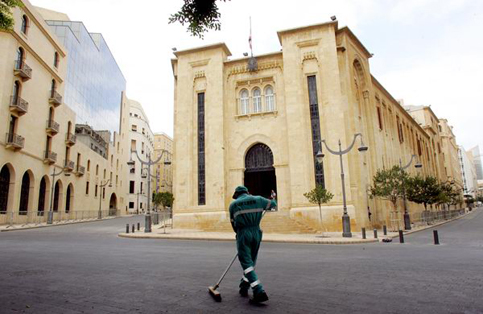


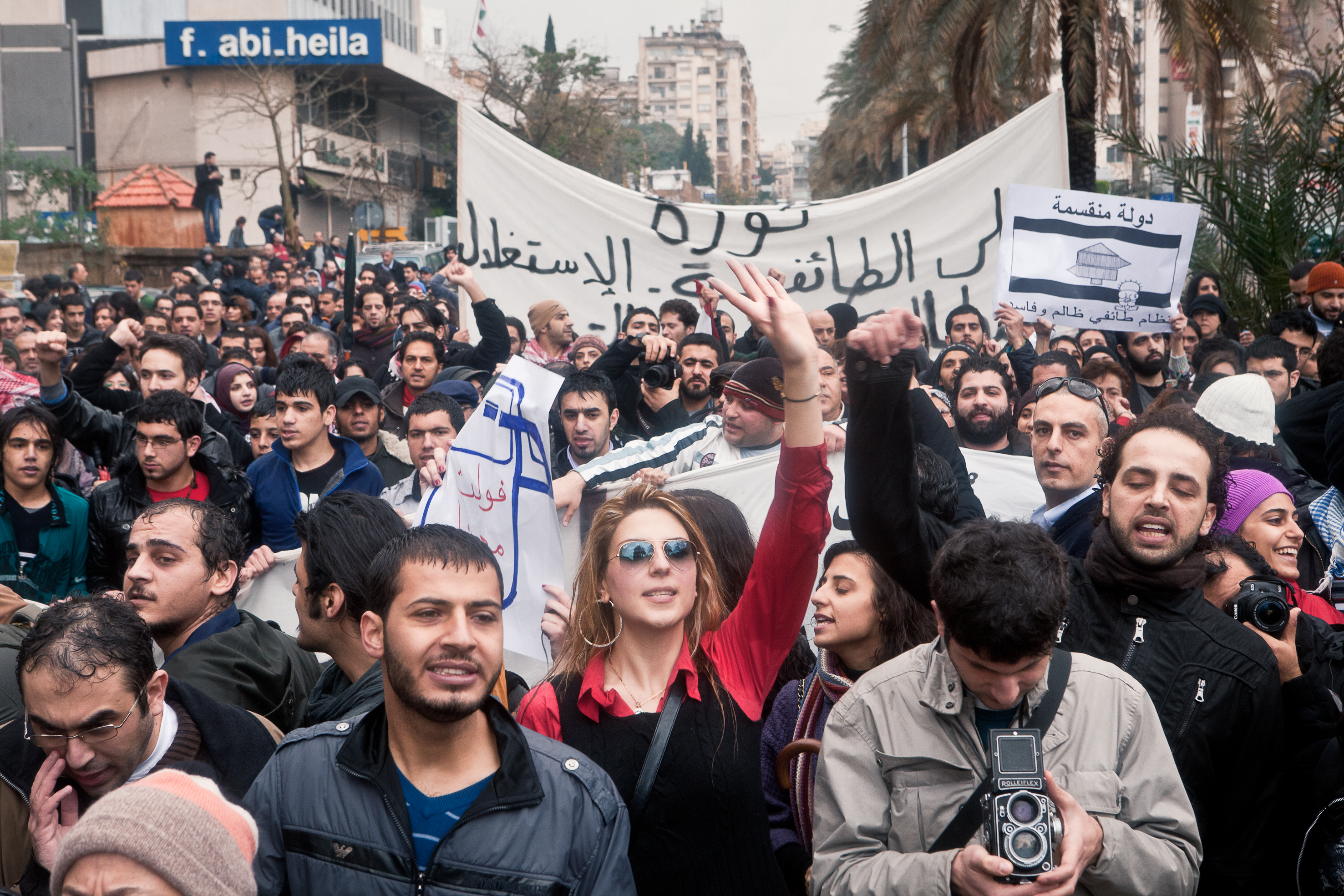


 Sami Halabi