A realistic goal for progress

Lebanon's parliament needs to break out of the vicious sectarian it finds itself in
Lebanon’s parliament needs to break out of the vicious sectarian circle it finds itself in

In 2005 an exiled former general of the Lebanese Army stepped off a plane in Beirut to meet the throngs of supporters coming to welcome him after 15 years abroad. Once amid his loyal followers on the tarmac and with the obligatory kisses complete, the general made his way to a podium where he spoke his first words to the cacophony of enthusiasts and press gathered before him; he told them to “shut up”.

You can say what you want about Michel Aoun and his party, but you can’t deny that the general speaks his mind. But when last month the Free Patriotic Movement (FPM) decided to run an electoral ad supporting the Orthodox Gathering Law (OGL) many of his previous supporters were taken aback, given that for decades the FPM has prided itself on being a ‘secular’ party, even if Aoun himself based his credibility on the ‘majority’ of the Christian vote.

For those unfamiliar with the proposal, the OGL basically mandates that each member of each sect votes for the seats in Parliament allocated to their religious confession on a proportional basis. All the major Christian parties in Lebanon, who are just as sectarian as the FPM, if not more so, have agreed to the law. Yet the FPM’s ad stands out. It parades several Lebanese Christians who state their names, their confessions and voicing their support for the OGL because it “represents” them and their interests while previous laws did not. In essence, what the FPM and other Christian parties are now saying to their supporters, and the Lebanese at large, is the most honest electoral appeal to date. They have done away with the façade of ‘Change and Reform’ and other empty policy-based promises. Instead, they are telling the Lebanese that they are nothing more than a collection of sects who have no common interests beyond their narrow sectarian identities, who must acknowledge this as their fate and vote accordingly.

It should, however, be abhorrent to anyone who believes in democracy to elect their representatives purely on the basis of sect, and hopefully this proposal will expose how sectarian our political parties really are and lead more people into the secular camp. However, we also have to be honest about the nature of the country and not expect everyone to become anti-sectarian overnight. A balance must be found between appeasement of the established status quo and progress toward a better electoral system.

Realistically, it is too late this year, and there is not enough political investment in true electoral reform for proportional representation and a single district for all of Lebanon to be implemented in full before the election — not to mention the laundry list of other reforms such as pre-printed ballots to prevent vote buying. And yet, many countries with complex circumstances such as ours have found new and inventive ways to run elections for seats in their parliament, and there is no reason Lebanon should be any different.

Ultimately, the aim of electoral reform is to provide a more representative government. But the old party leaders will not accept election reforms unless they are assured their power bases will be maintained. Thus, the dilemma is how to appease these sectarian parties and those who support them, while both holding the elections on time and implementing electoral reforms. The answer might just be the use of mixed-member proportional representation with countrywide proportional representation for a half of the parliament — ideally on a non-sectarian basis — while allowing sectarian parties to squabble over a way to elect the other half; this is probably the most progressives can realistically hope for at this juncture. Similar voting systems have been used in Germany, New Zealand and the United Kingdom, albeit in different forms adapted to the circumstances of each nation.

This would allow small constituencies and sectarian interests to elect their own people — which is all they care about anyway — while also opening the door to proportional representation in Lebanon as a single constituency, as well as push for other electoral reforms. Even if such a system were implemented on a sectarian basis it would incentivize issue-based politics, given that candidates would have to appeal to voters across the country, rather than being able to concentrate their vote-buying and patronage networks on a particular fiefdom. In the longer term, this might even nudge members of the electorate to consider casting their ballot for leaders that represent their issues, rather than those that don’t but happen to be from the same sect.

First published in Executive’s February 2013 print edition
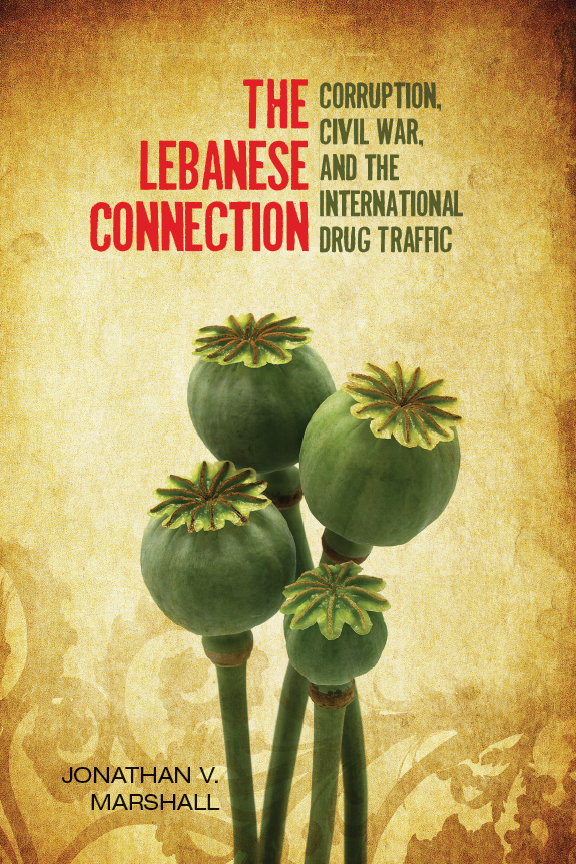
Book Review: The Lebanese Connection

978-0-8047-8131-2-frontcover

By the third page of Jonathan Marshall’s new book, “The Lebanese Connection: Corruption, Civil War and the International Drug Traffic”, anyone who knows Lebanon can see why the book has raised so many eyebrows. In one stroke of the pen, Marshall accuses modern Lebanon’s founding fathers Bechara el-Khoury and Riad el-Solh of profiting from the drug trade as they were putting together the pieces that is Lebanon today. By 1990, the glue that held those pieces together, and almost tore them apart, was hashish and heroin.

The Lebanese Connection is Marshall’s third book about drug trafficking, covering the history of the Lebanese drug industry, its supporters (both internal and external) and the extent to which it constituted a major linchpin in the global narcotics trade from independence until the end of the civil war. In doing so, Marshall runs the gauntlet of implicating major Lebanese families, politicians, political parties, banks, airlines, external actors and intelligence agencies, by name, for dealing in, or at least being affiliated with, the drug trade during that time.

Any Lebanese citizen reading the book will likely feel a sense of unease and suspicion of any author who points a finger squarely at many of the figures and families that form the crux of today’s body politic, even if it is across sectarian and communal affiliations. Merely listing names of all the actors identified by Marshall would not do his research justice, not to mention the fact that a Beirut-based publication would not last very long after printing them.

Marshall’s research is extensive; a fifth of the book’s girth is dedicated to notes and appendices. But, by the author’s own admission, the work is nevertheless skewed. It relies heavily on documents he obtained over many years from United States drug enforcement agencies and personal interviews with their agents. He also draws heavily on English-language publications without attributing much bias to publications based out of the US that are known to have a pro-Western slant.

Marshall offers this book as a mere addition to the discourse about what allowed the Lebanese conflict to rage for so long. And even if half of what Marshall says is true, he has proven that the length and devastation of the protracted conflict would not have been possible without the political, financial and international support for Lebanon’s drug industry.

Yet the principal strength of this work is not that it is well researched or identifies people by their names, but that it is written in a manner which allows readers to appreciate the history, relevance and consequences of how drugs fueled the civil war. Instead of the accusatory tone that most are used to in their national publications, Marshall calmly and matter-of-factly shows how, not just today, but historically the Lebanese authorities have shirked their responsibilities.

Hashish and poppy farmers never got nipped in the bud because the authorities either colluded with them, did not have the political ability to do so or could not offer them economic alternatives. Marshall details how financial institutions turned a blind eye to the billions of dollars in drug money entering their vaults in the 1960s and 1970s and the apparatus that supported the smuggling efforts from transit routes to “illegal” ports during the 1975-1990 war, as trade value shifted from hashish to the more valuable opium-based products that were either sourced and processed in Lebanon or shipped through.

When accusations are exaggerated he points out that they are likely not true. This is the case when he deals with Israeli accusations against the Palestine Liberation Organization, Hezbollah or the Syrians, not that he exonerates them either. The bulk of the trafficking, however, is attributed to the Christian militias that controlled the ports along the coast, but he does not fail to mention the political protection the Muslim farmers of the valley received in the first place and the minorities that facilitated the international network of smugglers and mafiosos needed to market the drugs to the West.

By the end, Lebanese will have an awkward feeling that they are still ruled by figures that ravaged the country for years and paid for it by smuggling drugs. The fact that ordinary Lebanese have been imprisoned for years, without trial, for possession or dealing in drugs, not to mention acts that pale in comparison to those committed by today’s political class is but further evidence of how the trade has warped the nations sense of justice and accountability.

A version of this article was published in Executive’s February 2013 print edition